Articles in the Internet Category
broadband »
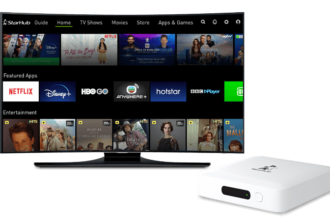
StarHub has entered what it calls the “next-gen broadband war” with its latest fibre-based broadband service plans, joining what is turning out to be a big fight for consumer dollars in a newly-shaken up market.
The “green” camp is charging S$68.27 a month for its 100Mbps fibre-to-the-home (FTTH) plan, which offers 50Mbps uploads and an international link of 15Mbps.
Internet, broadband »

Credit: Shuttlestock
A strange thing happened yesterday in Singapore, when a slew of new broadband offerings became available at competitive prices, over the country’s new fibre optic network being extended to homes and offices.
The new next-gen network, four years in the making, is now starting to be available to homes and offices, which are being progressively hooked up. By mid-2012, 95 per cent of the island will be wired up.
Since the new network, partly funded by taxpayers’ dollars, mandates an open wholesale price for all telcos, no single operator gets preferential rates to use and resell the bandwidth provided by it. This means a level playing field for all telcos, and better deals for consumers down the stream.
broadband »
Besides SingTel, which unveiled its next-gen broadband prices today, Singapore’s new high-speed broadband network will have services sold by local bigwigs StarHub and M1, as well as smaller operators SuperInternet and LGA, which count many small and medium enterprises (SMEs) as customers.
The news came at a news conference held today by Nucleus Connect, which runs the switching and other networking gear for the NBN. It also wholesales the bandwidth to retail service providers (RSPs).
Nucleus Connect CEO David Storrie said network coverage – or a lack of it – was the reason why only five RSPs have signed up so far, despite earlier estimates of hundreds of service providers coming forward to leverage on the open pricing offered by the new broadband network.
Featured, broadband »
Years after they first heard the phrase “ultra-fast broadband”, home owners and businesses here can finally log on to Singapore’s new next-gen broadband service next month, when it goes online with promises of faster speeds and cheaper rates.
SingTel today unveiled an aggressive price plan for new FTTH (fibre-to-the-home) services that already looks like forcing new competition in a market that many users have complained is plagued with slow and expensive services, especially when compared to those in South Korea or Hong Kong.
The new services will be available to users whose homes and offices are already wired up with fibre optic cables to Singapore’s next-gen broadband network. Homes are still being wired up at the moment.
Starting from S$85.90 a month, SingTel’s basic FTTH service for home users will offer download speeds of 150Mbps, upload of 75Mbps, and an international link of 15Mbps.
Enterprise, Storage, cloud »
Public clouds just don’t cut it when it comes to mission critical applications that form the backbone of your business. Security concerns, especially when you’re dealing with sensitive customer data like building security drawings, could also put a damper on any cloud computing strategy.
You could try to build a “private cloud“, though the term could be misleading, depending on your definition of cloud computing.
In May, Amazon Web Services senior vice president Andy Jassy noted that private clouds usually incur “very high fixed cost and lack the benefits of the cloud. Companies still own all the capital expenditure, data centers, servers; it’s not pay as you go and it’s not truly elastic on the company level because you still own and manage the infrastructure by yourself.”
Internet, Storage »
First unveiled at CES 2010, the Iomega iConnect is a NAS device targeted at consumers and SOHO users with its simple set-up process that quickly connects USB drives and printers to a home network for file and print sharing.
This S$163 NAS slab is possibly one of the thinnest out there, and comes with four USB ports (three in front and one behind) for hooking up USB drives and printers that can be shared among the users on your home network. While the iConnect looks sleek, the whole set-up doesn’t look that great once you have USB cables running all over the device.
Enterprise, Internet, broadband, security »
Starhub has quietly introduced a “redirection service” that takes MaxOnline broadband customers to a Yahoo search page if you happen to enter an invalid URL in your browser. Prior to this, you would typically get an error message from your browser telling you that the invalid domain’s server cannot be found.
According to a Starhub FAQ list, the service does not track individual Internet usage patterns. The service “simply redirects queries to non-existing domain names to a useful search results page instead of a cryptic error message page or browser-defined page”. Users can also choose to opt out of the service at a preferences page.
What Starhub is effectively doing is DNS hijacking, a controversial practice that has led to security breaches by hackers. Some ISPs in the United States have had their users open to cross-site scripting attacks due to lax Web programming techniques by some search partners.
In 2003, Verisign also directed users to paid search results, a move which led to an investigation by the Internet Corporation for Assigned Names and Numbers (ICANN).
Among its findings, ICANN noted that DNS redirection “disturbed a set of existing services that had been functioning satisfactorily. Names that were mistyped, had lapsed, had been registered but not delegated, or had never been registered in DNS were resolved as if they existed.
“As a consequence, certain e-mail systems, spam filters and other services failed resulting in direct and indirect costs to third parties, either in the form of increased network charges for some classes of users, a reduction in performance, or the creation of work required to compensate for the consequent failure”.
GPS/maps, Singapore, Web 2.0 »

There has been quite a bit of talk over the new public transport distance fare calculations that have been put in place in Singapore since July 3rd.
There have been the usual government overtures that in general people pay less and the system is fairer under the new distance fares.
From the opposite camp, irate citizen bloggers claim that this isn’t true at all.
I find the official LTA fare calculator a pain to use, so if you’re interested in how much more (or less) you’re paying, go use Gothere’s mapping and directions tool. I use Gothere often to get directions, so the extra functionality is just groovy.
Thanks to this post on DK’s blog, from which I first came across this!
Hmmm. Gothere folks, if you’re reading this, perhaps with your data collected on searches done by Singaporeans you can probably do a good estimate on the question everybody is dying to know: Are Singaporeans paying more or less for transport under the new system?
If you send this in to the various local media, I’m certain they will love to know!
Featured, broadband »
Though 4G LTE (long term evolution) looks like the future for mobile broadband, the rival WiMax technology got a small boost yesterday with the launch of laptops in Malaysia that come with the wireless technology built in.
The likes of Acer, Dell and MSI launched a number of netbooks and notebooks that will let users log on, out of the box, to the wireless broadband service run by the country’s WiMax operator, PacketOne.
Enterprise, Green IT, broadband »
Networking giant Cisco Systems unveiled its vision of smart, connected cities of the future during a media event at the Shanghai World Expo today.
In a showcase of interest to urban planners striving to build sustainable and environmentally friendly cities, Cisco demonstrated several network enabled applications in areas such as health care, security and transportation.
Telemedicine, for instance, allows patients to measure blood oxygen levels and send that information to their doctors while urban transportation management systems allow city officials and transportation service providers to monitor real time traffic conditions and divert traffic if necessary.
Underpinning these technologies are ubiquitous smart networks and data centers that process and serve up critical information in real time.