





Years after they first heard the words “ultra-fast broadband”, home owners and businesses here can finally log on to Singapore’s new next-gen broadband service next month, when it goes online with promises of faster speeds and cheaper rates.
SingTel today unveiled an aggressive price plan for new FTTH (fibre-to-the-home) services that already looks like forcing new competition in a market that many users have complained is plagued with slow and expensive services, especially when compared to those in South Korea or Hong Kong.
Read the full story »
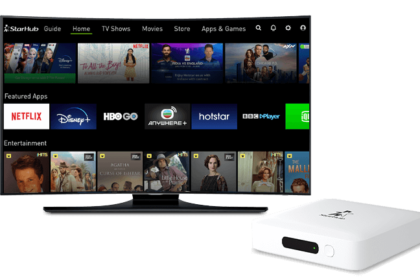
StarHub has entered what it calls the “next-gen broadband war” with its latest fibre-based broadband service plans, joining what is turning out to be a big fight for consumer dollars in a newly-shaken up market.
The “green” camp is charging S$68.27 a month for its 100Mbps fibre-to-the-home (FTTH) plan, which offers 50Mbps uploads and an international link of 15Mbps.

Credit: Shuttlestock
A strange thing happened yesterday in Singapore, when a slew of new broadband offerings became available at competitive prices, over the country’s new fibre optic network being extended to homes and offices.
The new next-gen network, four years in the making, is now starting to be available to homes and offices, which are being progressively hooked up. By mid-2012, 95 per cent of the island will be wired up.
Since the new network, partly funded by taxpayers’ dollars, mandates an open wholesale price for all telcos, no single operator gets preferential rates to use and resell the bandwidth provided by it. This means a level playing field for all telcos, and better deals for consumers down the stream.
Besides SingTel, which unveiled its next-gen broadband prices today, Singapore’s new high-speed broadband network will have services sold by local bigwigs StarHub and M1, as well as smaller operators SuperInternet and LGA, which count many small and medium enterprises (SMEs) as customers.
The news came at a news conference held today by Nucleus Connect, which runs the switching and other networking gear for the NBN. It also wholesales the bandwidth to retail service providers (RSPs).
Nucleus Connect CEO David Storrie said network coverage – or a lack of it – was the reason why only five RSPs have signed up so far, despite earlier estimates of hundreds of service providers coming forward to leverage on the open pricing offered by the new broadband network.
Years after they first heard the phrase “ultra-fast broadband”, home owners and businesses here can finally log on to Singapore’s new next-gen broadband service next month, when it goes online with promises of faster speeds and cheaper rates.
SingTel today unveiled an aggressive price plan for new FTTH (fibre-to-the-home) services that already looks like forcing new competition in a market that many users have complained is plagued with slow and expensive services, especially when compared to those in South Korea or Hong Kong.
The new services will be available to users whose homes and offices are already wired up with fibre optic cables to Singapore’s next-gen broadband network. Homes are still being wired up at the moment.
Starting from S$85.90 a month, SingTel’s basic FTTH service for home users will offer download speeds of 150Mbps, upload of 75Mbps, and an international link of 15Mbps.
Public clouds just don’t cut it when it comes to mission critical applications that form the backbone of your business. Security concerns, especially when you’re dealing with sensitive customer data like building security drawings, could also put a damper on any cloud computing strategy.
You could try to build a “private cloud“, though the term could be misleading, depending on your definition of cloud computing.
In May, Amazon Web Services senior vice president Andy Jassy noted that private clouds usually incur “very high fixed cost and lack the benefits of the cloud. Companies still own all the capital expenditure, data centers, servers; it’s not pay as you go and it’s not truly elastic on the company level because you still own and manage the infrastructure by yourself.”
Bad news for users of Motorola Milestone here in Asia-Pacific.
While American owners of the popular Droid – a CDMA version of the GSM Milestone – are already getting Android 2.2 updates, users here will have to wait until early next year to get the OS update that gives them speedier operation and Flash support, among other goodies.
First unveiled at CES 2010, the Iomega iConnect is a NAS device targeted at consumers and SOHO users with its simple set-up process that quickly connects USB drives and printers to a home network for file and print sharing.
This S$163 NAS slab is possibly one of the thinnest out there, and comes with four USB ports (three in front and one behind) for hooking up USB drives and printers that can be shared among the users on your home network. While the iConnect looks sleek, the whole set-up doesn’t look that great once you have USB cables running all over the device.
When I opened up the box for the Nokia C6 smartphone sent to Techgoondu for testing last week, I told myself to keep my expectations low – this was, after all, a low-cost phone from the rather beleaguered Finnish phone giant.
But what little doubt I had of Nokia’s recent decline immediately disappeared when I fired up this sadly outdated slide-out number sold exclusively by M1 for S$98 (with a two-year plan).
In a move that stunned many in the tech circles, Oracle pulled a trigger on Google with a lawsuit alleging that the Android platform and devices infringe one or more Java patents and copyright.
Oracle claims that Google has been aware of Sun’s patent portfolio, including the patents at issue, since the middle of this decade, when Google hired certain former Sun Java engineers.
The lawsuit leads one to question the intentions of Oracle’s latest lawsuit and its commitment to open source. Java has been covered by the open source General Public License since 2006, way before Oracle’s acquisition of Sun Microsystems was completed in January 2010.
Singapore’s mapping start-up Gothere.sg launched their new iPhone application about exactly a week ago. I had the pleasure of catching up with Junhan, one of Gothere’s founders, to get both a demo of their app and a status update of what they’ve been doing.
Firstly, below are some YouTube videos that the scrappy Gothere guys have put up on the Interwebs to explain what their app is about:
Basically it’s a front end client app on iPhone that extends their already popular Gothere.sg site. I’m don’t own an iPhone (I have a HTC Desire and am on the Android platform), but in the preview session that Junhan demoed the app to me and a few other work colleagues on the iPhone 4, I found the app to be excellent.
Everything that I liked about Gothere.sg — various driving public transport suggestions + estimated costs (e.g. avoiding ERP gantrys), trip summaries, smart autocompletion of search locations, etc. — had been shrunk down into one portable app. And the best thing is that the price point of S$1.99 for the app is something that is very affordable.