While many organisations are shifting their focus to AI agents this year after an era of pilots and trials, many in Asia-Pacific do not yet have the right infrastructure to match their ambitions, according to PC maker and technology firm Lenovo.
Indeed, there is a widening “readiness gap” in the region, despite growing momentum on agentic AI, which promises independent reasoning and real-world action, company executives told an industry audience in Hong Kong last week.
In the city, specifically, 50 per cent of organisations admit they are at least 12 months away from being AI-ready, according to a Lenovo study this year.
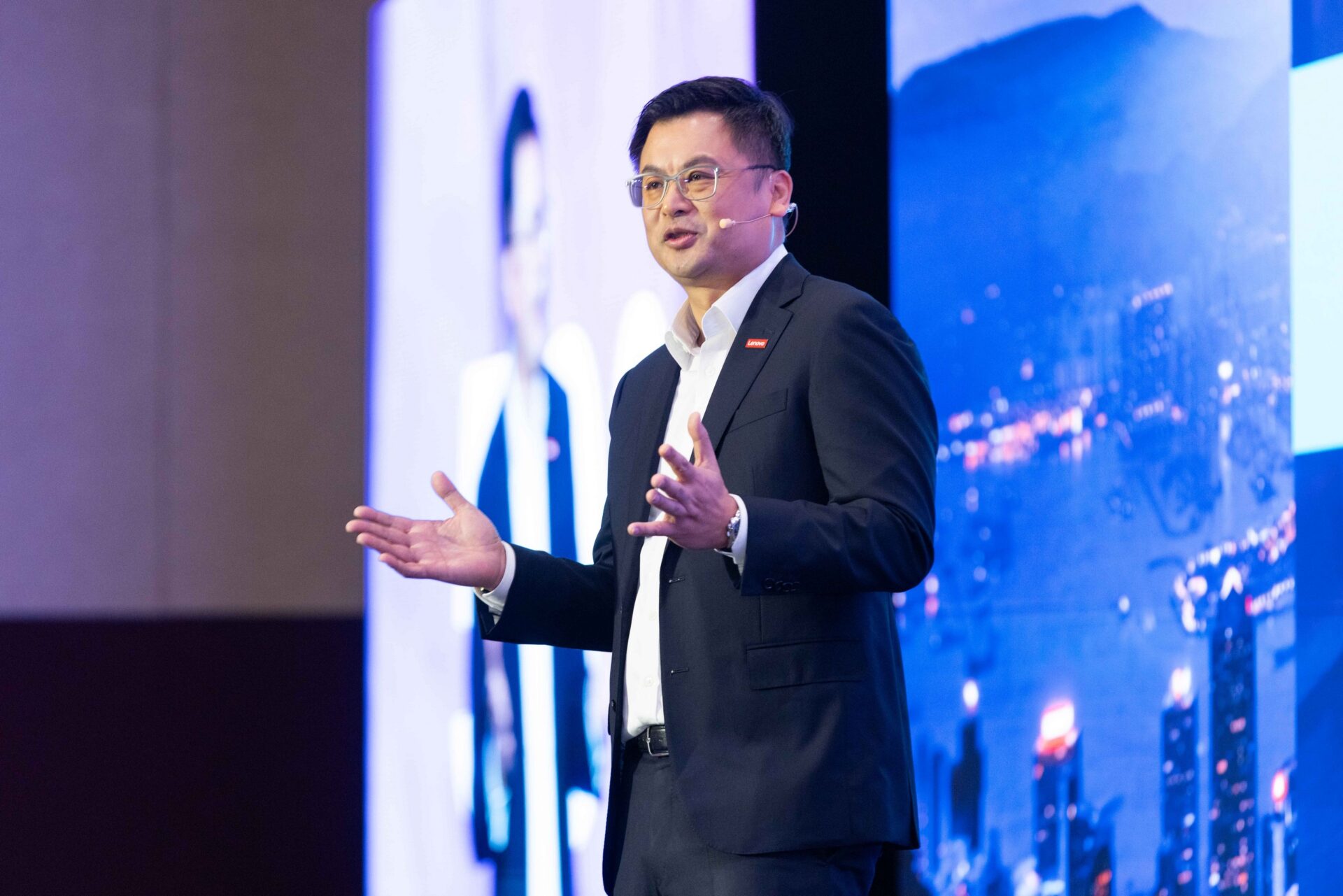
“The next era of AI leadership will not be defined by who builds the biggest model,” said Ken Wong, Lenovo’s executive vice-president and president of solutions and services.
“It is actually who makes AI operational, trusted, and scalable,” he told about 1,000 business leaders and partners this week at an annual Lenovo gathering for business leaders and partners.
One theme that surfaced repeatedly at the one-day event was the idea of hybrid AI – the notion that enterprise AI will not live entirely in the cloud, nor entirely on local devices, but across a distributed architecture.
Under this approach, AI systems are organised into multiple layers. At the personal layer, AI agents operate directly on user devices. These systems handle tasks such as productivity assistance or contextual analysis while keeping sensitive data local.
At the enterprise layer, AI runs within private infrastructure, an AI factory where multiple agents can coordinate tasks such as supply-chain optimisation, financial monitoring or cybersecurity detection.
Above this sits a public collaboration layer, where organisations can link selected data sources to enable ecosystem-level applications, such as urban services or industry-wide data platforms.
The technical argument is straightforward. Complex AI systems rarely function as standalone models. They operate as multi-agent networks, combining local inference, enterprise data and external information streams. Hybrid architectures allow these components to interact without forcing every workload into the cloud.
The concept is still evolving, but the real significance lies in what it signals: enterprise AI is becoming an infrastructure challenge as much as a software one.
Several real-world deployments at the event point to how this shift is playing out in practice.
Partnering with Chinese robotic firm Yunji Technology, Lenovo demonstrated robot dogs currently patrolling Hong Kong’s Water Department facilities.
The autonomous inspectors navigate high-voltage zones and detect gas leaks, tasks previously considered too hazardous for human crews.
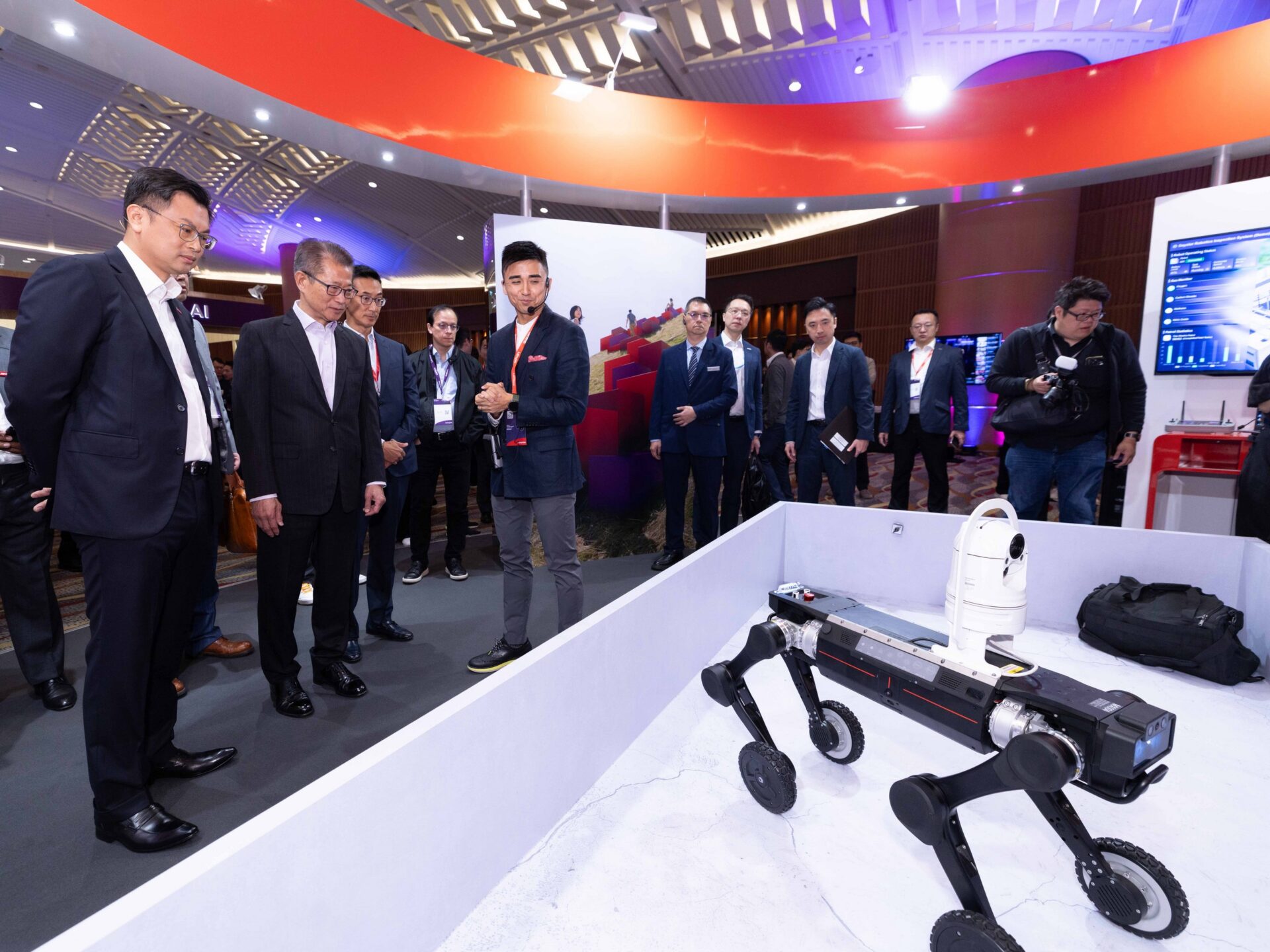
According to Wong, the deployment has reduced manual inspection workloads by about 80 per cent.
In the mobility sector, Lenovo is working with autonomous driving technology company WeRide to advance Level 4 self-driving robotaxis in Hong Kong. Level 4 autonomous vehicles are designed to operate without human intervention within defined operational zones.
The robotaxis are more than self-driving cars. They function as mobile data centres, processing heavy inferencing workloads at the edge to make millisecond decisions amid dense heavy traffic.
Perhaps the most demanding test of such architecture will come later this year. Lenovo is the technology partner for the Fifa World Cup 2026, which kicks off on June 11 and runs for six weeks across 16 cities in the United States, Canada and Mexico. With 48 teams competing, it will be the largest tournament in the competition’s history.
Major global sporting events have quietly become proving grounds for new digital infrastructure. The World Cup is no different for it will require systems capable of handling massive data traffic, from fan engagement platforms and broadcasting operations to team analytics and event logistics.
Romy Gai, Fifa’s chief business officer, told the media in Hong Kong that one objective of going digital is to bring fans closer to players through immersive digital experiences.
Fans for example, will be able to capture holographic selfies that simulate a “moment” with their favourite football stars. Referees will wear portable “refcams” that stream real-time close-up footage from the pitch, offering viewers a new perspective on the match.
Teams will also be able to analyse digital twins of athletes, allowing coaches and analysts to study playing habits and historical patterns, generate simulations and develop game strategies in near real time.
For enterprise IT observers, the lesson is not about the robot or the autonomous vehicles themselves. It is that AI is moving out of the chatbot phase and into the mission-critical phase.
The focus is shifting towards a distributed AI architecture that rely on a blend of edge computing, local inference and centralised data analysis. The intelligence must sit close to the physical environment, while enterprise systems coordinate the broader workflow.
Some analysts see Lenovo’s strategy as part of a broader transformation. The company used to be known primarily as a hardware company selling PCs, laptops and smartphones,” said Su Lian Jye a chief analyst at research firm Omdia.
“Now it is positioning itself as an enterprise technology provider, offering servers, storage, data-centre infrastructure and hybrid AI solutions,” he added.
Large events like the Fifa World Cup can serve as a powerful demonstration platform. More importantly, such projects force technology providers to test their systems under extreme conditions.
Such stress tests may offer a glimpse of the next phase of enterprise AI, one where the real breakthroughs appear in the infrastructure that allows them to operate reliably in the real world.
“In this case, Lenovo is putting its technical resources behind this project, stress testing their networking, storage, software and engineering capabilities behind a massive live project,” Su noted. “It will stress-test the entire system and push the company to its limits.”