
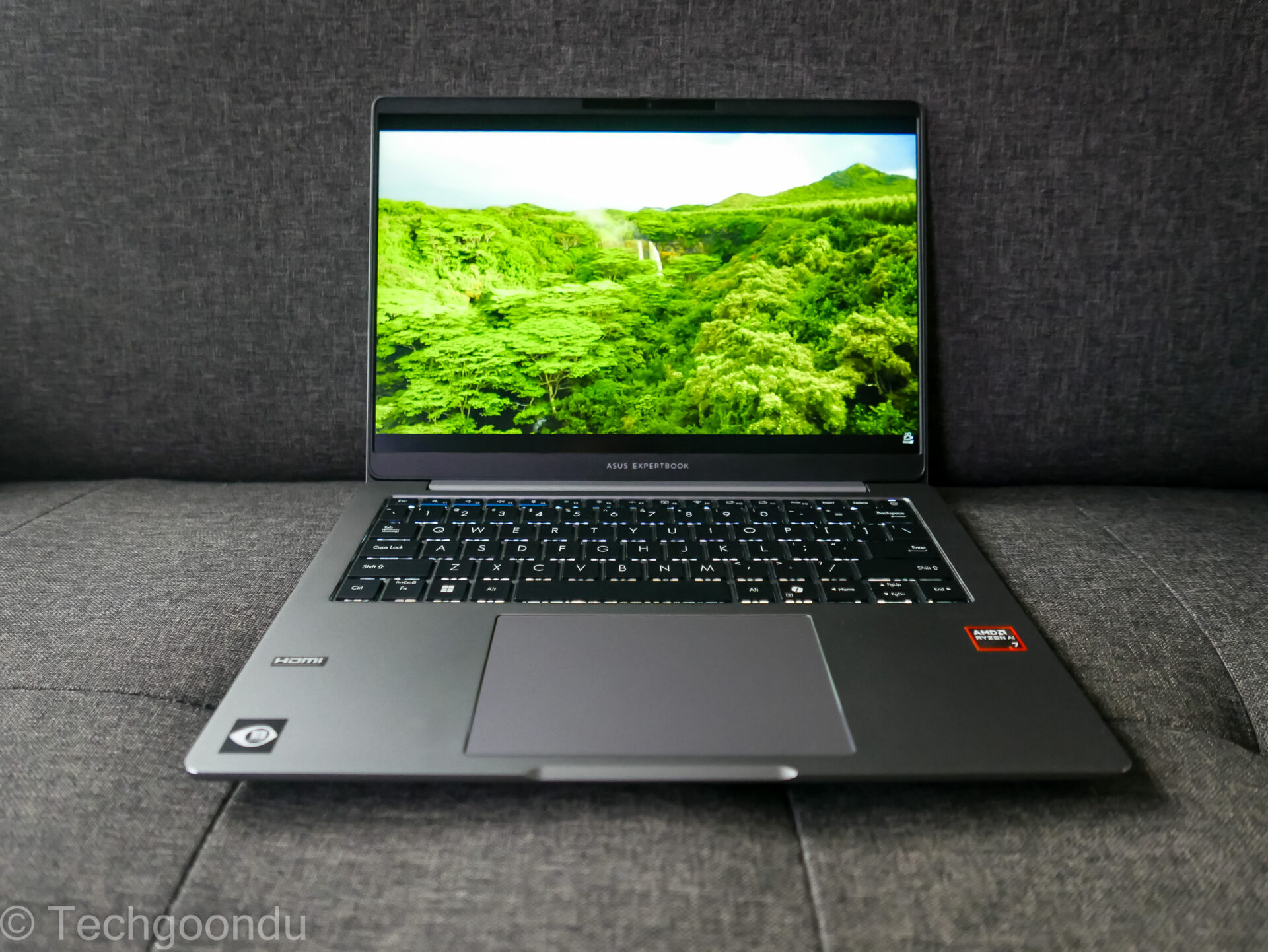
If your job is to buy laptops for your company, chances are you’ve seen Lenovo ThinkPads or HP EliteBooks turn up in commercial tenders. Joining the competition more recently is the Asus ExpertBook P3, a workhorse that promises to get stuff done like its rivals because it’s built just as tough and resilient to everyday knocks and bumps.
The first thing you’d notice about Asus’ new commercial laptop is its rather unflashy appearance. By that, I don’t mean it’s boring looking – rather a lot of emphasis seems to have gone into making it neat and tidy, instead of flashy.
To be fair, there’s a flashier Asus ExpertBook – the ExpertBook B9 that weights under 1kg like the popular Lenovo X1 Carbon – but the ExpertBook P3 launched recently for Singapore is far less eye-catching than its thin and light cousin.
Its metallic silver finish is complemented by a neat name strip that announces its ExpertBook pedigree. This means it has undergone some pretty stringent tests at Asus’ labs. These include extreme shock and vibration tests that make sure the machine you’re getting is tough enough for the military, for example.


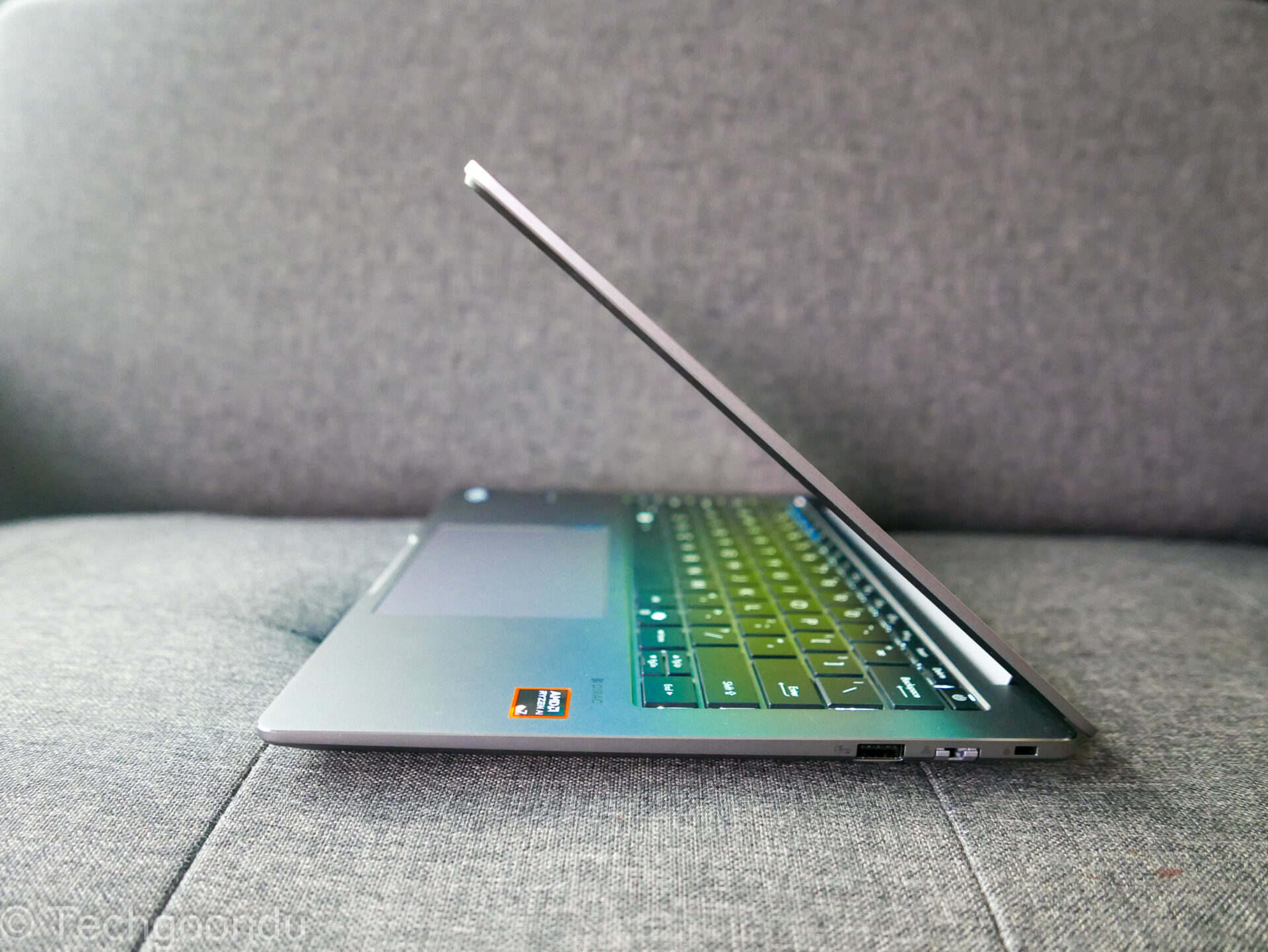
To be sure, this is one solid-looking laptop. One hand lifts the lid when it’s closed – the bottom doesn’t threaten to flip, unlike on many laptops. This is something I’m familiar with my Lenovo ThinkPad as well, which shows you Asus is challenging the best in the market in the small details.
The same for the 180-degree screen that is totally flat when pushed back to the max. Again, this is something you’d find on Lenovo ThinkPads and the Asus ExpertBook P3 comes with a solid hinge to match up. It’s a feature that’s useful when you want share a screen with someone sitting across you – plus, it’s also a reflection of how solid and flexible the hinge is.
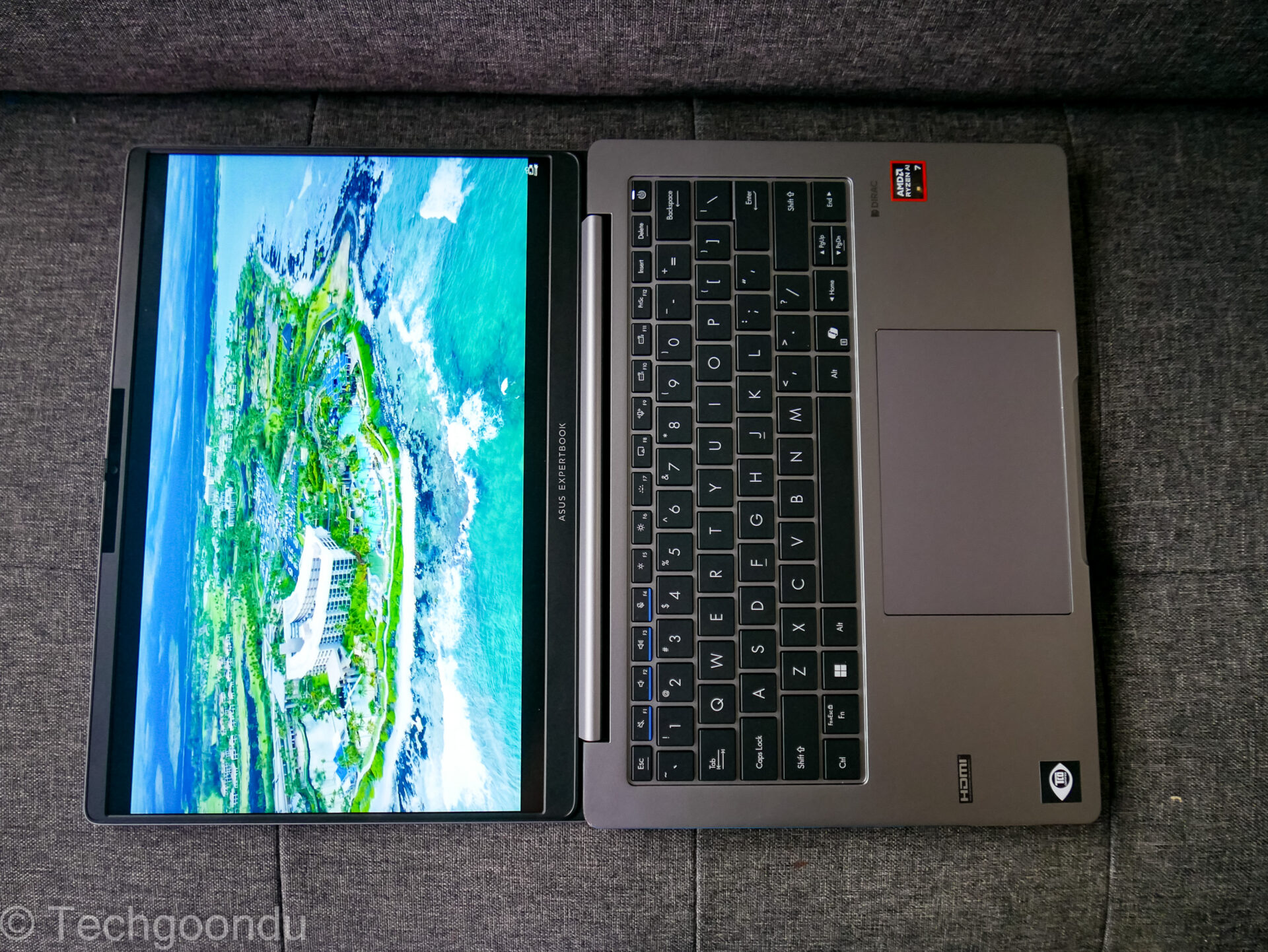
The ExpertBook P3 weighs 1.42kg, which puts it above most thin and light machines that are usually under 1.3kg. Still, the 14-inch workhorse is not so heavy as to be difficult to lug around between meetings.
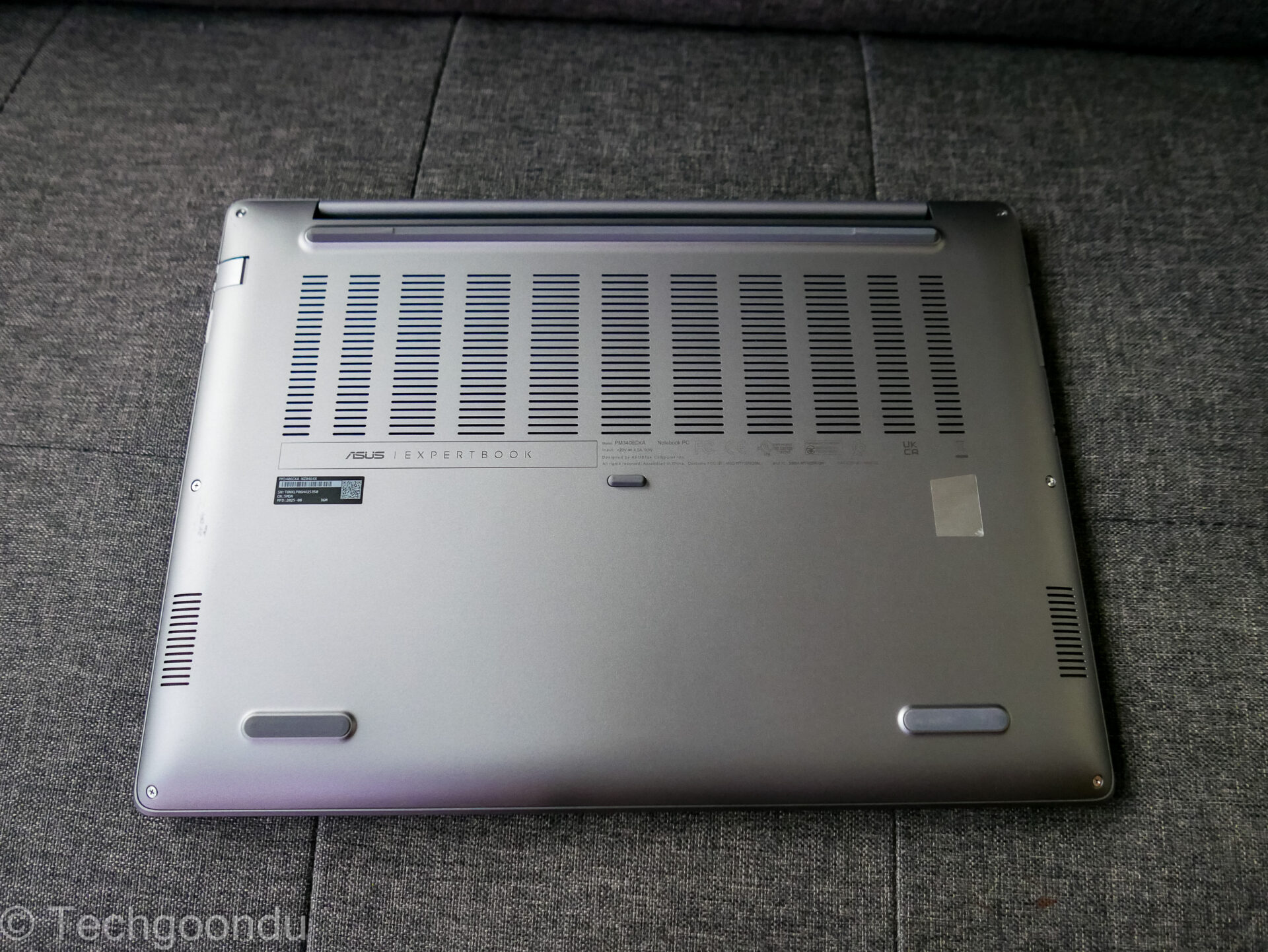
For the extra weight, you do get some goodies included. You get no fewer than two USB-A ports and two USB-C ports to power up the laptop or connect up, say, phones or USB drives. There’s also a full-sized HDMI port to hook up a monitor or projector.
Even better, there’s a flexible network port to link up to your wired gigabit network when you don’t want to deal with Wi-Fi. These days, not many commercial laptops offer this, except perhaps for some Japanese PC makers, which are still including optical drives in some models.
The Asus laptop’s 14-inch IPS screen isn’t as bright as some OLED displays but it’s large enough and also sharp enough with a 2,560 x 1,600 resolution to let you get work done well. Certainly, it’s a step up from entry-level Full HD screens that other PC makers often offer on their lowest-cost models.


You don’t get the thinnest bezels out there but they are sufficiently slim enough, at least on one side, to make the laptop feel tidy enough. Yes, it’s a workhorse but a neatly designed one.
The particular Asus ExpertBook P3 model I tested out comes with an interesting choice of processors – AMD instead of Intel. The Ryzen AI 7 350 CPU may not be as common as Intel CPUs portable PCs but it’s a powerful engine to build a laptop around.
In the Asus machine, it is complemented by an impressive 64GB of DDR5 memory and a PCIe 4.0-capable 1TB solid state drive (SSD), which make this a high-end offering in terms of hardware. The onboard Radeon 860M graphics processing unit is no slouch, either, especially for integrated graphics.
For sure, this is reflected in the performance the laptop delivers, according to benchmark tests I ran. In Geekbench 6, which measures performance in everyday tasks like Web browsing and image editing, the Asus machine came back with scores of 2,872 for single-core performance and 13,669 for multi-core performance.
As I’d expected, this AMD-based machine with a hefty 64GB RAM gets ahead of Intel-based machines, even a Lenovo ThinkPad X1 Carbon that sports Intel’s high-end Core Ultra v200 CPUs.
The ExpertBook P3 also did well in PC Mark 10, another test that measures performance in common tasks such as video calls and spreadsheets. Here, it scored 7,404, again ahead of the Lenovo machine with the Intel Core Ultra 7 258V chip and 32GB of RAM.
What about AI? I ran the Geekbench AI test to mimic some common AI tasks that you might perform on the laptop. With the ONNX AI framework, the laptop’s CPU returned with 3,944 for single precision score, 1,983 for half precision score and 8,789 for quantised score.
With OpenVino, another AI framework but one that AMD and Intel tend to do better with, the Asus laptop’s CPU came back with 5,176 for single precision score, 5,161 for half precision score and 14,091 for quantised score. Not bad, though I didn’t manage to run the test on the AMD neutral processing unit (NPU), which boasts 50 TOPS.
Though this Asus machine is a commercial laptop, I also ran a quick 3DMark Time Spy test, which simulates real games, to see how it would do handling difficult game graphics. It scored 2,912, which is just slightly less than the Intel CPU-based Lenovo laptop but still decent for a work-focused machine.
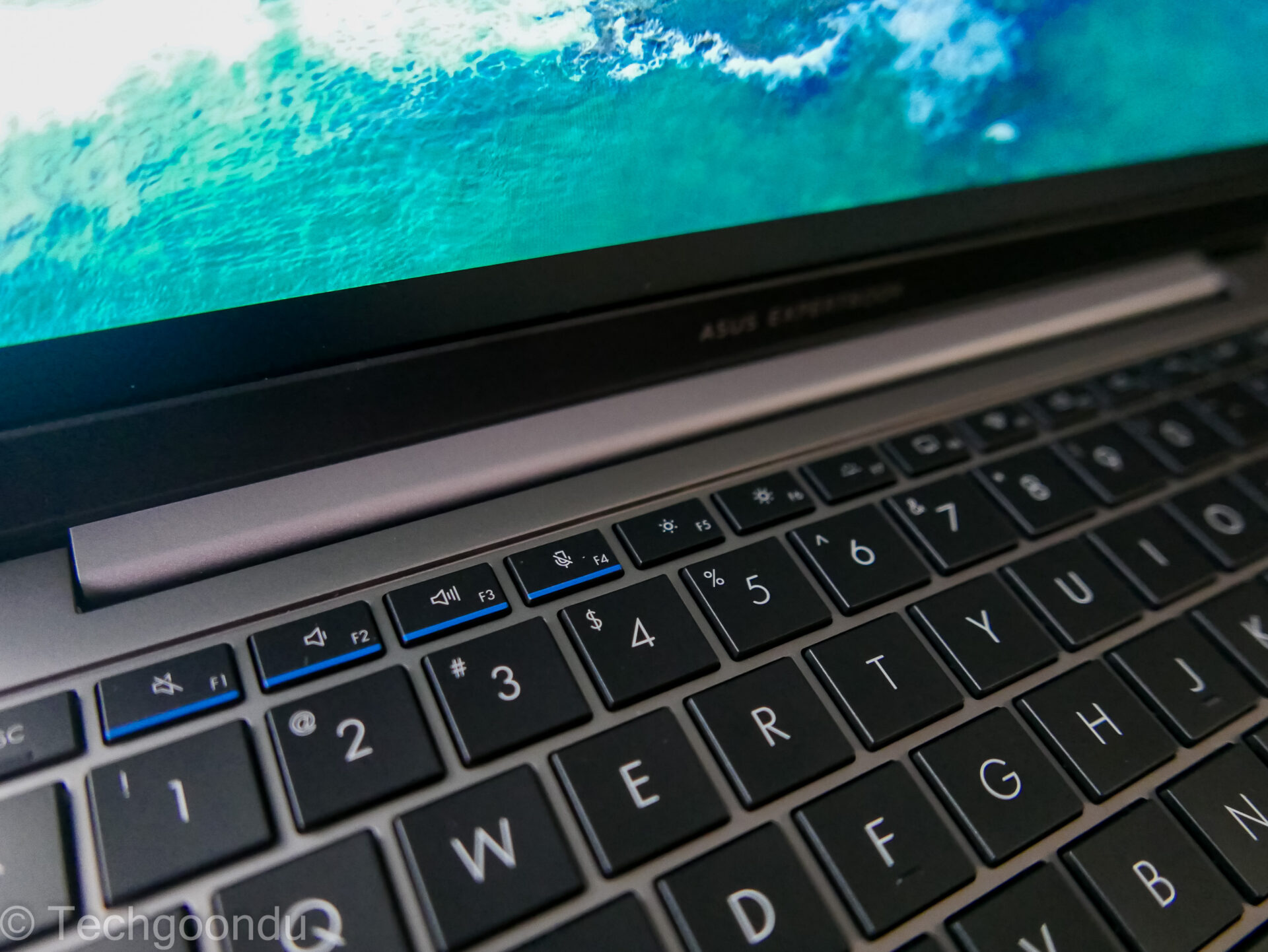
On the whole, the ExpertBook P3 isn’t lacking in performance. What I also like to commend Asus on is the usability. Though it isn’t flashy or eye-catching, the laptop is made for real work – its large touchpad makes it easy to navigate around and the keyboard offers good key travel and decent tactile feedback.
Of course, for a commercial laptop, you’re going to get a handy fingerprint sensor to log in to Windows. You can also use it to access, say, your password manager on Google Chrome. For me, this is a key feature for any business laptop.
For the same reason, you have Windows 11 Pro, which more IT management features and tougher security built in compared to the Home version. Plus, the laptop comes with three-year on-site warranty that is standard in the package.
This is why the total price is bumped up to just over S$2,000 in Singapore. The model I tested, with 64GB RAM, doesn’t seem to be available in Singapore yet, though the 16GB and 32GB ones are just above the S$2,000 threshold.
To be sure there are consumer laptops that might be slimmer and cost less but if you add the additional software and warranty, the scales tip back in favour of this Asus workhorse. So, it’s certainly worth a look if you’re looking for a resilient machine to form the backbone of your office fleet.
The Lenovos, HPs and other PC makers may be more well known in the commercial laptop market but Asus’ offerings are also backed by its strong consumer brand and know-how, which make for compelling alternatives.