For folks looking for a convenient camera that lets you capture videos of their travels, the Insta360 Luna Ultra promises to be portable yet highly capable.
Essentially a camera fixed to a gimbal for stability, it is easily pocketable and great for capturing anything you see on the go for your social media videos.
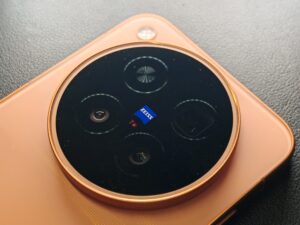
Actually, the Insta360 Luna Ultra is not one but two distinct cameras built inside a small body. Key here are the Leica Summicron lenses that you can expect great image quality for both stills and video.
This camera, of course, is also aimed directly at the rival DJI Osmo Pocket P4. Just how well does it compete?

For starters, the Luna Ultra feels compact and solid in the hand, giving you a good level of confidence when shooting content with it.
Like the DJI Osmo Pocket 4P, though, it can feel a little short for those with larger hands, so adding a 1/4-inch thread handle makes it much more comfortable to hold and use.
The standout feature for the Insta360 camera has to be the built-in wireless controller. It detaches from the main body and lets you frame your shot and start recording from up to 20m away, without using your phone.
This is particularly useful for solo travel content or vlogs, where you do not want to keep walking back to the camera to check the framing or review the photo or video you have just taken.
Having the controller integrated into the camera also means one less accessory to carry compared with using a separate remote or relying on a smartphone app. That said, I would keep it within about 10m for a more reliable connection to the main body.

Helpfully, the camera includes a wind guard to reduce wind noise during outdoor recording. It does not come with the Insta360 Mic in the standard set, so voice quality in noisy environments will depend on the built-in microphones unless you add an external mic later.
Note that there is no mini video light included, which some creators might miss when shooting close distances in low light or indoors.
The Luna Ultra’s main camera uses a 1-inch 48-megapixel CMOS sensor with a 20mm-equivalent focal length at 1x zoom. A second 1/1.3-inch 48 Megapixel sensor handles 3x zoom with a 60mm-equivalent focal length.
Between these two points, 2x zoom is a digital crop from the main sensor before the camera switches to the telephoto lens at 3x. Any zoom beyond 3x is digital.

Despite having a 48-megapixel sensor, the camera produces up to 37-megapixel stills when shooting in full-resolution mode. By default, it uses pixel binning to produce 9-megapixel images.
This combines data from multiple adjacent pixels in one part of the sensor into a single pixel, improving light sensitivity and reducing noise, although at the expense of resolution.
If you need a 360-degree image, the Sphere Panorama mode can stitch multiple images together to produce an impressive 200-megapixel output.
Since the image is created by stitching multiple frames, there is a risk that some areas may not merge properly, particularly when there are moving subjects in the scene. This is where a dedicated 360-degree camera such as the Insta360 X6 still has an advantage.

Video recording tops out at 8K at 30 frames per second, with Dolby Vision and 10-bit I-Log support for those who want more flexibility when colour grading. The bad news is that Night mode video is limited to 4K at 60 frames per second.
Slow motion is available at up to 4K at 120 frames per second, although it is best used in well-lit scenes. My test shots under stage lighting are still more than acceptable, fortunately.
Like the DJI Osmo Pocket 4P, vertical shooting is limited to 3K, which is a drawback if you want to make full use of the sensor when shooting in portrait orientation. It is a pity that the gimbal cannot rotate the camera into a vertical position, as this would allow the full sensor resolution to be used for vertical video.
Minimum focus distance is 9cm, allowing decent close up shots for products or food. The camera has 47GB of built in storage, which fills up quickly at high bitrates. A fast V30 or A2 rated microSD card is recommended for a full day of shooting, though larger cards may be more practical depending on your recording habits.
Battery life is rated at around four hours from the 1,150mAh power pack. In real use, 8K recording and frequent gimbal movement will reduce the operational time further so it’s a good idea to carry a capable power bank for long shooting days. The camera also supports Time Code, which helps sync footage from multiple cameras in post-production.
The 3x telephoto lens is useful for portraits and distant subjects, though it is a smaller 1/1.3-inch sensor so low light performance drops compared to the main camera.
The 2x digital zoom is usable but not as clean as true optical zoom. The tip is to use the second camera’s optical zoom at 3x to shoot portrait vlogs and photos to maximise the image quality.
A noticeable weakness with the Insta360 Luna Ultra is photo saving speed. The camera can be slow to write JPEG stills to internal storage, and during this time you cannot change settings or shoot again.
During my tests, this caused me missed shots in fast-moving situations. The transition from the 1x camera to the 3x zoom camera can also feel result in a slight jerk in the video clip. This is especially when focusing on close-distance subjects, so avoid zooming in past the 2x mark when using the main camera.
Video quality is the camera’s stronger suit. The gimbal system coupled with the camera system with Leica lenses took pristine video clips during a recent walk through the Singapore Night Festival.
Image quality from the main 1-inch sensor has natural-looking colours with good dynamic range. If you like the Leica look, there are built-in filters to emulate those tones in both photos and videos.


The Insta360 Luna Ultra retails from S$969 for the standard set in black or white. The Creator Bundle, which includes the ultrawide-angle attachment and a microphone transmitter, is priced at S$1,229. The ultrawide lens, sold separately for S$59, is useful for interiors and landscapes where the 20mm main lens may feel too tight.
For creators who want a pocket gimbal camera with dual focal lengths, built in remote control and 8K video, the Luna Ultra offers a unique package. The slow photo saving, limited vertical resolution and lack of included mic or light are trade-offs to consider.
If you shoot mostly video and value the convenience of the Insta360 camera’s detachable controller and a hidden table tripod, it is a compelling option at this price point.
If you prioritise fast stills shooting or need better low-light telephoto performance, you may want to test it in store first or compare it against other options before committing.