
After various trials and experiments in the past two years, some Singapore organisations are gradually moving AI out of the lab into daily operations to make a real impact.
A small number, at least, say they are pioneering the new technology’s use in a meaningful way, even as many others struggle to find good returns for their AI investments.
At Microsoft’s AI Tour in Singapore on October 12, which drew more than 2,500 business and technology leaders, three organisations with very different starting points described how they were using it.
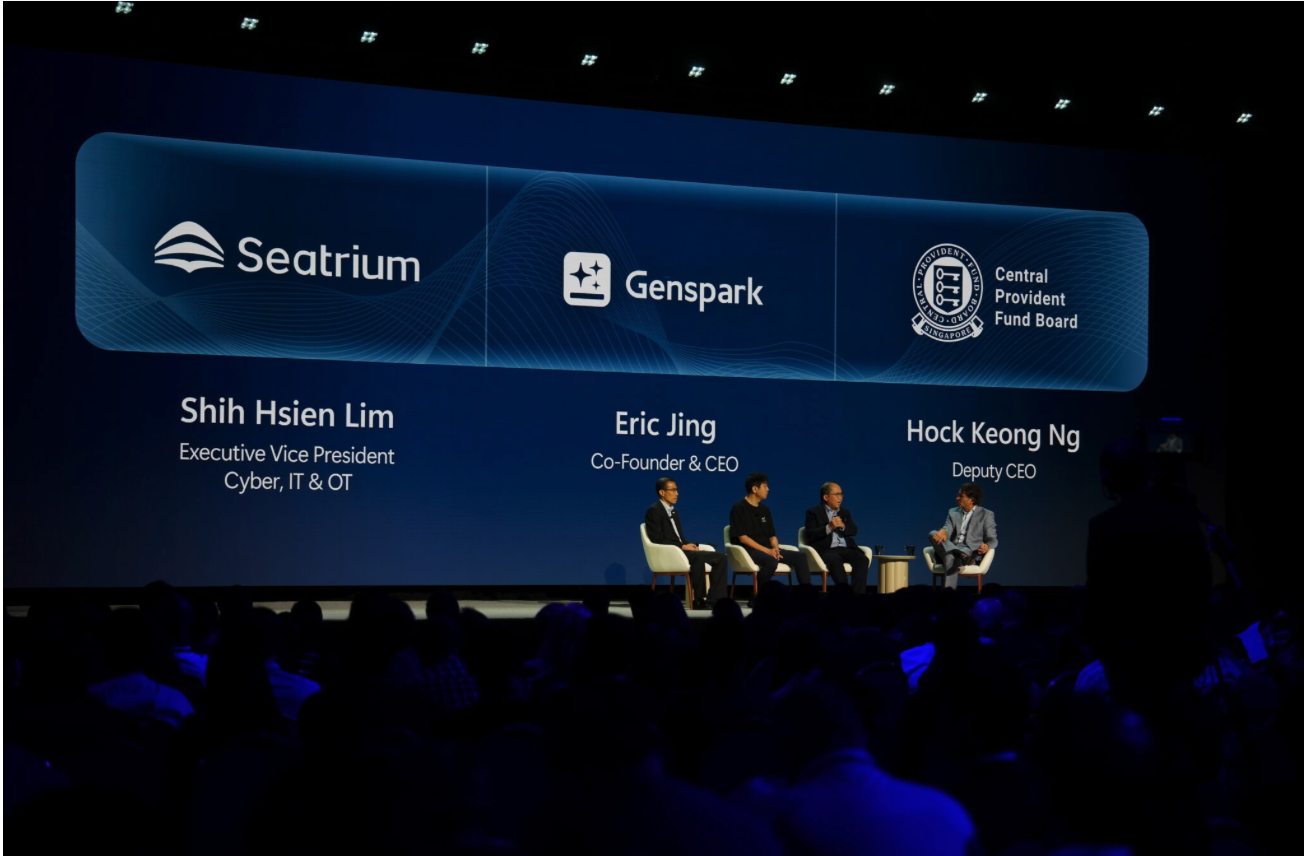
At the Central Provident Fund (CPF) Board, which has 130 million transactions yearly with citizens and residents, its focus has been on encouraging its own workforce to use AI to improve their work, said Ng Hock Keong, its deputy CEO for infocomm technology (ICT) and digital services.
Bringing AI into everyday work across the organisation resulted in employees spending less time on routine tasks and more on the work that matters most, he explained.
As an example, AI tools are used at the CPF Board’s contact centre staff to take and transcribe online and offline conversations with customers, freeing up time for its staff to focus on areas that need human support.
On top of time savings the other value the CPF Board sees, is buy-in from employees. It is reiterating the organisation’s message for its employees, that the future is about working with AI tools, not the AI tools displacing workers.
The approach is deliberate – give staff the tools first, and let better service follow, said Ng.
On the other end of the spectrum of early AI success stories is Genspark, an AI-native company. It reached US$250 million in annual recurring revenue within 12 months of its launch, making it one of the fastest-growing AI companies in the world.
Its big bet is on agents. Rather than answering questions, its platform carries out tasks, taking a user from an idea to finished work.
Eric Jing, co-founder and CEO of Genspark, explained that internally, the company runs on agents. “Every employee has one, drawing on a shared company brain that holds the organisation’s collective knowledge, plus separate team brains for individual groups.”
The agents keep information synchronised across the business, so staff spend little time coordinating with one another directly. There is only one regular company-wide meeting each week.
A customer success team of three or four people looks after all of its clients, and its software is written by AI in a collaborative process.
Built on Microsoft Azure, Genspark’s AI serves over 7,000 users worldwide, and its growth suggests strong demand for AI that completes jobs rather than merely assisting with them.
Meanwhile, Seatrium, the offshore, marine and energy engineering group, is applying AI to some of the most complex physical assets in the industry.
Working with Microsoft, the company is developing what it describes as a first-of-its-kind digital twin foundation, a virtual model of its operations designed to optimise how assets are used, streamline project delivery and support faster, data-driven decisions.
The aim is greater productivity and reliability as it builds offshore energy infrastructure for customers around the world, said Lim Shih Hsien, Seatrium’s executive vice-president for cyber IT and OT.
For an engineering business where projects run for years and delays are costly, better data at every stage translates directly into competitiveness, he added.
Though small in number, the three cases could reflect a growing trend. IDC research commissioned by Microsoft found that 17 per cent of Singapore organisations qualify as Frontier Firms – companies with mature AI strategies and stronger returns – against 10 per cent globally.
Sixty-eight percent of Singapore organisations report significant or transformative outcomes from AI, and 41 per cent say the technology is growing revenue or creating new revenue streams, said the report.
The survey which covered 200 Singapore respondents, highlights AI investment, breadth of use, agentic adoption, skills and confidence in handling AI risk and outcomes.
Chia Wee Luen, managing director of Microsoft Singapore, said the country already ranks second in the world on AI diffusion, and that the next chapter will be defined by who scales with trust.
Key to that is rethinking workflows, equipping people to work confidently with AI, strengthening governance and measuring value, he noted.
Microsoft is backing that ambition with capital. The company says it is on track to invest US$5.5 billion in Singapore between 2025 and 2029 in cloud and AI infrastructure and operations.