Singapore gives a data centre operators almost nothing to work with. There is no winter, no cool season and very little spare land. Every watt is counted because the government counts it.
Yet Equinix says its newest facility here, SG6, will run at a power usage effectiveness (PUE) of about 1.2 at full load, a figure more often heard in Scandinavia than a degree north of the equator.
The US$290 million facility, opened on November 6 by Senior Minister of State for Ministry of Digital Development and Information, Tan Kiat How, is Equinix’s sixth in Singapore.
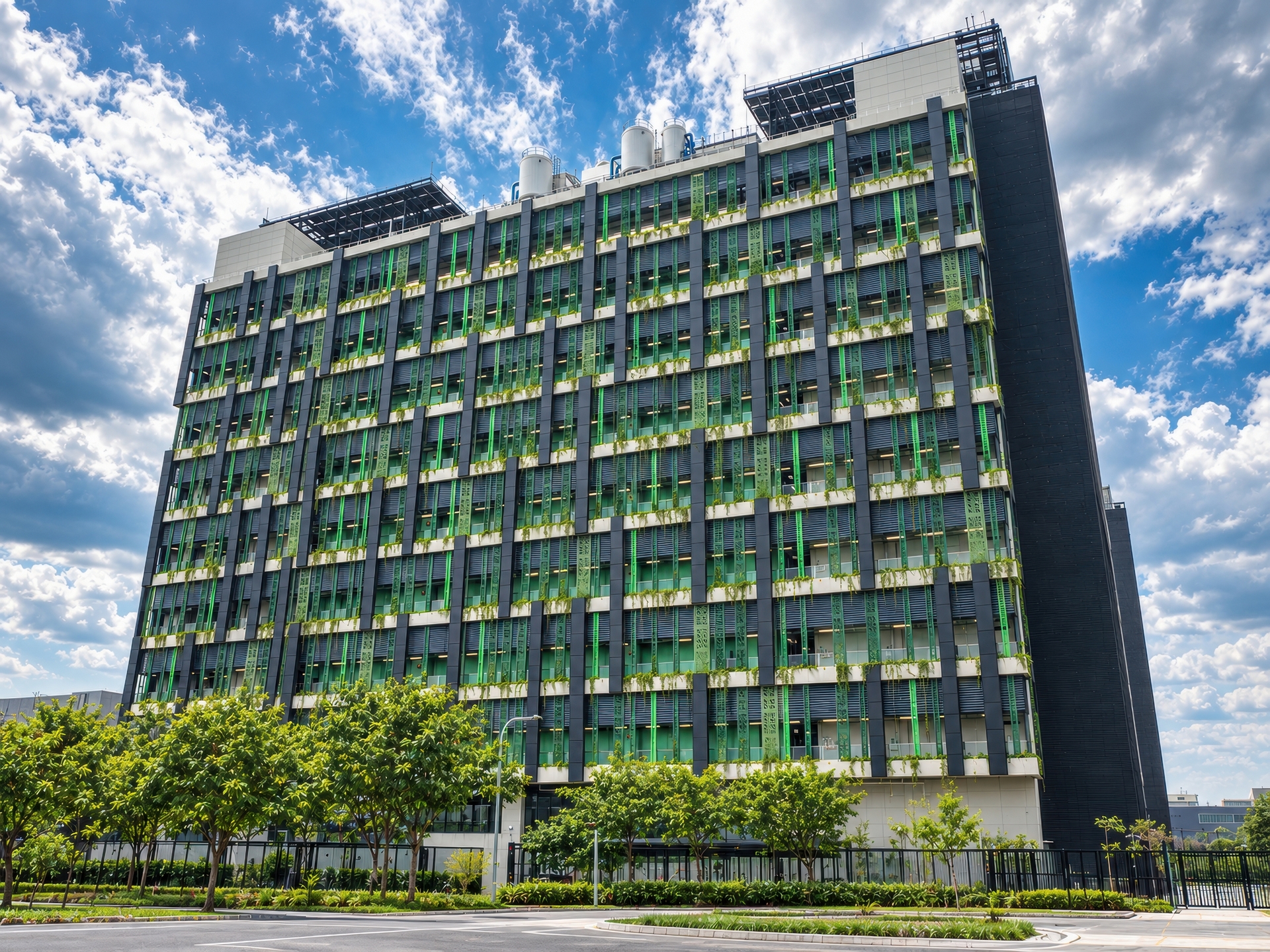
It is the first the company has built under the government’s Data Centre-Call for Application (DC-CFA) framework, which releases scarce capacity only to operators that commit to hard efficiency targets. Phase one holds about 1,550 cabinets, rising to 20 megawatts of IT load at full build-out.
“You don’t get the benefit of free cooling anytime during the day,” said Samson Jeremiah, who leads design delivery for Equinix in Asia-Pacific and has worked on SG6 since 2019. Hitting 1.2 here, he said, was “quite remarkable”.
Engineering around the heat
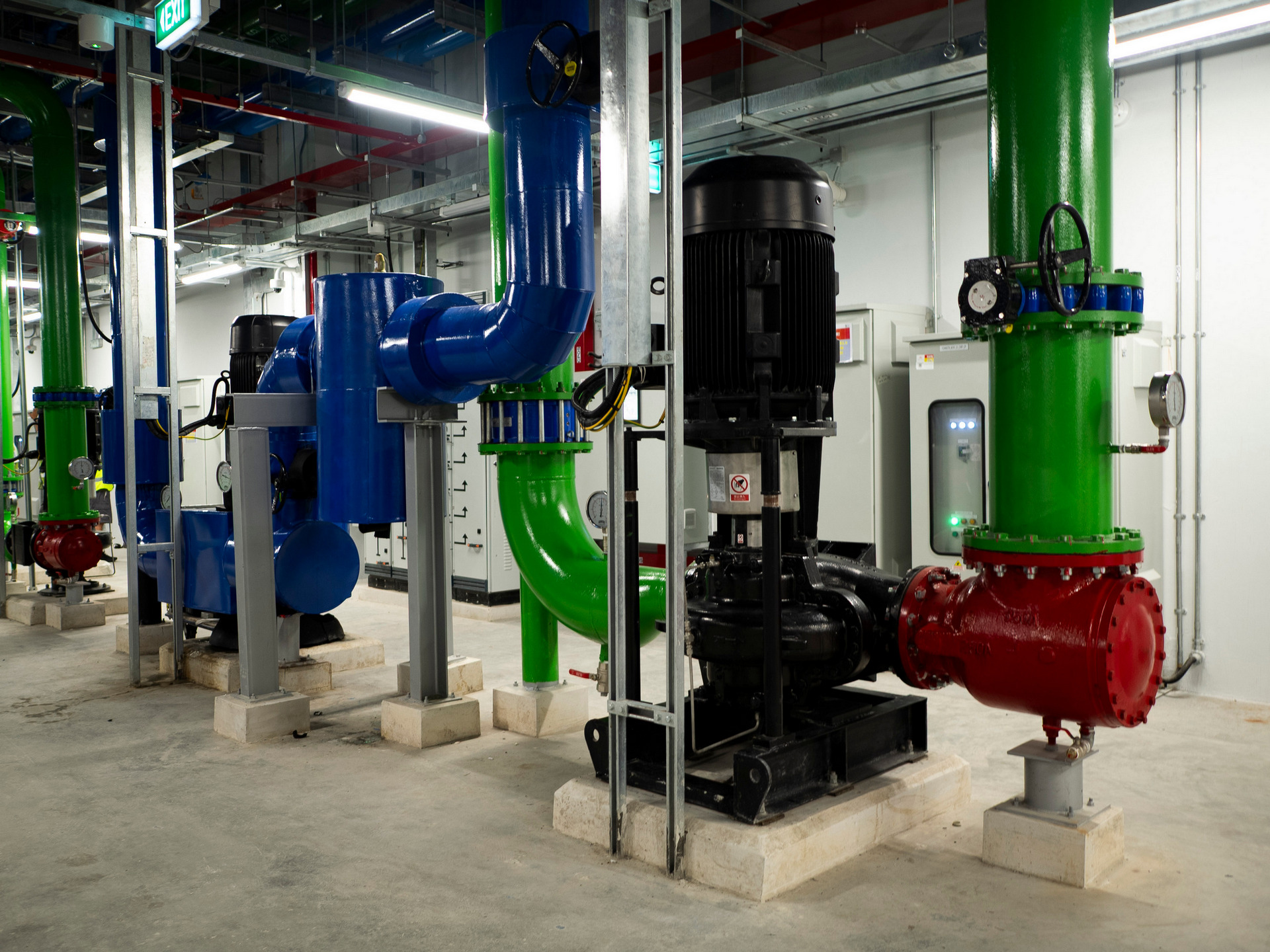
Cooling is the biggest drag on PUE, so that is where the engineering went. SG6 uses magnetic-bearing chillers, which lose less energy to friction than conventional units.
The cooling equipment is built with headroom, so even when the building is full, the chillers never run flat out. Like a car engine, they use less energy cruising than at full throttle. Singapore also cools a little at night, and SG6 uses those few hours of cooler air to give the chillers a break.
In the data halls, Equinix’s patented cooling arrays sit alongside liquid cooling for dense graphics processing unit (GPU) racks.
The building makes some of its own power. About one megawatt-peak of solar is built into the roof and facade, including vertical solar panels, still rare in Singapore because neighbouring towers usually cast shadows. Jeremiah admitted the team is “still in the learning phase” and that SG6 is lucky its neighbours are low-rise buildings.
Green strips on the facade were designed in-house; their cooling effect will not be known until the plants cover the wall.
The less visible choices matter too. The concrete is locally sourced and low-carbon, using recycled ash in place of new material. Rainwater is harvested for irrigation and the cooling towers. Together with NEWater, the facility reduces reliance on potable water.
Equinix also requires customers’ servers to meet Singapore’s SS 715:2025 energy-efficiency standard – which demands that equipment be able to run safely at up to 30 degC – pushing the efficiency mandate past its own walls and onto tenants’ hardware.
A bet on inference, not training
The efficiency push had a useful side effect. “Because we pushed the PUE to 1.2, we actually built the data centre to be AI-ready,” said Yee May Leong, Equinix’s Singapore managing director. SG6 was designed for sustainability first. The liquid cooling and power density came with it.
Equinix is not chasing the 100-megawatt training clusters that are going up elsewhere.
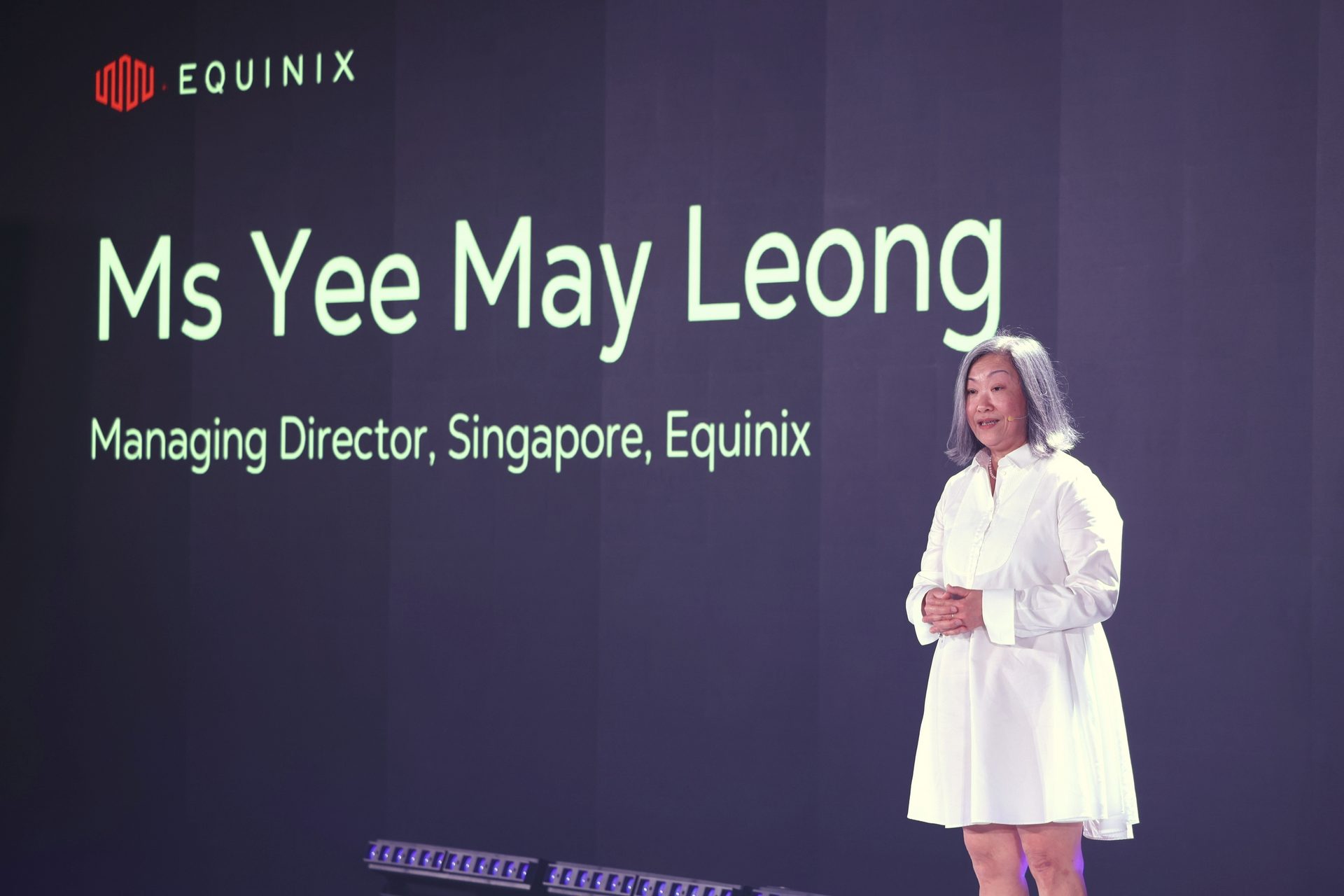
“We are also not GPU-intensive,” Leong said. The bet is on inference, which she expects to make up half of AI workloads by 2030, and on interconnection. She said 17 of the 31 subsea cables landing in Singapore terminate in Equinix facilities, and the company counts over 1,000 local customers.
“(AI) Agents don’t go to bed,” she said. Inference serving them has to sit close to users, clouds and networks.
CEO Adaire Fox-Martin, who was present at the opening of SG6, framed AI as the company’s third inflection point, after neutral network exchanges and hybrid cloud. Running it at scale with control and sovereignty, she said, poses “challenges that compute alone cannot solve”.
SG6 also hosts a co-innovation hub with the National University of Singapore’s Energy Solutions Hub. Due in 2027, it will test direct-current power, AI-driven digital twins for cooling, direct-to-chip cooling and the embedded water footprint of electricity.
Equinix has already signed AI customers for SG6. Leong would not name them but said they comprise the usual suspects of AI users and providers.
An SG7 data centre will be going up in Singapore’s Jurong Island as Equinix has been awarded the second DC-CFA round in August. It must run on new green-energy pathways such as biomethane, ammonia or fuel cells.
Equinix has chosen two but has not decided on which two yet. With SG6, Equinix has six data centres in Singapore, all of which have achieved 100 per cent renewable coverage since 2020. Globally, Equinix operates more than 280 data centres with about 11,000 customers across 36 countries.