
Jensen Huang has spent four years as the AI boom’s frontman, chief cheerleader and roving foreign minister. On Sunday, he hit the headlines for all the wrong reasons.
In a memo to staff, the Nvidia head honcho confessed to having an affair with Alice Huang, a former executive at Megaspeed International, a Singapore-based cloud computing company that has reportedly bought billions of dollars worth of Nvidia chips.
United States intelligence believes she was an asset of China’s Ministry of State Security, sent to learn about Nvidia’s most advanced chips and nudge the company to sell them to Beijing. China calls the story a smear. Nvidia’s board says it has no reason to believe secrets leaked.
Whatever investigators find, the wound is self-inflicted. The man who dines with President Donald Trump at Mar-a-Lago and shakes hands with President Xi Jinping in Beijing, who sits on the President Trump’s science and technology council and lobbies Washington on export controls, is said to have walked straight into the oldest trap in the spy manual.
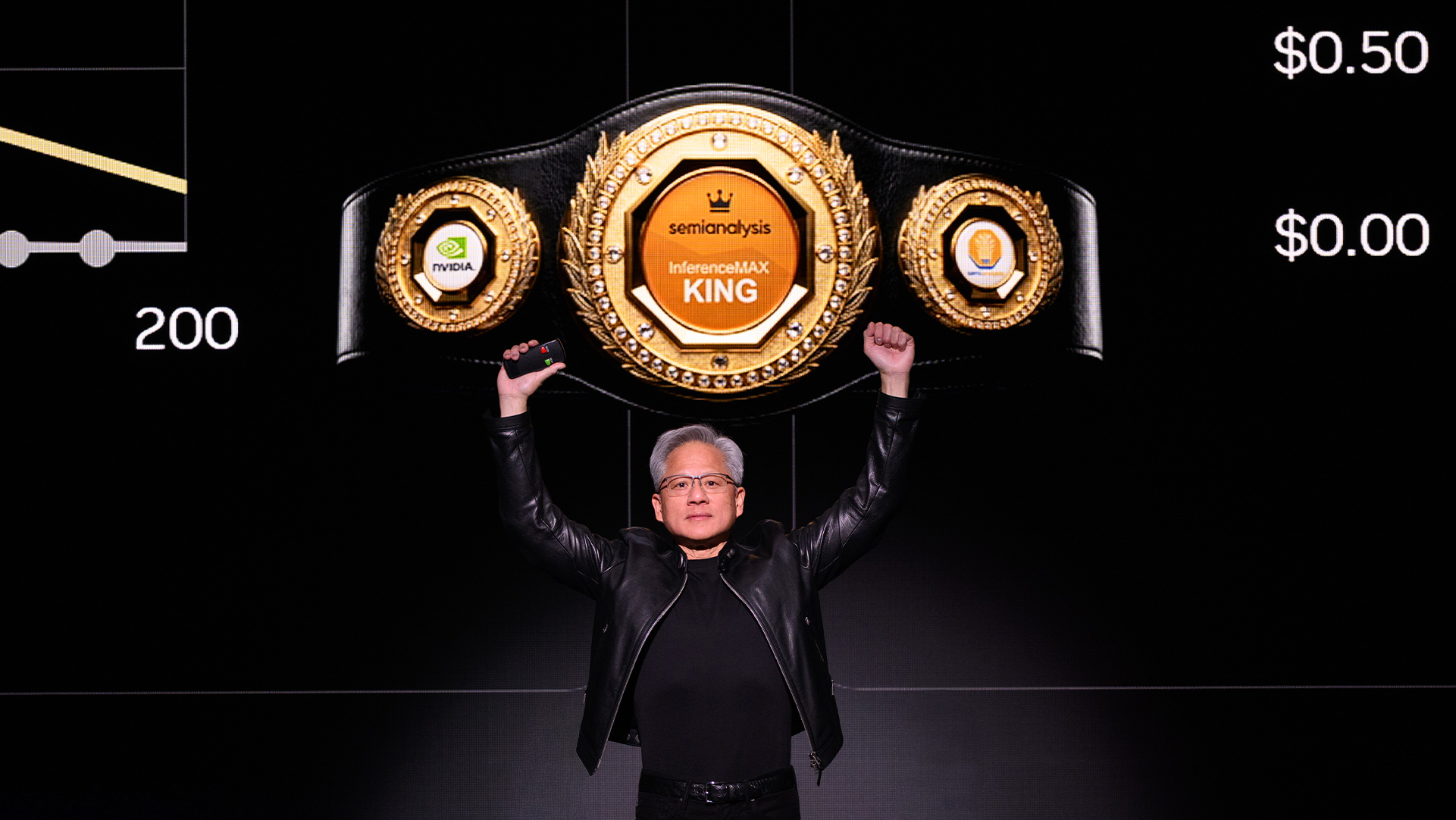
Alice Huang was a Chinese businesswoman with a finance background and no computer science degree, who became the controlling shareholder of Megaspeed International, a key buyer of Nvidia’s most advanced chips. None of that set off alarms for Huang?
That lapse is what has many people riveted. For investors, the AI industry and the geopolitical chessboard, though, the affair is not the main event.
Perhaps more intriguing is how Nvidia is run like a “sole proprietorship” that happens to be worth about US$5 trillion. That discovery has put Nvidia under a harsh spotlight from Washington, Wall Street and regulators. When one company sits at the centre of the AI economy, its wobble moves markets and rattles an entire industry.
The market’s first verdict to the affair was cool. Shares closed 4.3 per cent lower on November 9, a day after news of the affair broke. Nobody is cancelling Blackwell graphics processing unit orders. What is being re-priced is the risk that everything runs through one man.
Huang has stood at the absolute epicentre of the AI explosion. Frontier AI companies train their flagship models on Nvidia’s GPUs, making its architecture the linchpin of America’s lead in the global AI race.
Equal parts chief executive and geopolitical strategist, Huang has spent years balancing Washington’s strict export curbs against Beijing’s boundless demand for AI compute.
That dual role made him indispensable, creating an acute risk that transformed his private conduct into a matter of corporate – and national – security.
Now look behind Huang. He runs Nvidia with anywhere from 36, by one leaked list, to 60 direct reports, by his own telling. He holds no one-on-ones, and calls this approach speed. It is also a wheel with a hub and spokes but no rim. There is no chief operating officer, no president, no heir apparent.
Nvidia’s website names just four executives including chief financial officer Colette Kress, as company officers in his leadership team. Huang’s co-founder Chris Malachowsky is Nvidia Fellow, who serves in a technical and advisory capacity. None carry the geopolitical weight or the architectural vision to take the wheel tomorrow.
The word “succession” does not appear in Nvidia’s latest annual report. Microsoft uses this word 25 times in its annual report. Asked in January this year how long he would stay, Huang said: “As long as I deserve it”.
Both his adult children work at the company – one has been there for about six years and the other for about four years. None of this adds up to a plan.
Then there is the board. Nvidia’s board of 10 directors – excluding Huang – comprise investors and corporate bigwigs, who have all retired from business.
A founder who runs everything needs directors who can say no. Nvidia’s board has no chair. Investors Tench Coxe and Harvey Jones have been directors since the company was founded in 1993. Another director Mark Stevens, also an investor, has served for nearly as long.
All three are billionaires on Nvidia stock. The directors’ median tenure is 15.5 years, longer than those serving at Apple or Amazon.
Leading the internal investigation team is another Nvidia board director, lawyer Stephen C Neal, chairman emeritus and senior counsel with US legal firm Cooley.
Yet even as the board initiated the inquiry, it simultaneously reaffirmed its total confidence in Huang and stated there was no indication of a breach. This is a curious strategy.
The financial results for the third quarter of its fiscal year ending 2027 will be announced on November 17. Earnings will show the business humming. Demand for Nvidia’s GPUs should remain high.
How long the Taiwanese-born American, 63, stays at the helm is now an open question. On his calendar will be congressional hearings and calls to reassure investors, customers and partners that the vision has not changed. Would this impact the development of the next big chip?
Though Huang is in the spotlight now, the board will also face pressure to change. It may have to hire a chief operating officer and be a more effective counterweight to Huang. Perhaps name an independent chair who was not in the room in 1993. Or publish a succession plan that shareholders hold the board to.
My coverage of Nvidia and Huang goes back to the early GeForce gaming cards, long before those same graphics engines were repurposed to fuel the global AI boom. Across 33 years of dominance, the answer to “What if Jensen steps down?” was always met with “He won’t.”
Now, an alleged honeytrap may just dismantle that certainty. With the current crisis, Nvidia faces a defining moment – it has to decide whether it exists as Jensen Huang’s company, or becomes more of a public enterprise.