
Salesforce has come up with a redesigned Slackbot personal assistant that promises to be a “deeply personal agent for work” with added intuition from the latest AI smarts.
More than a standalone assistant now, the new Slackbot is expected to draw on the context of the work that corporate users generate on Salesforce’s popular Slack online collaboration tool.
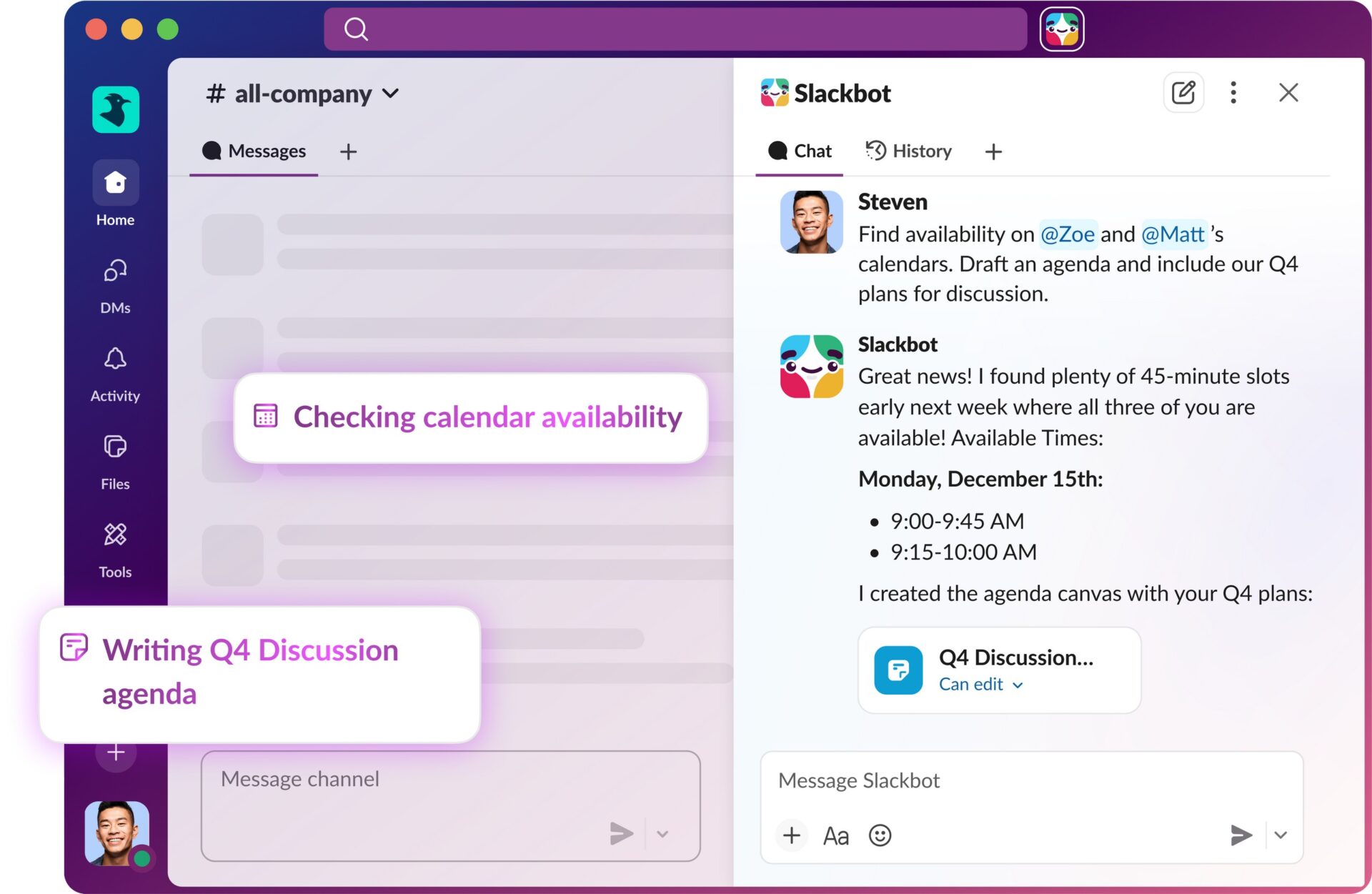
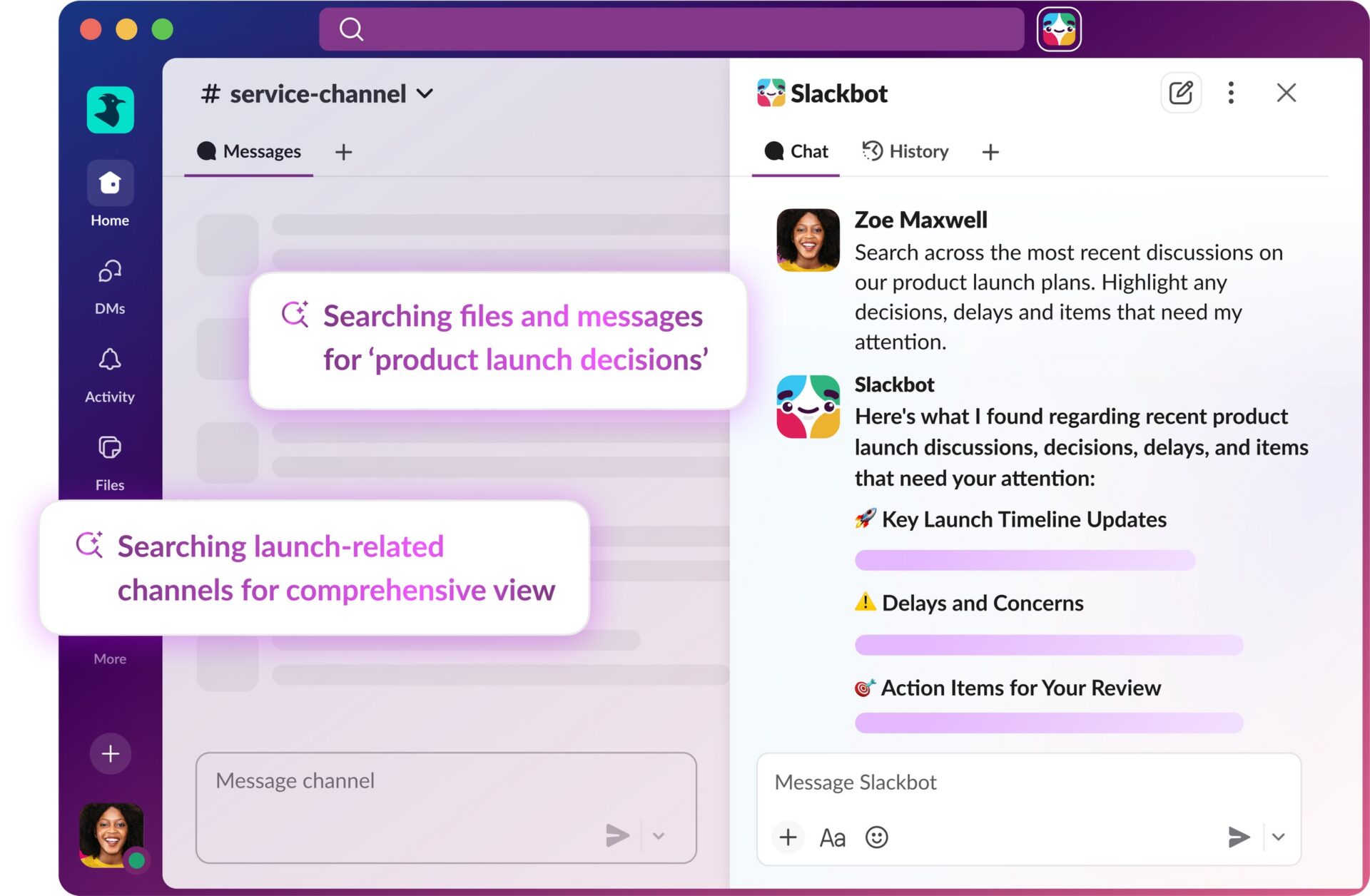
This means it will make use of conversations, files, and team norms – while respecting existing permissions and access controls – when acting as a virtual sidekick. It aims to help users find answers, organise work, create content, schedule meetings, and act, all within Slack.
The revamped AI agent is embedded directly in Slack, as part of an ongoing rollout to customers in the next two months, according to Salesforce, the online customer service software company.
Launched last year, Slackbot is part of the Salesforce’s broader “agentic enterprise” push. This means incorporating more smart AI agents in an enterprise that not only suggest answers but take action on behalf of users.
The Slackbot is able to help answer questions like “Where is that important file someone sent me?” or “What did we decide about the Q4 budget?” or respond to “Catch me up on Project Phoenix.”
Salesforce says Slackbot can also summarise content like recent discussions or customer history into a single briefing. It can also draft content like meeting notes and project updates. Plus, like a handy assistant, it helps manage a workday by finding time on calendars or scheduling meetings.
What’s a big deal here, says Salesforce, is that it has reduced the adoption curve. There is nothing to install, learn, or anything new to manage, as it is built directly into Slack, it claims.
Just as important is context – something that many early AI efforts fall down on because they do not have the real-world data to learn from and take smart actions with. Like other AI proponents, Salesforce is pushing its AI tool as one that is grounded on contextual data.

Most other agents exist in separate apps, and would therefore lack context, miss nuance, and force a user to jump between tools to get anything done, according to Salesforce. The result, it says, is work that feels impersonal and disconnected from how someone operates.
Parker Harris, Salesforce chief technology officer, described the Slackbot as “the front door to the agentic enterprise,” aiming to bring AI grounded in company data, workflows, and Slack conversations into the flow of work.
In time, the goal is for Slackbot to be able to figure out which systems are involved and collaborate with other agents, coordinating the work across systems and behind the scenes. This will do away with users having to hunt for the right agent or tool.
Besides Salesforce’s Slackbot, other enterprise AI assistants that offer the advantages of improved productivity and automation of certain tasks include Microsoft Copilot, Google Gemini, Zoom AI Companion.