
At the ATxSummit two years ago, conversations revolved around how AI could drive digital transformation, bridge the digital divide, power smart cities and support sustainable growth.
Singapore also unveiled major national initiatives including its Green Data Centre Roadmap and the National Quantum Strategy.
This year, the mood at the annual technology summit in Singapore was markedly different. Over two days on May 20 and 21, the conversations zeroed in one issue: Accountability.
The leap from AI chatbot to agentic AI or autonomous agents emerged as the summit’s most consequential theme, discussed in almost every keynote, panel session and fireside chat.
AI has moved from merely generating text to a system that takes actions. It books appointments, executes workflows, makes decisions and collaborates with other AI systems in multi-agent environments that no single human oversees in real time.
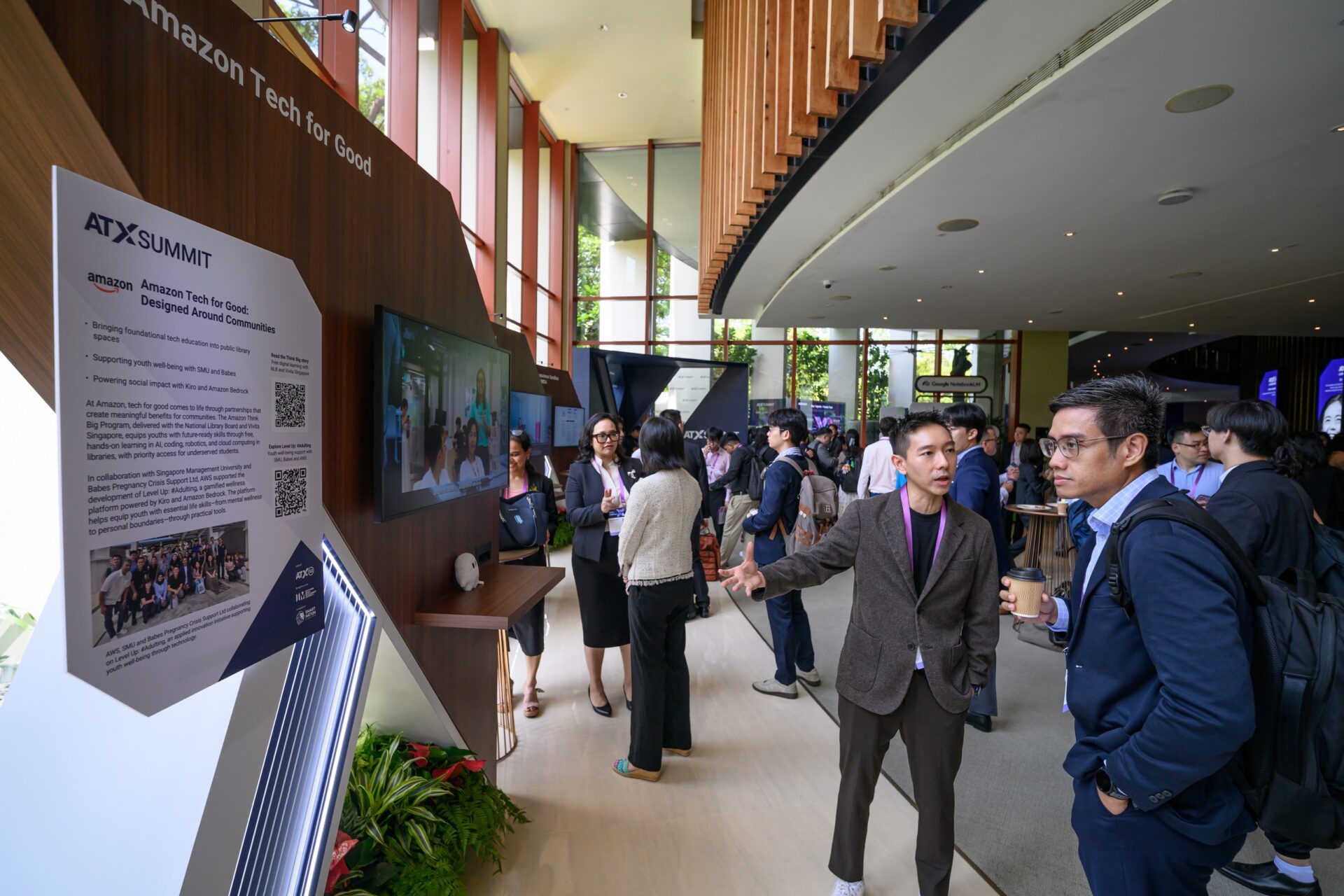
The attendees, largely AI optimists – otherwise they would not have been at the conference – came looking for answers from the builders, researchers and users of these autonomous systems. Their central questions were no longer about capability, but about trust, governance and accountability.
There was standing room only at many of the sessions. Attendees jostled for seats while conversations spilled into corridors, coffee queues and the dining outlets around the Capella Singapore hotel where the event was held.
The speaker line-up reflected the gravity of the moment. Yushua Bengio, professor of computer science at the University of Montreal and one of the “godfathers” of AI, warned about existential and societal risks posed by advanced AI systems.
Ajay Banga, president of World Bank, returned to a subject he often champions: How to create meaningful employment opportunities for the 1.2 billion young people in emerging markets like Africa, who are expected to join the workforce in the next decade.
Even among the policy makers, business leaders and tech experts who embraced AI, one tension lingered beneath the optimism: Jobs.
Yet, alongside concerns over employment and governance, another theme quietly gained momentum: Physical AI.
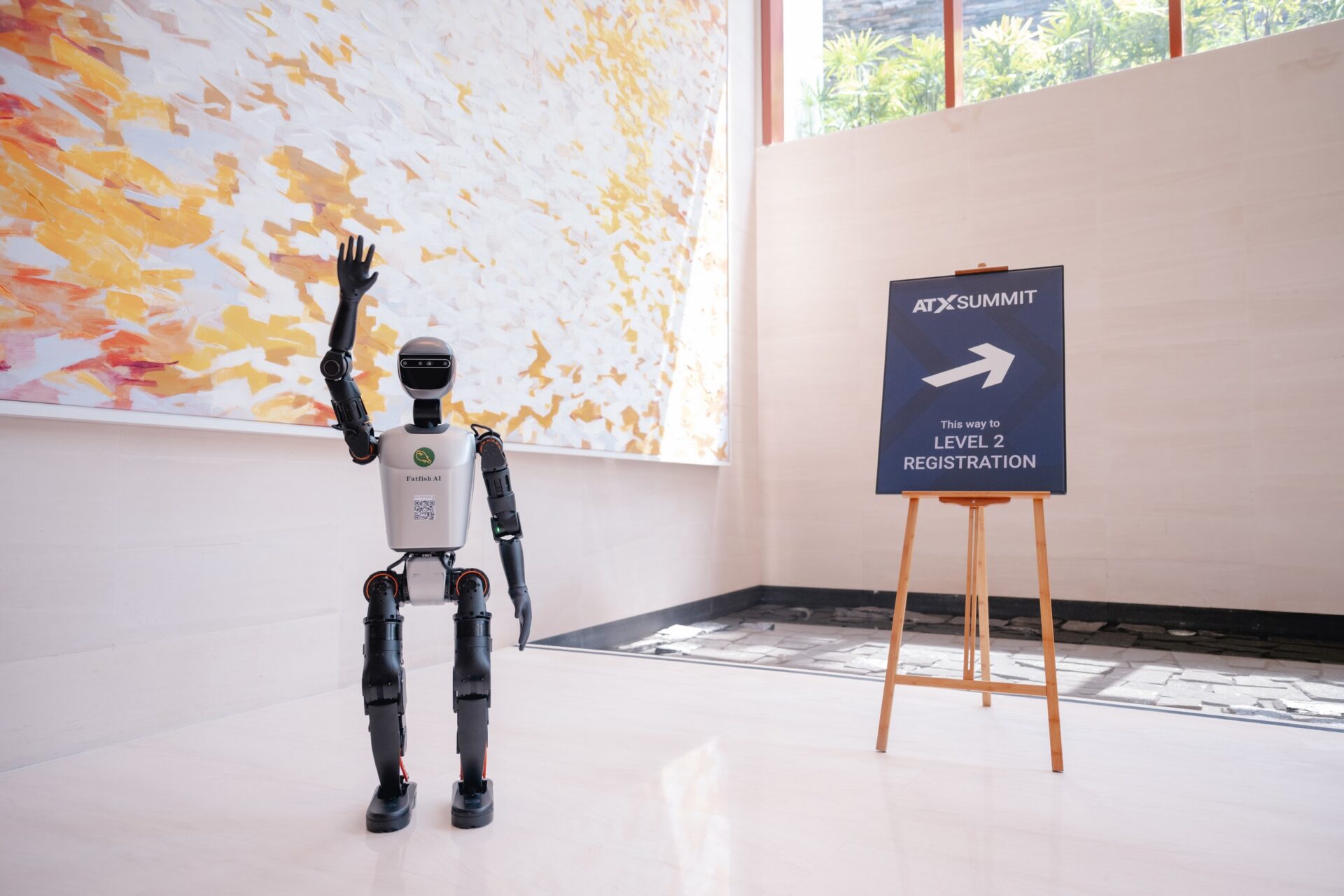
Robots, humanoid or not, did not roam the grounds of Capella but robotics and embodied AI featured prominently in discussions about the next frontier of intelligent systems.
Dr William Dally, Nvidia’s chief scientist and senior vice-president of research, painted a future where robots would not merely react, but anticipate and imagine the future.
Using techniques such as vision language action and world action models, engineers and scientists are training robots to translate visual cues and predictions into physical movement.
These models allow robots and robotic arms to see and understand images and text together, interpret their surroundings and decide what actions to take next.
Accountability moves centre stage
It became increasingly clear at ATxSummit that agentic AI is no longer theoretical or an experiment, it has moved into production.
Accountability in autonomous systems depends heavily on the availability of accurate, real time and comprehensive data. AI agents cannot navigate around messy organisational data the way humans often can.
Janet George, Mastercard’s executive vice-president of AI, noted during a panel session that a person can work around inconsistently labelled spreadsheets or incomplete records. An agent cannot – it fails and more dangerously, it proceeds to make a wrong assumption.
The implication for organisations is clear – fix the data problem, including the vast amounts of unstructured data before deploying AI at scale.
Another recurring insight was that organisations needed to remain grounded in real customer needs rather than become distracted by technological novelty.
“Fall in love with the customer problem, not the solution,” advised Suthen Thomas Paradatheth, Grab’s chief technology officer, and who led the development of the company’s autonomous public ride service in Punggol Digital District this year.
Tests and simulations of the autonomous systems must be conducted before their public introduction to ensure that the correct outcomes. This leads to the next significant trend, trust.
Trust is not a brand issue, pointed out Mastercard’s George. It is a design issue which must be built in from the start, not bolted on as an after thought, she stressed.
That principle becomes even more critical in autonomous systems where extensive testing and simulation are needed before deployment in the real world.
In that sense, trust is becoming as much an engineering specification as it is a reputational aspiration.
Governance, speakers argued, most also evolve. Since agentic AI systems act autonomously and continuously, governance cannot sit at the edges of systems as an afterthought. It must happen in real time and be embedded directly into the operational architecture itself.
The urgency stems partly from growing power asymmetry between those who control AI systems and those who do not.
Computer scientist Bengio warned about the risk of misalignment – the gap between what an AI systems is optimised to do and what humans actually want it to achieve. As AI systems become more capable and autonomous, the gap could widen dangerously for businesses and society.
Tomorrow’s workforce
Notably, the emerging picture of work discussed at ATxSummit was not one where humans disappear, but one where humans and AI agents increasingly operate together in blended workforces.
AI agents will likely handle repetitive execution tasks, while humans oversee judgement context and decision making grounded in real-world consequences.
This discussion surfaced repeatedly across the summit and in conversations in the corridors. Judgement remains deeply human because it depends on context, and the ability to understand nuance when reality refuses to behave neatly.
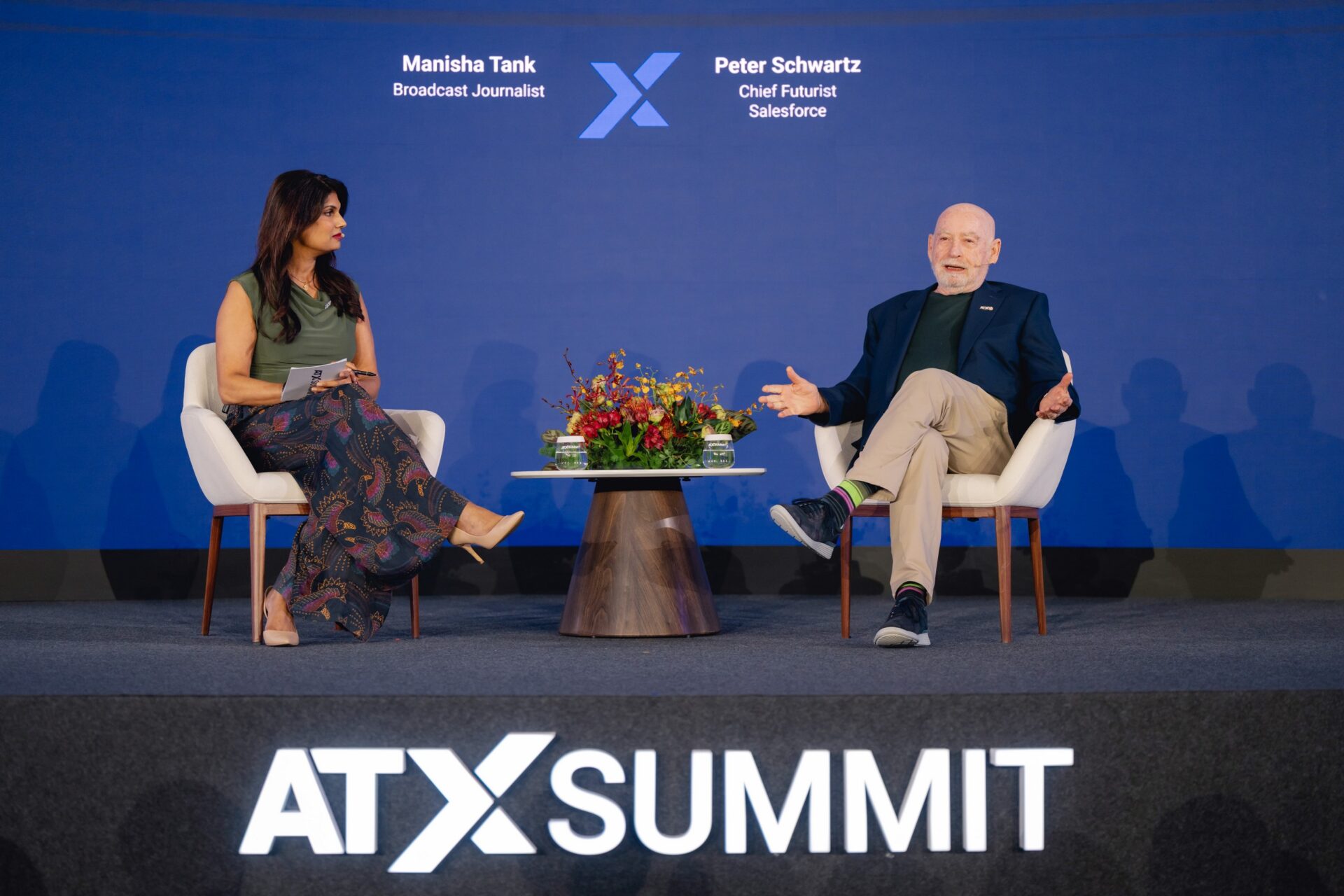
Peter Schwartz, chief futurist for Salesforce, argued that empathy will become the most important human quality in tomorrow’s workforce. That is the human quality autonomous systems cannot copy.
The World Bank’s Banga returned the conversation to economic reality. Over the next decade, around 1.2 billion people in emerging markets will come of working age, but only an estimated 400 million jobs are expected to be created globally.
One critical priority, he argued at a fireside chat, is ensuring that the private sector continues receiving sufficient support and investment to create opportunities for these new workforce entrants.
As the summit closed, it struck me that one important issue still lingered beneath all the conversations around AI – change management.
I asked tech consultancy Capgemini about the impact AI will have on organisations and their workforces. Its CEO for Asia-Pacific, Paul Margetts who was at the summit, acknowledged that AI will inevitably reshape employment, making change management more critical than ever.
Leadership teams and employees alike, he said, must understand not just the technology itself but the role it is expected to play, the organisational outcomes being pursued and how humans will continue to work alongside increasingly autonomous systems.
There is growing urgency around these conversations. Agentic AI is already moving from experimentation into deployment. For enterprises hoping to harness its advantages, change management can no longer be deferred.