
Nvidia today unveiled its much-awaited RTX Spark “AI superchip” that promises to let users run AI agents more efficiently and easily on their Windows PCs, marking one of the biggest potential disruptions to the market in decades.
Featuring some of the high performance and fast networking and memory used in AI data centres, new PCs using the Nvidia chip are expected to support multiple AI agents working for users, while also running regular Windows apps like games.
The RTX Spark will appear in laptops made by PC makers Asus, Acer, Dell, HP, Lenovo and others by the end of this year. Also expected are desktop PCs and small lunchbox-sized workstations – much like an earlier Nvidia DGX Spark machine.
Launching the new technology today at the GTC Taipei show, chief executive Jensen Huang described it as a “reinvention” of the PC after 40 years. It is designed not just for people but AI agents that need to react much faster to each step of a task it is given, he added.
In future, users will no longer fire up an app to do work but simply tell an AI agent to get their work done, using the software tools both on the cloud and on a PC, he told an industry audience here, at the eve of the annual Computex show.
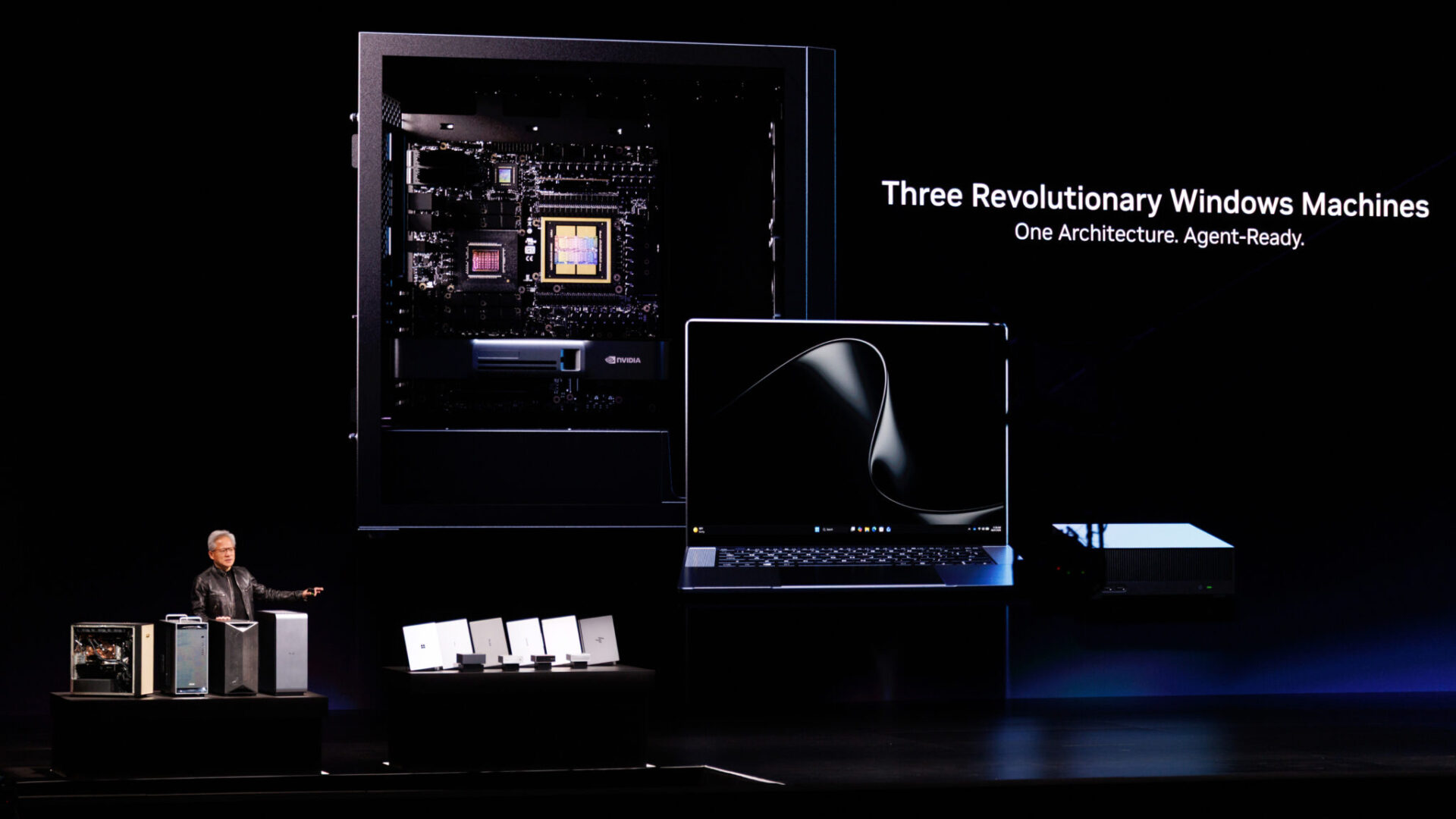
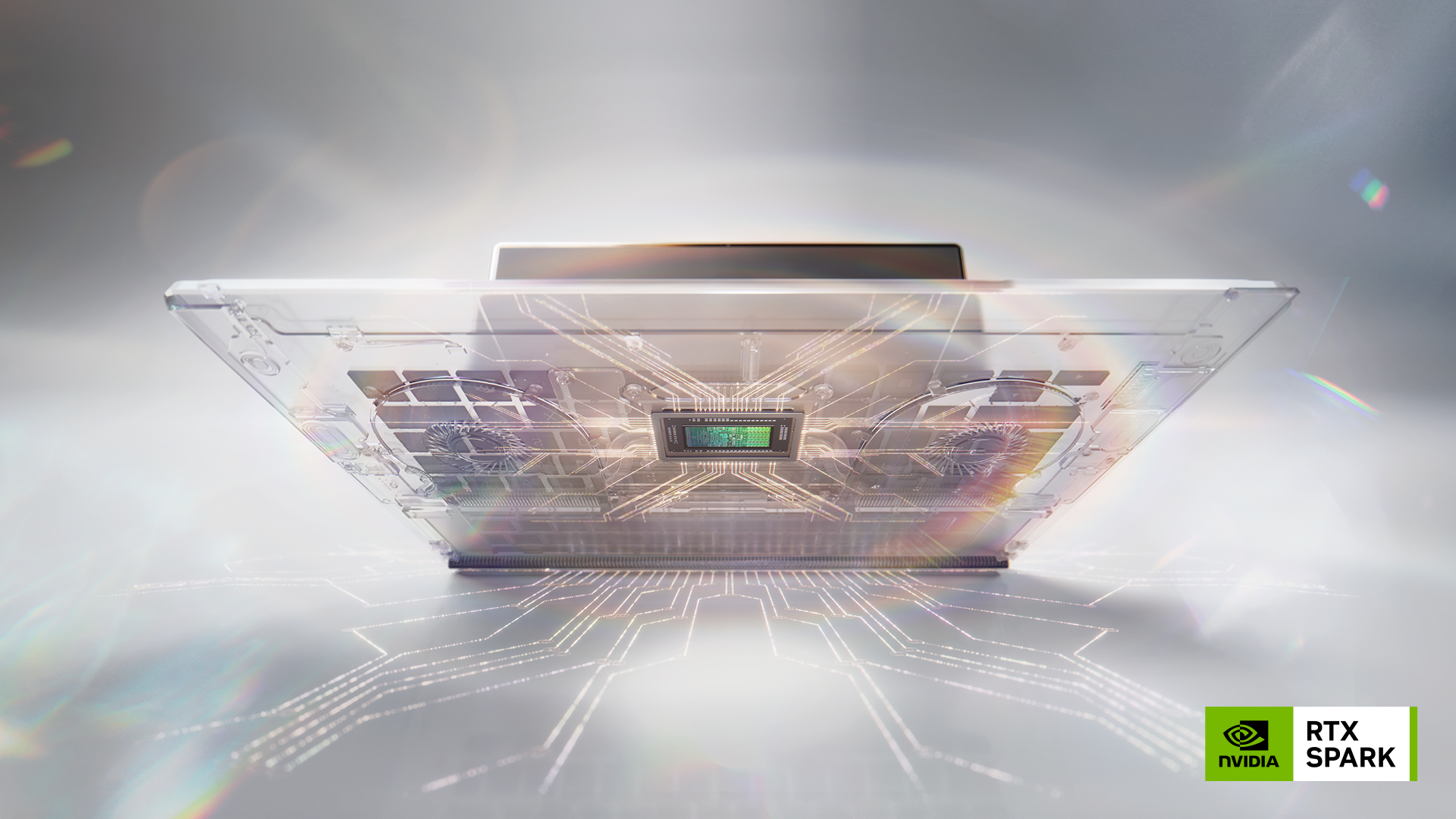
The beefy new Nvidia platform will make use of Arm-based CPUs – like Apple and Qualcomm chips – with up to 20 cores. These will be made by Taiwan’s MediaTek, a continuation of Huang’s longstanding partnership with the island, which he called “home” today.
Perhaps more importantly, Nvidia’s RTX Spark is also packed with 6,144 Blackwell RTX graphics processing unit (GPU) cores and up to 128GB of unified memory. That’s powerful enough for users to run their own AI agents and other workloads locally.
The software is just as important. Nvidia is packing in its OpenShell runtime, which lets users run AI agents more safely by limiting their access to files and networks, for example. With this, users can make use of OpenClaw and Hermes software to launch their AI agents on their own PCs and workstations.
This could be as big a win for Nvidia as Microsoft. While Nvidia’s DGX Spark “AI boxes” are popular with early adopters and businesses experimenting with Nvidia’s technology, many users today still have to set up their own software and AI tools.
With the RTX Spark aimed at Windows users now, the impact could be much greater. With a familiar interface from Windows and support for AI-ready software tools, such as Adobe’s Photoshop and Premiere, many more users can tap on Nvidia’s technology stack.
This could also grow the use of AI agents to run all sorts of tasks, from controlling smart home lighting to managing everyday schedules. For Microsoft, the collaboration is another shot at success after the dismal takeup of Copilot AI tools embedded now into Windows.
For Nvidia, this big step into PCs is another attempt to spread its technology as far as it can, now that it is at its peak and everyone wants to ride the wave with it. The RTX Spark is also a return of sorts to the company’s beginnings as a PC graphics card maker 33 years ago.
Notably, new RTX Spark PCs should run Windows games and other everyday apps without issues. During his two-hour keynote today, Huang held up two laptops running the 007 First Light and Forza games.
He also showed off how this so-called new era of PC computing would work. For example, a user can tell an AI agent on his PC to help design a house with detailed prompts of what he is looking for.
From here, it brings in resources on the PC, such as software tools for drawing up and designing the house (based on sketches) while considering the cost of materials.
The AI agent, using tools on the PC, also allows the user to add details and test various interior designs with photo-realistic mockups. When done designing, the AI can help place the house on a specific location on a map to visualise how it might look on an actual site.
For Nvidia, success hinges on how well these tools are integrated. This means developers need to buy in. Unsurprisingly, some of the earlier PCs running RTX Spark, from Dell, Asus and Microsoft itself, are aimed at creators who need the horsepower for their work.

Price is another factor. PCs have become so expensive because AI data centres have monopolised all the memory modules and flash memory available. Could Nvidia, and Huang’s strong bond with the Taiwanese semiconductor and PC ecosystem, make these RTX Spark PCs cheap enough?
Related to price is the competition from Intel and AMD, which have dominated the PC chip space for decades. In recent years, Qualcomm has entered the space as well with Arm-based chips. These chipmakers aren’t going to throw in the towel.
What’s unknown is whether Nvidia, despite its momentum in AI data centres, can muscle into the PC space more broadly and cause the disruption it believes is due.
The size of its ambition is huge, no doubt. Will it be able to focus on PCs, since it also wants to move from designing GPUs to a full rack of AI systems to entire data centres it calls AI factories?