Network storage vendor Synology is upgrading the software used on its network attached storage (NAS) and other enterprise storage appliances to help solve a key AI adoption problem – finding the data for it to work its magic.
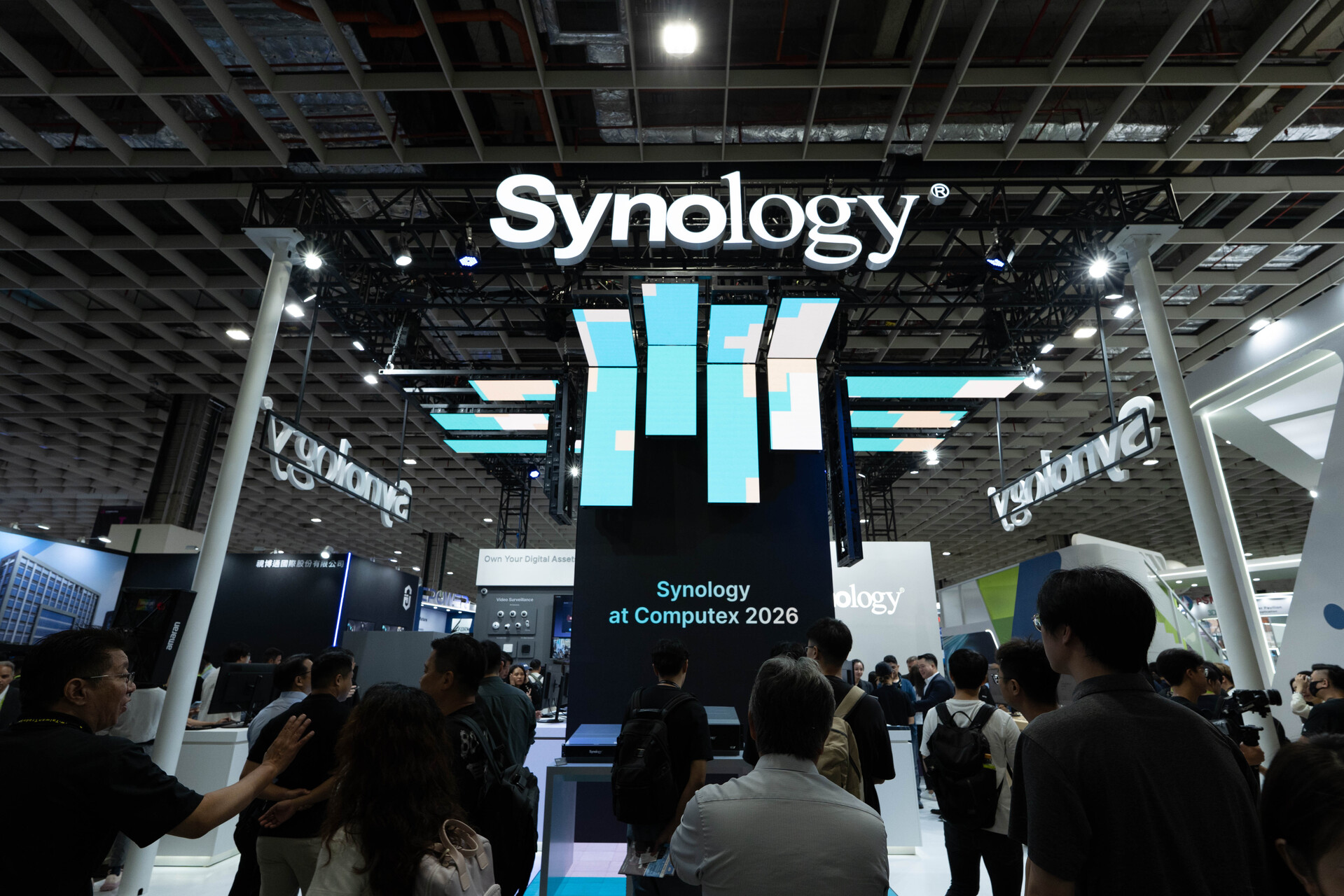
At the Computex show in Taipei this week, the Taiwanese company unveiled updates to its Diskstation Manager (DSM) software that enables users to easily tap on the right data stores to perform analysis and even set up AI agents to run tasks for them.
The new software, which is being rolled out to new and existing users, promises fully on-premises AI inference and governance. A new DSM Agent, released this week as well, orchestrates intelligent, automated workflows across the entire system.
The new capabilities can boost everyday office collaboration as well as keep track of potential threats such as data theft, according to the company.
The latest updates are aimed at further enabling large-scale deployments at enterprise customers that Synology has been eyeing in recent years. It has been seeking a move up from the small and medium business market that it’s well known for.
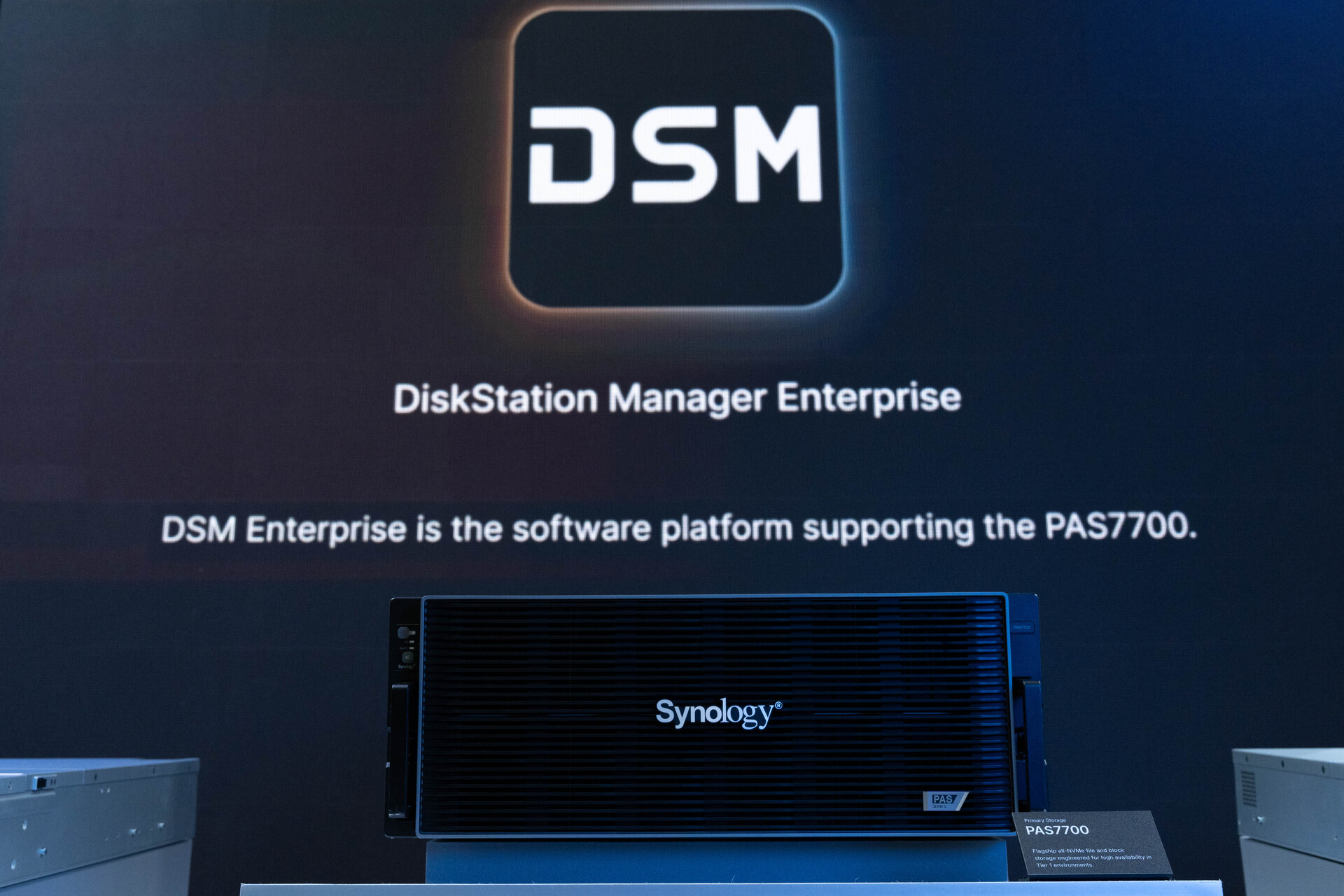
Besides AI smarts, the company’s new DSM software is also designed to make storage workload migration easier by unifying multiple systems under a single interface. It enables fast provisioning across multiple sites for businesses that are expanding fast.
Notably, the company’s new RackStation 26-series and upcoming AI Station devices both support graphics processing units (GPUs) for local AI inferencing.
The Rackstation 26-series supports language models with up to 10 billion parameters, while the AI Station will go past 100 billion, said Katherine Chiang, Synology’s product marketing manager at a Synology media briefing yesterday.
These can be an alternative path for a quick drop-in of on-premise AI capability, say, to run local large language model (LLM) systems or a retrieval-augmented generation (RAG) pipeline to pull data from other trusted sources, she told reporters.
Indeed, Synology seems to be trying to pull along customers that have been stuck in AI deployment hell. In other words, no results to show for all the effort and investment.
At the media demo yesterday in Taipei, Synology executives showed off an expanded Synology Office software suite that now embeds AI deeply into collaboration and productivity.
Why use something from Synology instead of, say, Google or Microsoft? Well, it believes its offering is close to the data, drawing on useful AI insights and enabling agents to do more work autonomously.
For example, when a colleague asks for images or reports for a marketing campaign, a user simply asks the AI to fetch both structured and unstructured files from the storage device. Images embedded in a text document can automatically available for download separately.
From here, the AI can look through previous e-mails and draft a new one with the files attached for the colleague, who had asked for it. Another time-saver.
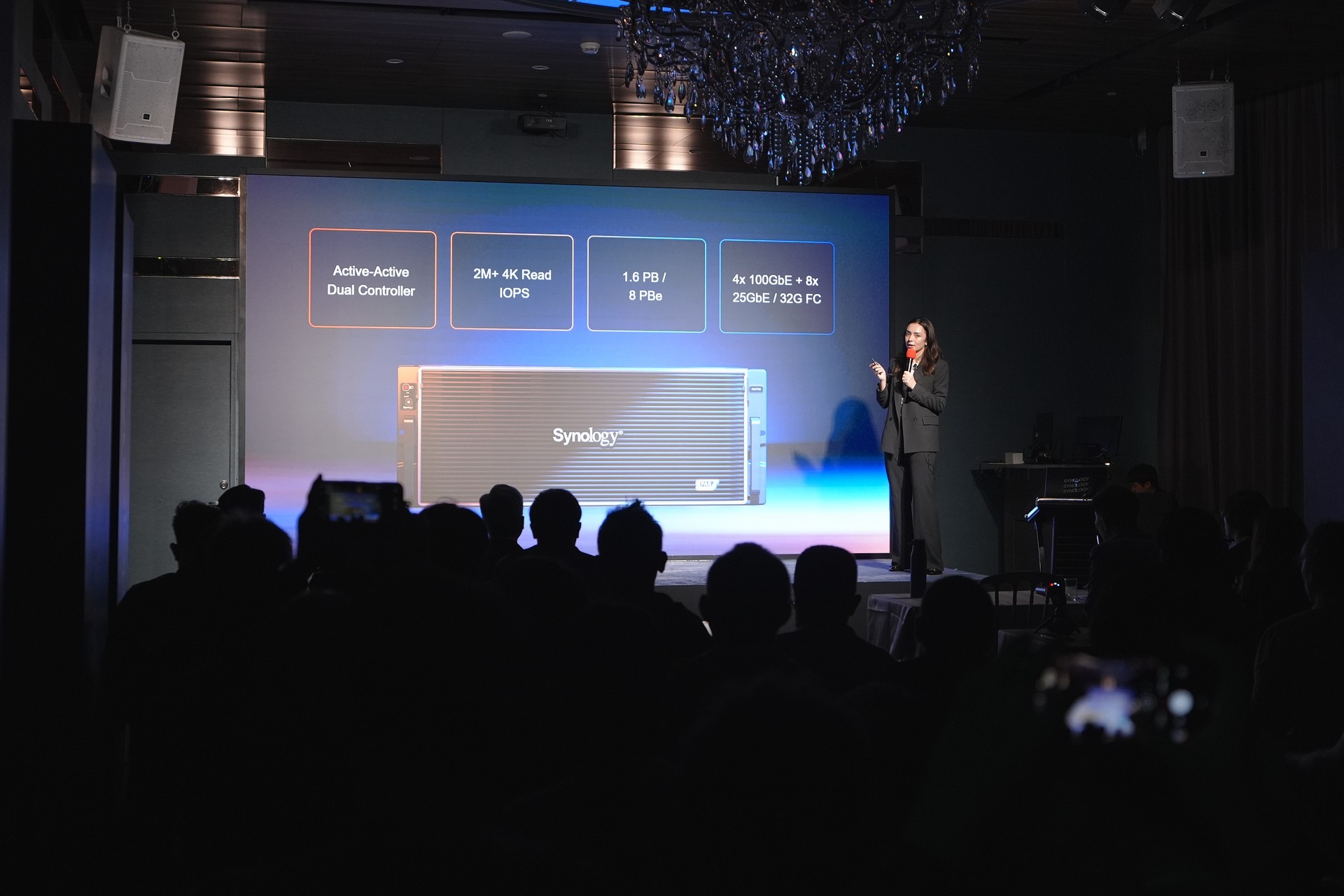
According to Synology, there are more than 18 million users of its Office Suite, with 700,000 business users and 100,000 enterprise users among them.
Queried about the types of LLMs supported by Synology, the company’s director of enterprise application group, Rex Huang, said businesses can use cloud-based AI services, self-host their own open-sourced AI or run Synology’s LLM with their own onboard GPU.
For Synology’s DSM software, the AI used is fine-tuned with an “open-source” AI, he added, describing the effort to keep track of fast AI changes as “standing on giants’ shoulders”.
The company is also beefing up security and resiliency with its updated ActiveProtect Manager. It now extends protection to different virtual environments and online platforms, including AWS EC2, Azure VM, Proxmox, Nutanix AHV and Google Workspace.
Synology promises cross-platform recovery so businesses using different cloud providers or perhaps some on-premise servers can still recover fast from, say, a ransomware attack.
ActiveProtect Manager also uses AI to detect anomalies and malware, making sure it catches these threats before they do damage and force a costly recovery process.