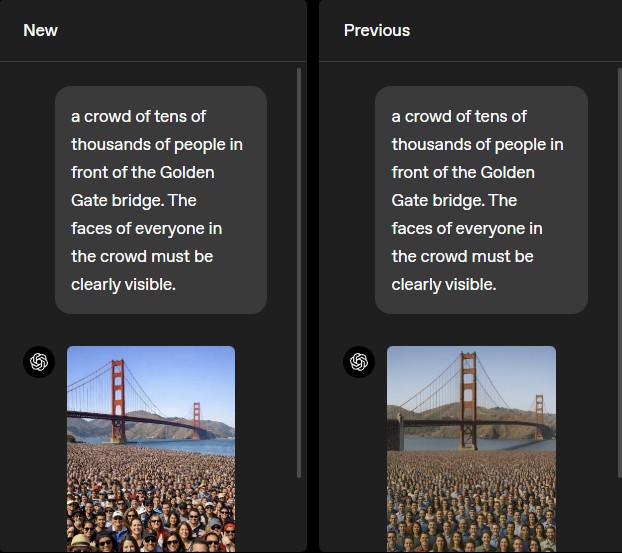
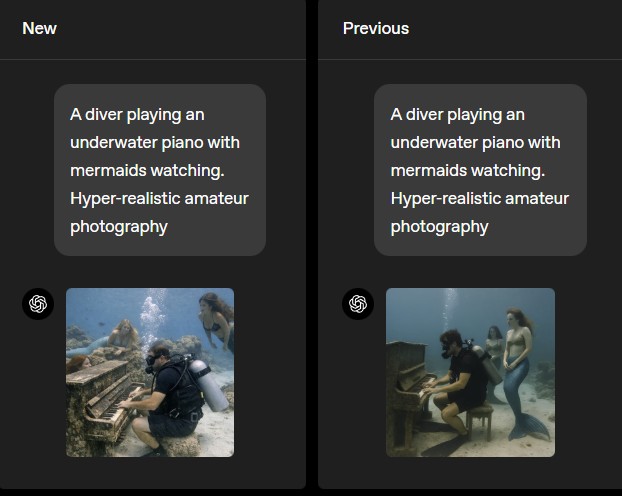
OpenAI earlier this week came up with GPT Image 1.5, the latest ChatGPT latest image generation model, which promises to deliver faster, more precise, and reliable image creation and editing for users.
The model generates images up to four times faster while preserving fine details, allowing edits to be applied accurately without disrupting key elements such as lighting, composition, facial features, and colour tone, according to the AI company.
This, it says, results in more realistic outputs, including improved clothing, hairstyles, and overall visual consistency across multiple edits.
The latest update, out from December 16, has a new Images feature that makes it easier to generate images in different styles. Users get preset options to get started quickly.
For text rendering, the model also promises to handle denser and smaller text. The model is said to improve realism in complex scenes, such as those involving multiple faces or detailed environments.
GPT Image in the API offers all the same enhancements as ChatGPT Images, with better image preservation and editing for branded assets like logos and key visuals across edits, compared to GPT Image 1.
For instance, it can generate full product image catalogues, including multiple variants, scenes, and angles, from a single-source image.
ChatGPT is evolving from a reactive, text-based product to be more intuitive and connected, said Fidji Simo, CEO for apps at OpenAI, in a blogpost. “The shift from text to multimedia and dynamic UI [user interface] is an important part of that transformation,” she added.
The new model is available now to all users on all subscription tiers (Free, Plus, Pro). It is also available via the API as gpt-image-1.5, with Business and Enterprise access rolling out later.
Going forward, ChatGPT aims to be a “fully generative UI that brings in the right components based on what you want to do,” said Simo. For example, when visuals communicate better than pure text, ChatGPT will include them.
“When you need a quick answer or the next step lives in another tool, it should be right there,” said Simo. “As we do this, we can keep closing the distance between what’s in your mind and your ability to bring it to life.”
ChatGPT aims to expand beyond text, and answers will increasingly include images, side-by-side comparisons, and clear sources to help with decisions like product or restaurant research. Users will be able to tap highlighted people, places, or products, or select any word or phrase in an answer to get more context without breaking the conversation flow.
For everyday tasks such as unit conversions or sports scores, ChatGPT will provide quick, visual responses. Writing tools are also improving – editing will happen directly within the chat or in full-screen mode, with smart options to export work as PDFs, Word documents, e-mails, or messages.
Finally, ChatGPT is growing its ecosystem of apps, enabling users to take action directly from conversations. Alongside existing partners like Booking.com, Canva, Coursera, Expedia, Figma, Spotify, and Zillow, a new app directory is launching.
This will include partners such as Adobe, Airtable, Apple Music, Clay, Lovable, OpenTable, Replit, and Salesforce, with more services and open submissions from developers.