
Despite a volatile 2025 defined by geopolitical shifts and rapid technology disruption, Singapore’s Economic Development Board (EDB) secured a robust S$14.2 billion in fixed asset investments, up from S$13.5 billion in 2024.
As global firms sought a “flight to stability,” Singapore leaned into its reputation as a trusted, well-connected hub, doubling down on talent and speed-to-market. These commitments are expected to generate about 15,700 jobs and S$18 billion in value added.
EDB chairman Png Cheong Boon described 2025 as a volatile year with companies having to grapple with multiple uncertainties from implementation of the global minimum effective tax to America’s Liberation Day tariffs.
A lot of sense-making was undertaken by engaging with global business leaders to better understand how the uncertainties affected their business strategy and the potential impact on investments they had previously committed to.
Through these engagements, EDB had better idea of how to support global businesses.
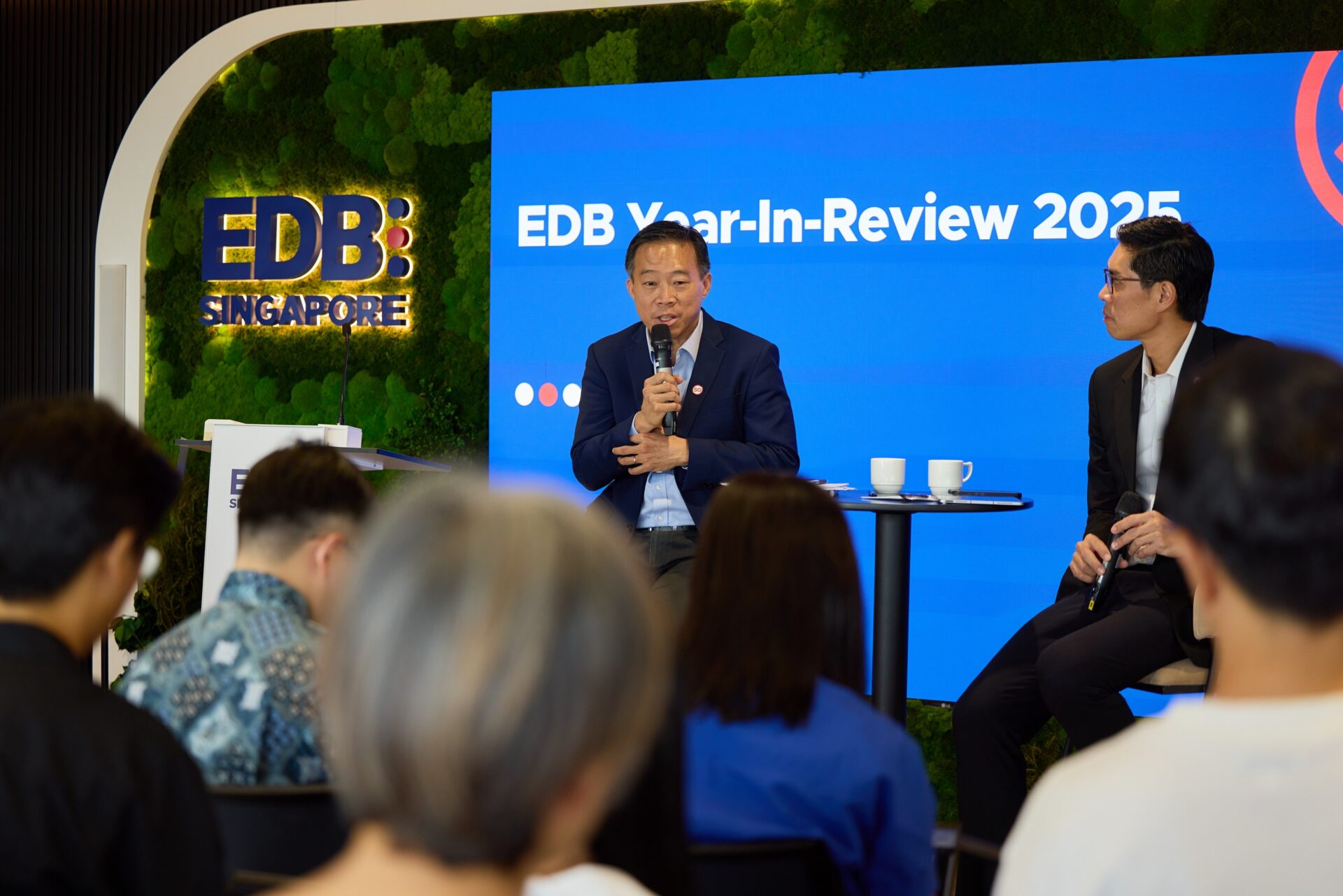
“Fortunately, Singapore remains a top of mind destination for business leaders … because of our excellent track record of being a stable, reliable, connected and trusted location and our consistent and pro-business policies and good infrastructure.” said Png, in a media briefing last week.
These attributes help us to secure investment that are on par with previous years despite the changing operating conditions,” he added.
What was notable, he noted, was the spread of investment secured last year which came from diverse source, regions and industries including “areas where we have deep improvement capabilities and newer growth areas that we are beginning to develop”.
He also highlighted that 2025 investment commitments were not expected to translate into the same level of value-added or new jobs created.
The 15,700 new jobs expected to be created over the next five years was lower than the 2024 figure of 18,700 new jobs over the next five years.
On the investment commitments, EDB managing director Jermaine Loy pointed to the strong global demand for AI related activities, chips, servers and other related products which form the key drivers of the semiconductor industry and where the Republic has a strong ecosystem of manufacturers, suppliers, distributors and users.
There was also a surge by the biomedical manufacturers in response to rising demand for high value biopharma and medtech products, he said.
In the regional headquarter and professional services and R&D sectors, companies continue to see Singapore as a place to orchestrate strategic decisions and create new values, he added.
Tech companies were the largest contributors to headquarter investments, reflecting a strong demand for digital solutions and services.
Of the S$14.2 billion investment commitment, the lion’s share of S$12.1 billion was poured into manufacturing. Semiconductor giants expanded greenfield plants to feed the global hunger for AI chips and servers, creating a lucrative “spillover” for precision engineering.
The investment portfolio also pivoted toward the future of mobility and health. As supply chains diversify, Singapore has captured critical nodes in electric vehicles (EV), semiconductor equipment, and high-value biopharmaceuticals.
Meanwhile, the chemicals sector is reinventing itself through speciality materials and sustainable biofuels, catering to a region increasingly focussed on sustainability.
The new headquarters of the East
Beyond the factory floor, Singapore’s hub status reached a fever pitch by tech titans from the United States, China and Europe that are increasingly choosing the Republic to drive international expansion outside of their home markets.
They are expected to spend S$8.9 billion in Total Business Expenditure (TBE) to anchor their regional headquarters here. Other sectors doing the same include the consumer and professional services industry. TBE refers to companies’ incremental operating costs including wages and rent.
For the local workforce, the new jobs expected are good, high value jobs that will offer meaningful career pathways to Singaporeans, said Loy.
Of the 15,700 new jobs, two-thirds will command a monthly wage above S$5,000. Forty per cent of the jobs are in services, 37 per cent in manufacturing and 23 per cent in R&D. Job roles range from AI research scientists and robotics engineers to sustainability specialists.
Looking ahead, job creation will be an uphill battle in an era of fractured trade and geopolitical friction.
Job creation will be a challenge, said Loy, but the EDB will double down on sectors where the Republic has strong capabilities and global leadership, for example in advanced manufacturing, aerospace, semiconductors, biopharma, medtech, headquarter and professional services and R&D.
It will also work towards transforming existing plants to best-in-class operations and establishing itself as a premier global AI hub.
Pursuing emerging opportunities and new growth engines will be another area to focus on. This includes precision medicine and green economy. The EDB will also focus on new professions of the future and technologies such as trust-based services, next-gen healthcare and energy solutions.
Loy also highlighted a focus on attracting the next generation of global enterprises to Singapore, to help them scale regionally and globally from here.
To ensure the local bench is ready for these global mandates, the Singapore Leaders Network (SGLN) is grooming a new cohort of executives for the world stage, with participants posted to hubs from the Netherlands to Indonesia.