Every safety system humans have ever built – for planes, fire codes, financial controls – was designed to catch human error before it turns into disaster.
Agentic AI breaks that assumption, warned Singapore’s Minister for Digital Development and Information Josephine Teo, adding that it will be “quite a long time” before anyone fully grasps the range of problems that could surface once agents are given room to make decisions on their own.
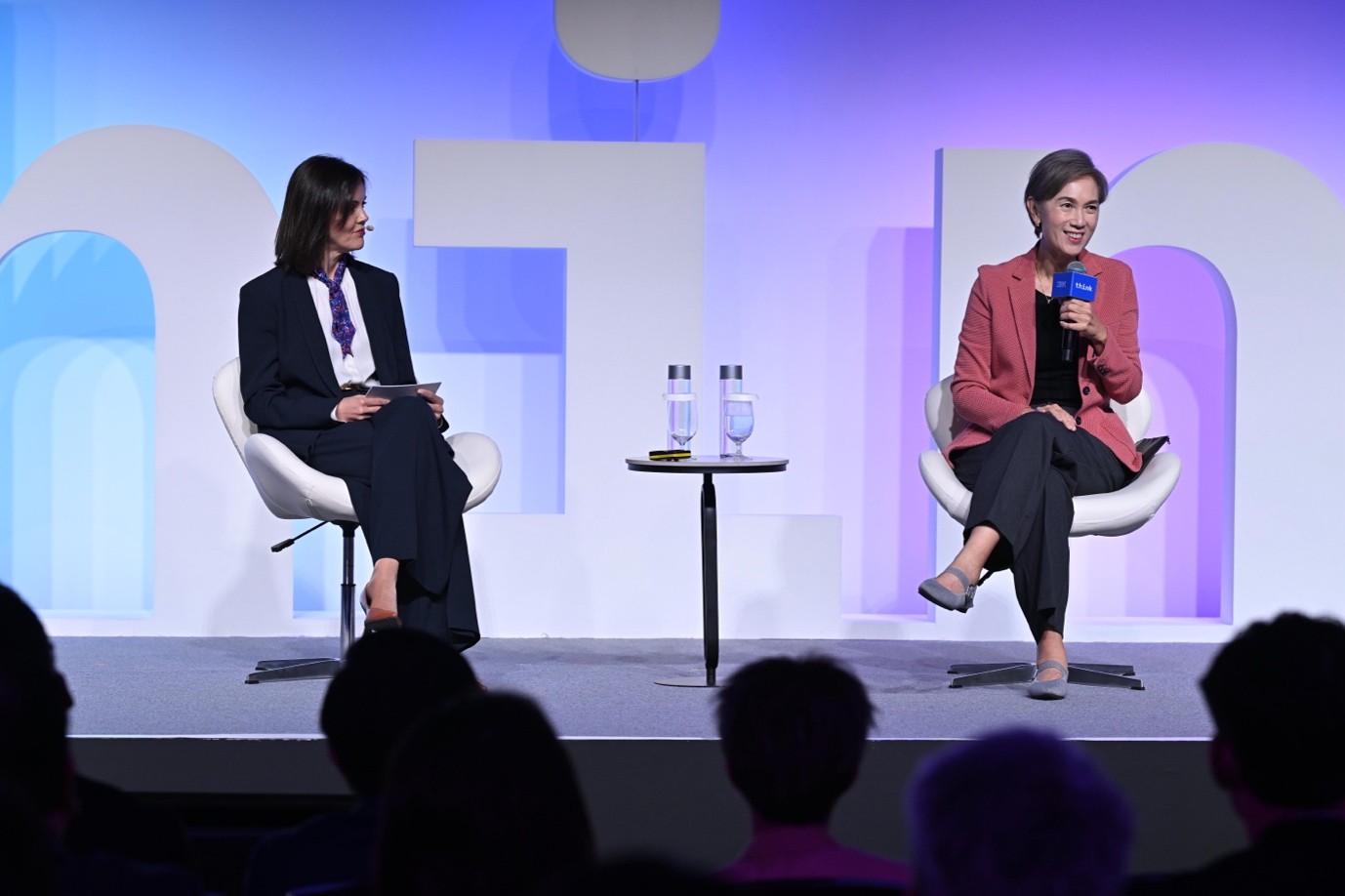
She made the comments at a fireside chat with Ana Paula Assis, IBM’s senior vice-president and chair for Europe, Middle East, Africa and Asia-Pacific, at IBM Think on July 21.
Singapore is not waiting to find out the hard way. It launched the world’s first agentic AI governance framework at the World Economic Forum in Davos earlier this year.
Teo shared that the priority from Day One was mapping out agent workflows before writing any guidelines and that the government now wants to work directly with companies helping clients deploy agents, so lessons from the field can feed back into the framework.
She also flagged quantum-safe cryptography as a growing concern specifically, which means keeping Singapore’s communication networks ahead of attackers who get their hands on quantum computers.
The country is also building up quantum-algorithm talent for emerging sectors such as banking and port logistics.
Citing the Singapore port as an example, she said that containers stack up to ten high, and where a box ends up – level two or level eight – determines how fast it can be reloaded onto the next vessel.
A classical computer takes years to run those calculations at scale. Quantum dramatically reduces the time to make the same calculations.
The upside is not just computational. Singapore’s semiconductor advanced-packaging capabilities are opening up new opportunities as a potential manufacturing angle for quantum components.
Singapore’s military is also exploring whether quantum computing can sharpen mission planning.
“There is significant advantage in national security for us to see how we can apply quantum computing, even though it’s still nascent, and utility and advantage are still some years away,” said Military Expert 7 Guo Jinghua, commander of the Singapore Armed Forces’ C4 and Digitalisation Command, at the IBM event.
As an example, he said that distributing supplies using 20 trucks across 50 locations created a quintillion possible route combinations and every additional variable scaled the problem exponentially.
For a classical computer, that would have been a search that went nowhere with an answer.