If you’ve always wanted a large-screen laptop without carrying a heavy weight around, then the Asus Zenbook A16 is definitely one of the best options that you have to consider.
The ultrathin portable PC packs a 16-inch 3K OLED screen but tips the scales at a stunning 1.2kg, which is what some of the lightest 14-inchers weigh. Yes, this Asus laptop is similar to the lightweight LG gram Pro we reviewed just a month ago.
Yet, while LG has gone for a minimalist look, Asus has wrapped the Zenbook A16 in its premium Ceraluminum material, which looks and feels more attractive with its matt finish and leaves no fingerprints behind.
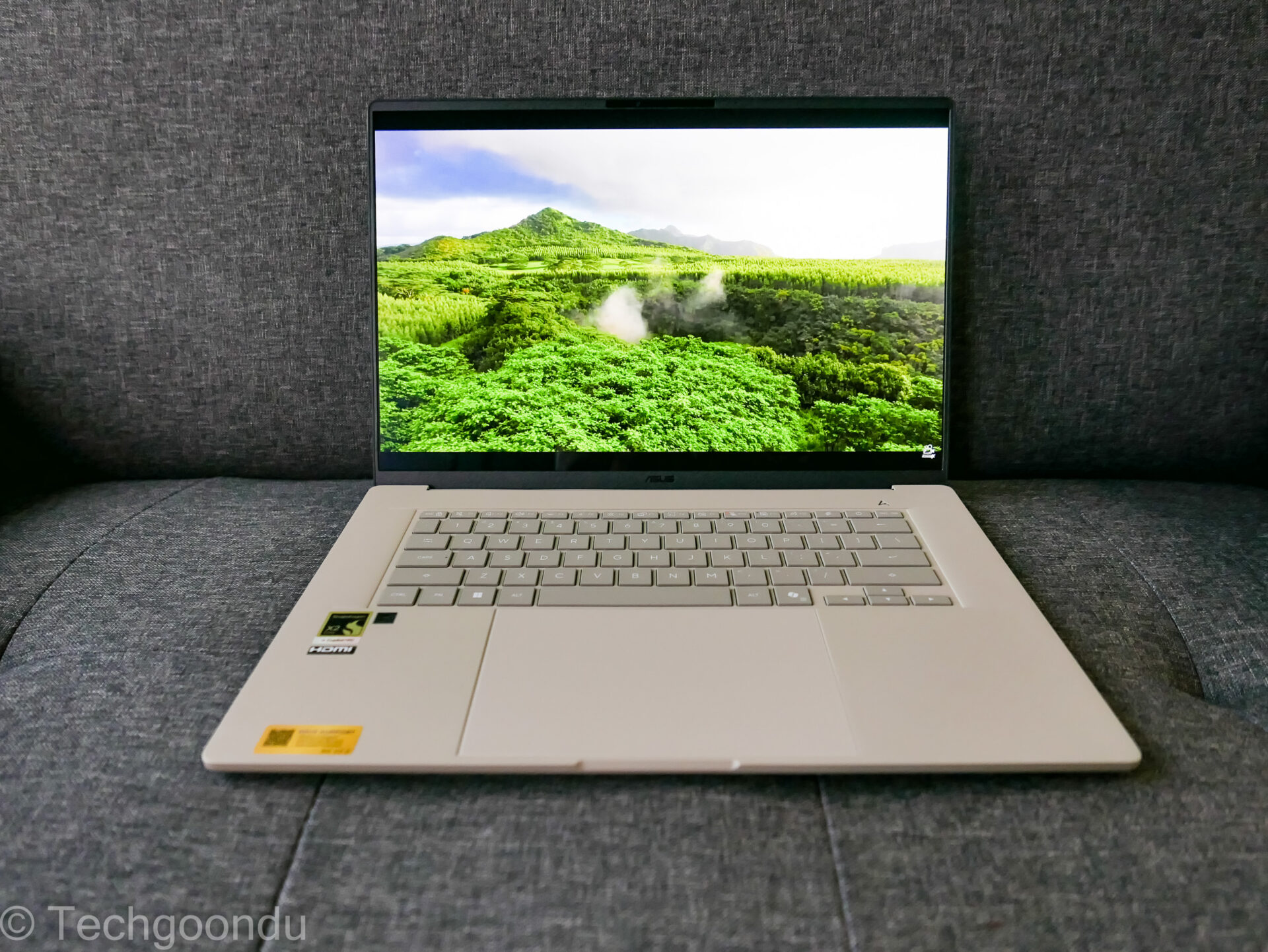
Plus, the ceramic compound, used also in aerospace and luxury watches, promises to be hardy and scratch resistant. It’s proven in earlier Asus Zenbooks and it’s great to see the material in the Taiwanese PC maker’s latest large-screen laptop.
Another departure from LG’s idea of a lightweight large-screen machine is the use of a Qualcomm processor instead of Intel’s more common Core Ultra chips.
As with other Zenbook A series laptops, the latest Asus Zenbook A16 makes use of an Arm-based Qualcomm Snapdragon X2 Elite chip. In my review unit, you’re looking at the top-end 18-core Elite Extreme variant that promises great performance with all-day battery life.
Also onboard are a solid 48GB of DDR5 RAM and a 1TB solid state drive – high-end hardware in today’s costly component era.


I put the Asus laptop through the latest Geekbench 7 benchmark test which measures how well a PC performs everyday tasks. It came back with scores of 3,226 for single-core and 25,906 for multi-core performance.
Considering that the new test usually yields lower scores than earlier versions, the performance is solid. In comparison, the LG gram Pro scored lower with the older Geekbench 6 test with its Core Ultra X7 chip and 32GB of RAM.
I did not manage to run my usual PCMark 10 scores as the Qualcomm chip doesn’t support that benchmark.
To test the new Asus laptop’s graphics performance, I ran the Geekbench 7 GPU test. Here, it came back with a score of 36,182, which is again solid.
I also ran the 3DMark Time Spy test which simulates how games run on PCs. For this, the Asus Zenbook A16 scored 4,476, which is unsurprisingly lower than Intel’s top-end chips with excellent graphics.
The Asus laptop will still play many of your games well, but note that there remain some compatibility issues if you’re considering the occasional game. Here’s a list of titles to check out.
What about AI? It was one of the big things that the Qualcomm-based PCs were touted for when they were unveiled a couple of years ago, though since then Windows’ Copilot+ has got a lukewarm response from users, at best.
I still ran through some Geekbench AI tests, which measure performance in tasks like image classification. The Asus Zenbook A16 doesn’t do too badly in them.
When testing the CPU with the ONNX AI framework, I recorded 1,984 for single-precision score, 3,591 for half-precision score and 7,783 for quantised score.
This gets bumped up dramatically if you use the “optimised” QNNX for the back-end in the AI tests. Here, the results were 1,953 for single-precision score and a hugely boosted 33,438 for half-precision score and 93,408 for quantised score.
To be sure, this is a powerful machine if you’re running some of Windows’ Copilot+ features or other AI-powered apps, say, video editing. The 80-TOPS neural processing unit onboard is a handy assistant.
The good thing about the machine is that it barely seems fussed about the heavy workloads. Even when running the benchmarks, the Asus laptop hardly spins up loudly or generates a great amount of heat.
It certainly helps to have a large surface area, as a 16-inch laptop can afford. This way, the heat doesn’t get trapped or concentrated like on smaller laptops.
What Qualcomm also promises is long battery life – the advertised 21 hours is longer than just about any flight and certainly any workday that is legal.
Another big plus is the usability of the Asus Zenbook A16. The screen, as OLED displays go, is bright and offers the excellent contrast you’d expect.
The 3K resolution works well at this size as well, making sure you never see fat pixels when you work with images or text. It’s sharp enough for a 16-inch display.
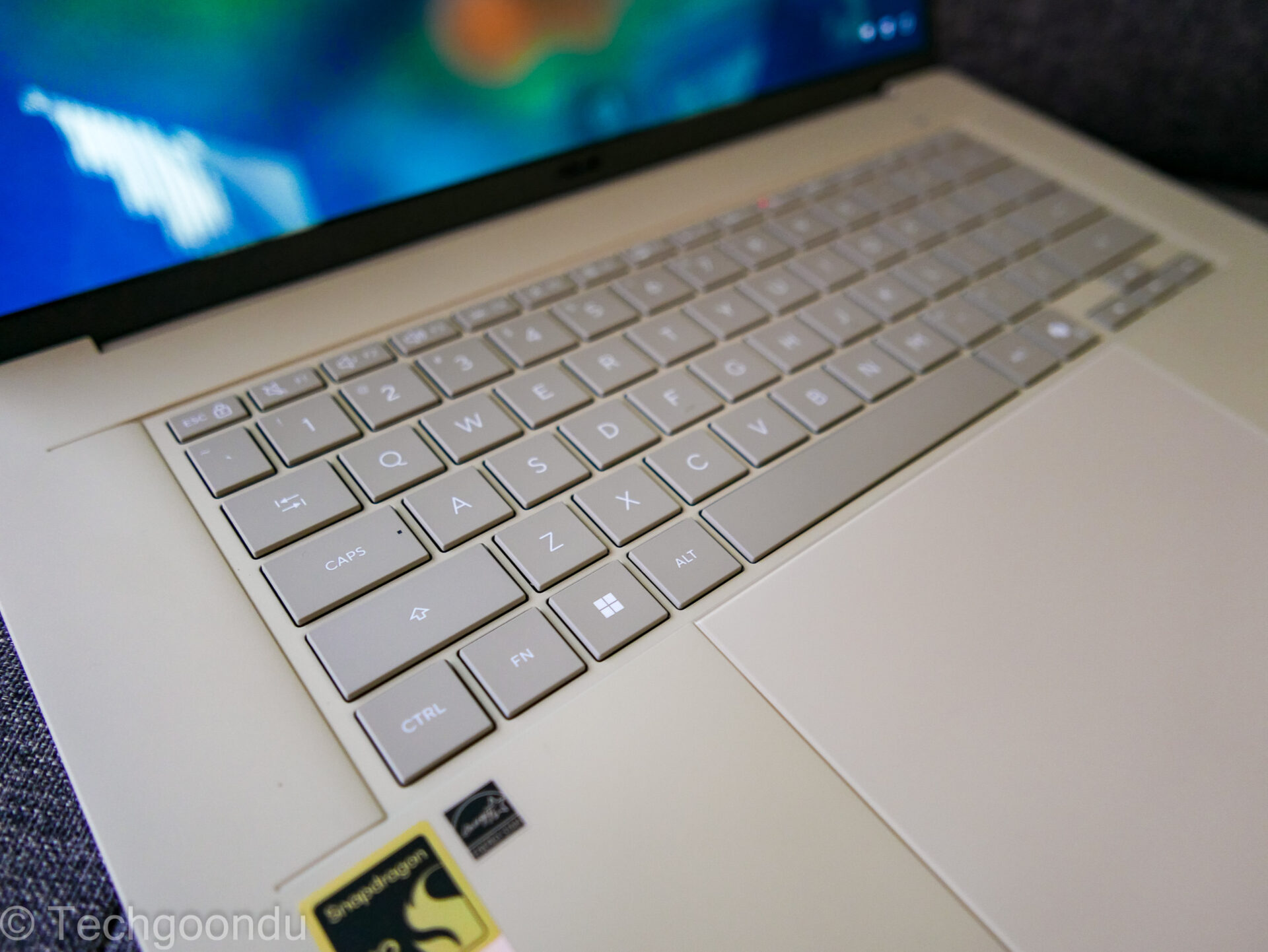
The keys are nicely spaced apart and offer decent depth. Fire away some documents and you’d find they are responsive enough and comfortable as well.
What’s also unmissable is the huge touchpad, which is surely one of the biggest you’d find on a laptop. Again, the large real estate offers you this luxury to easily navigate through your work effortlessly.
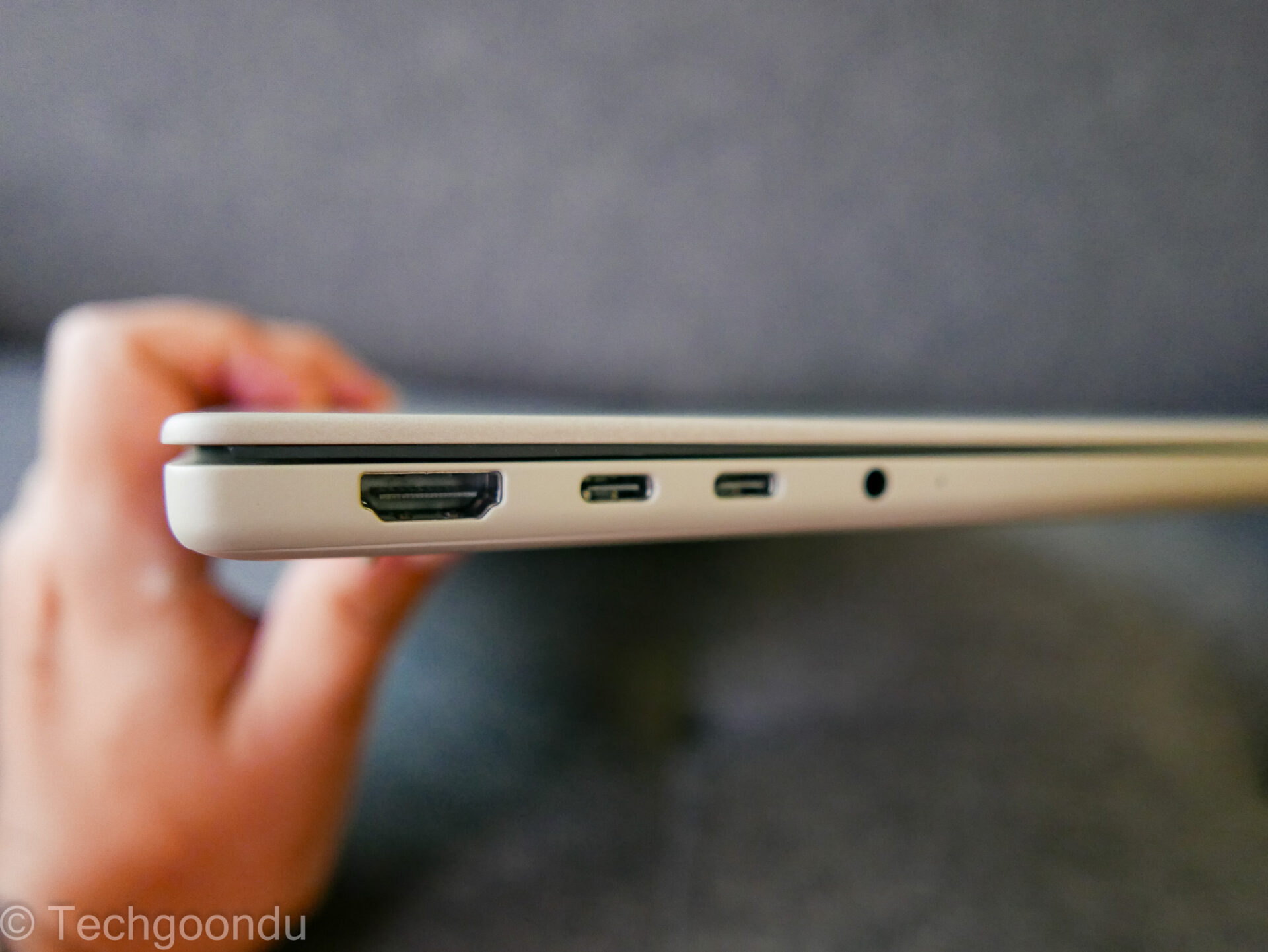
If I were to nitpick, I’d like Asus to include one more USB-C port on the right side of the laptop, so you don’t have to reach to the left if you want to plug in your charging cable.
To be fair, the full-sized HDMI and USB-C on one side plus SD card reader and USB-A on the other seem adequate. I’m just a bit OCD with cables.
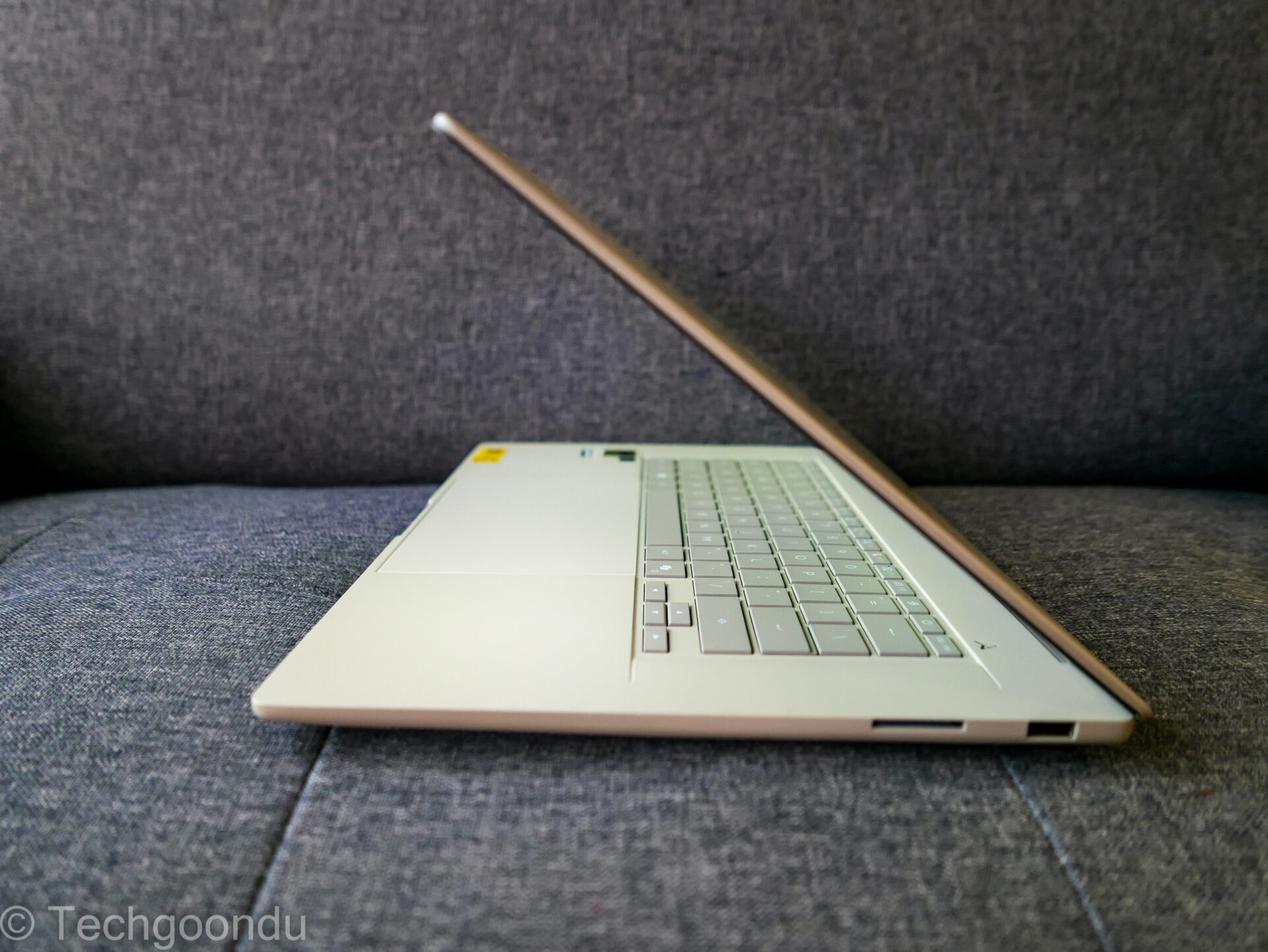
All said, there is so much to like about the Asus Zenbook A16. A powerful machine with a large screen that is as light to carry around as a smaller laptop, it also comes in such a svelte design.
I’m still wary of some games that can’t run well on Qualcomm chips in 2026, though if that’s not something you’d run on a laptop, then it’s not an issue.
Price, of course, is always a sticking point for a premium laptop in today’s climate of overpriced PC components. In Singapore, the Asus Zenbook A16 unit I am reviewing here goes for S$3,899, which is hardly small change or a cheap bargain.
That said, it packs some serious hardware that lets you do more on the road with its large screen. If your work demands that, then it could worth paying for.