
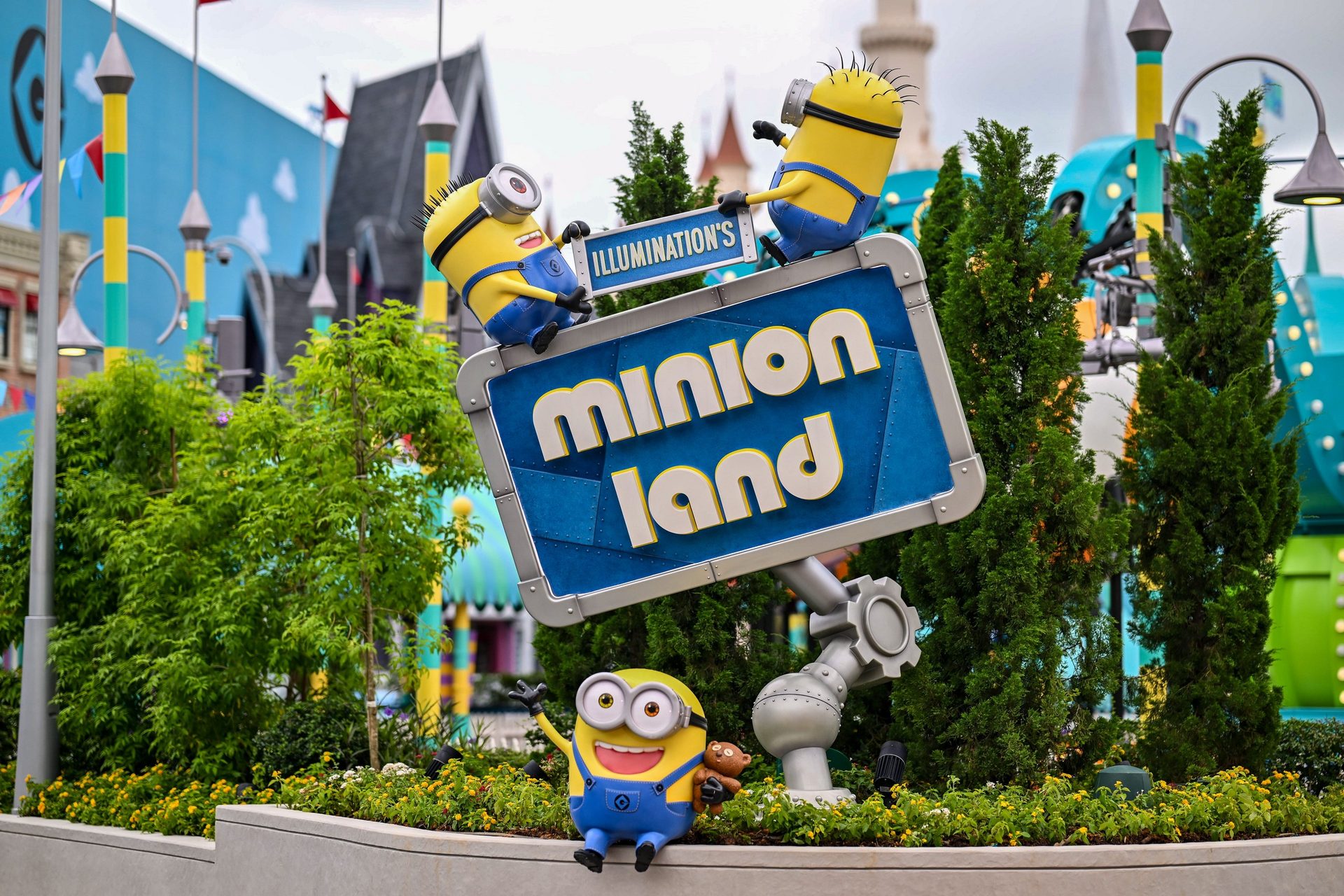
Beneath the thrill rides, gaming floors, and beachfront hotels of Resorts World Sentosa (RWS), an invisible engineering feat keeps 49 hectares of hospitality running cool.
Today, the integrated resort in Singapore consumes roughly 186 gigawatt-hours of electricity a year. The next phase, RWS 2.0, will bring new attractions like Super Nintendo World, Minion Land and expanded hotel inventory, so energy demand is projected to climb 28 per cent over the next five years, said Kess Chiang, RWS’ senior vice-president of resort services.
Rather than letting its utility bill spiral, RWS is betting that AI, cloud infrastructure, and a newly upskilled workforce can squeeze unprecedented efficiency out of its sprawling physical plant.
RWS has a five-year plan to reduce its energy consumption by 15 to 20GWh and its energy use intensity by 36 per cent to 40 per cent against 2015 levels, said Chiang, at a briefing earlier this month.
Since 2023, RWS has partnered with building automation giant Honeywell Technologies to build Singapore’s first large-scale cloud-based building management system (BMS), linking more than 800 controllers across the resort.
Having laid a digital foundation, which already delivers four gigawatt-hours in annual savings, the two organisations are scaling three co-innovation initiatives: district cooling plant optimisation, AI-enabled airside controls, and a smart guest room management system.
At the heart of the operation are two interconnected district cooling plants with a combined capacity of 30,000 refrigeration tons. They pipe chilled water across 15 facilities like Universal Studios and resort hotels so that mission-critical venues like the casino, data centres, and life-support systems never lose cooling.
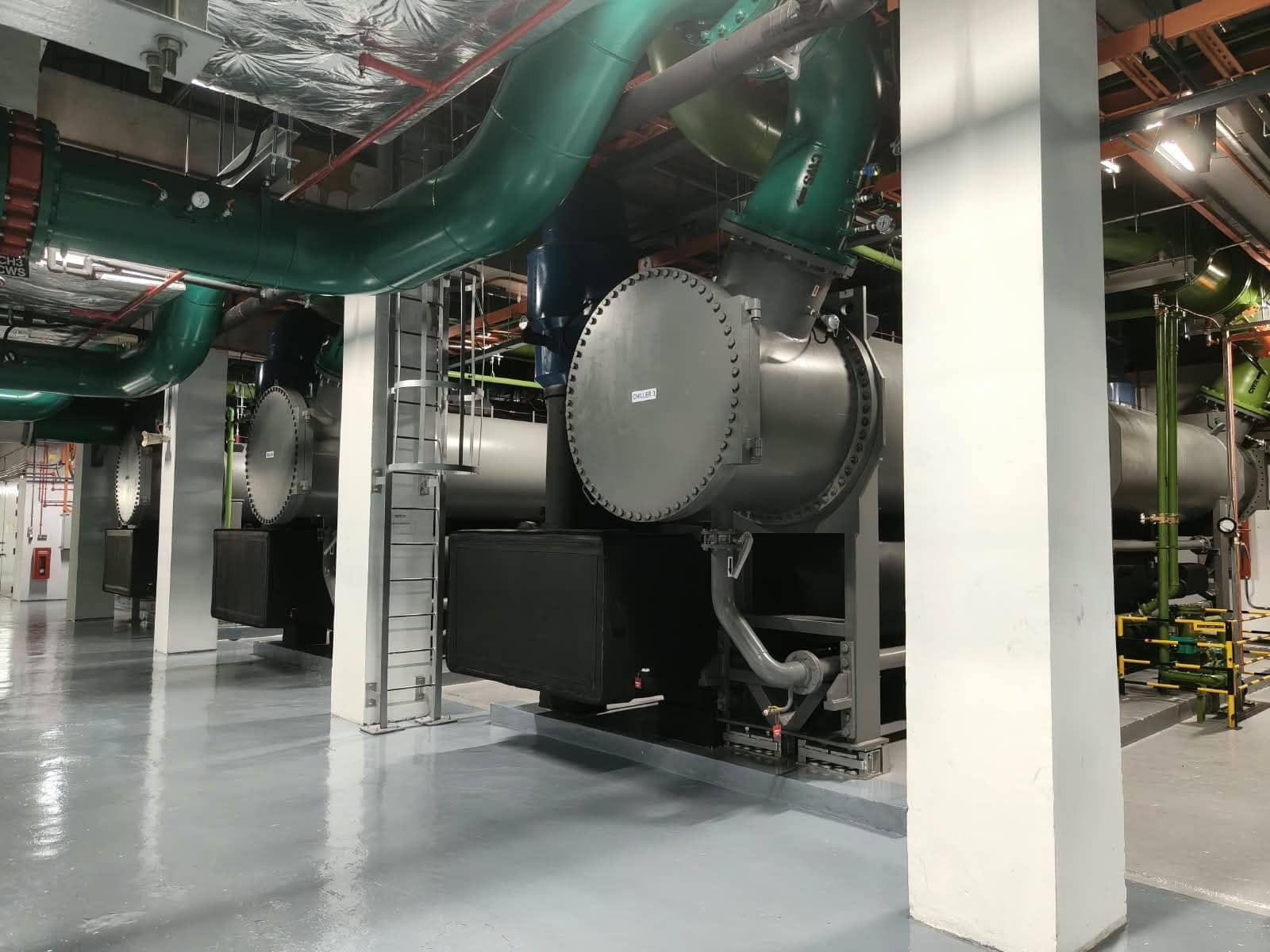
District Cooling Plant 2, built to serve the RWS 2.0 expansion, is set to triple its active load from 3,000 to 9,000 refrigeration tons by the end of 2028.
Meanwhile, Plant 1 has steadily slashed its energy intensity from 0.82 kilowatts per refrigeration ton in 2012 to 0.635 in 2025, with plans to trial AI optimisation this year to hit 0.625, three years ahead of national standards.
Traditional building controls operate on a simple loop: sense a temperature change and react. Adding Honeywell’s Forge AI layer transforms how the property behaves as it combines factors like operational data, digital twins and AI applications to help commercial buildings and utilities monitor assets, cut energy use and move from automation toward autonomous operations.
“Instead of see and act, you go into ‘see, think, act, and learn’, and then you close the whole feedback loop,” explained Munish Suri, Honeywell’s president for building automation for India and Asia-Pacific.
By correlating weather forecasts, historical patterns, event schedules, and real-time occupancy across more than 300 air-handling units, the system already trims fan energy use by 5 to 10 percent while keeping indoor temperatures rock-steady.
Yet in an industry often jittery about automation replacing technicians, RWS leadership insists headcount is not on the chopping block. Over the next two years, the resort is protecting jobs, recruiting cloud-savvy specialists, and retraining existing engineers.
“Technology does not replace the human touch; it helps our people to deliver it better,” said Lee Shi Ruh, CEO of RWS at the briefing.
Running a mega-resort is a high-stakes and a deterministic business where a mistake affects thousands of guests, so human operators retain final sign-off on critical AI recommendations.
Trained on 31 million global Honeywell service cases, the software involved surfaces root-cause diagnostics instantly, turning newer technicians into seasoned troubleshooters, according to the integrated resort.
It is targetting 10-fold returns on its co-innovation investments as the resort scales toward 2,000 hotel rooms by 2030.