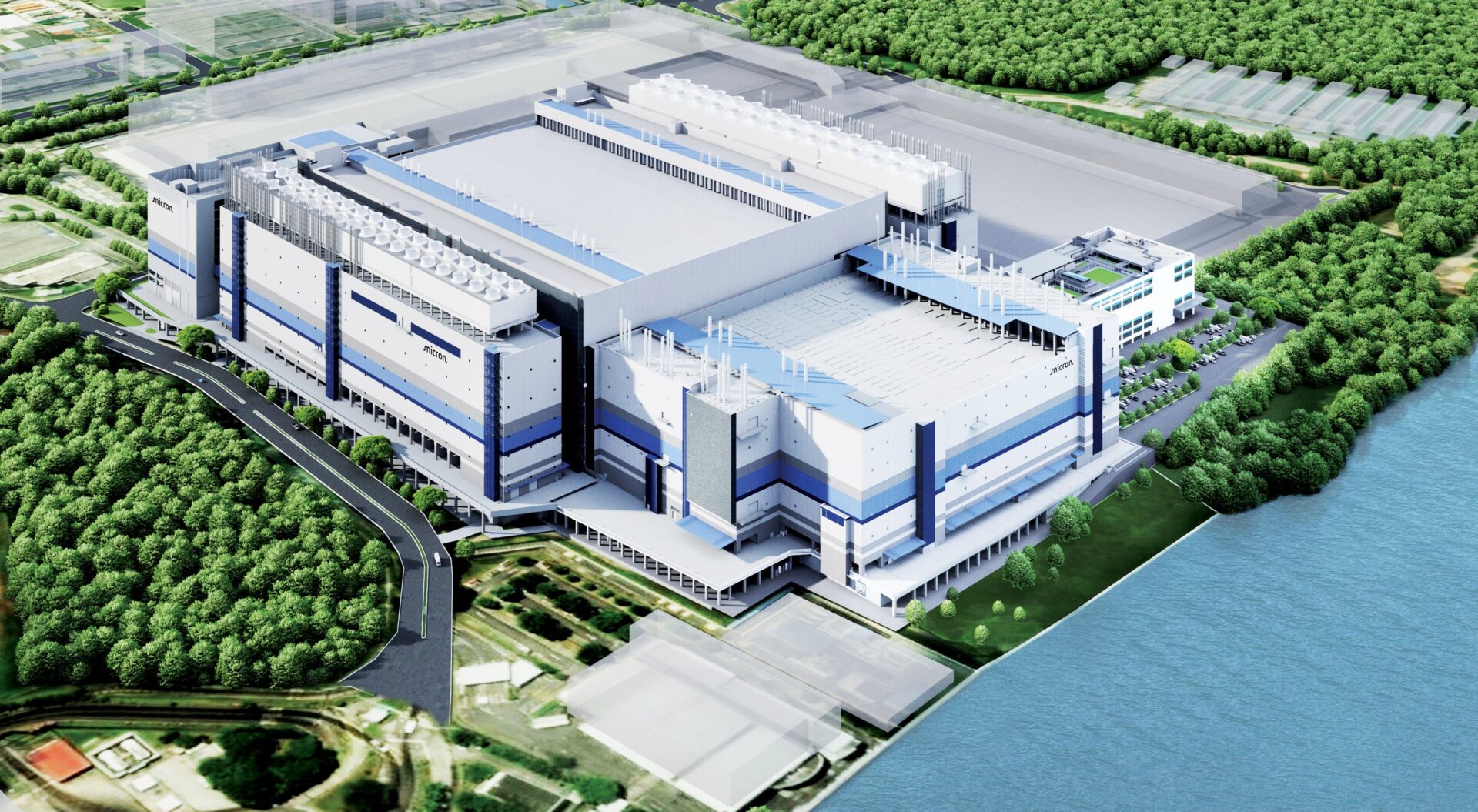
American chipmaker Micron is investing US$24 billion in a new facility in Singapore that would make more wafers that form the basis of today’s most sought-after memory chips for AI.
The investment, spread over the next decade, aims to expand its current facility in the north of Singapore by providing an additional 700,000 square feet of cleanroom space.
The new space, sitting within a manufacturing complex that includes a high-bandwidth memory (HBM) packaging facility announced last year, will start producing its first wafers from the second half of 2028.
This comes as the world faces a shortage of advanced chips that are used for both memory and storage devices in not just AI servers but also PCs, smartphones and millions of other digital devices like car automation systems.
The demand from AI companies is so acute that manufacturers such as Micron and rival Korean firms Samsung and SK Hynix are prioritising that higher-margin business over consumer applications.
Last month, Micron axed its 29-year-old consumer memory and storage business. Meanwhile, prices for consumer devices like PCs and smartphones are expected to be driven up until late 2027, say some experts.
The increased production from Micron’s new Singapore plant might yet ease some of that supply crunch, when it eventually rolls out the first wafers.
Marking its groundbreaking yesterday, the company said it would create 1,600 new jobs in Singapore, adding to the 1,400 for the HBM facility announced earlier in the country.
These 3,000 new jobs will be for fab engineering and operations, integrating AI, advanced robotics and smart manufacturing technologies to enhance efficiency and innovation.
For Singapore, the new facility will help retain its importance in the global semiconductor supply chain, as part of the country’s ambitions to be a key AI innovator.