
About 45 minutes from the Singapore-Johor Bahru causeway sits Senai, an industrial park that has quietly become a magnet for data centres.
Palm oil and rubber estates have given way to factories, among them data centres. Johor state authorities have approved 52 data centres, of which 17 are already operational.
On July 1, the industry in Senai received a boost. Vertiv, an American digital infrastructure company, opened its first Asian manufacturing facility outside of China and India – a 236,000-square-foot plant producing power and cooling systems.
The gear rolling off its lines will keep data centres humming in Senai, as well as others across Southeast Asia, South Korea, Japan, Australia and New Zealand.
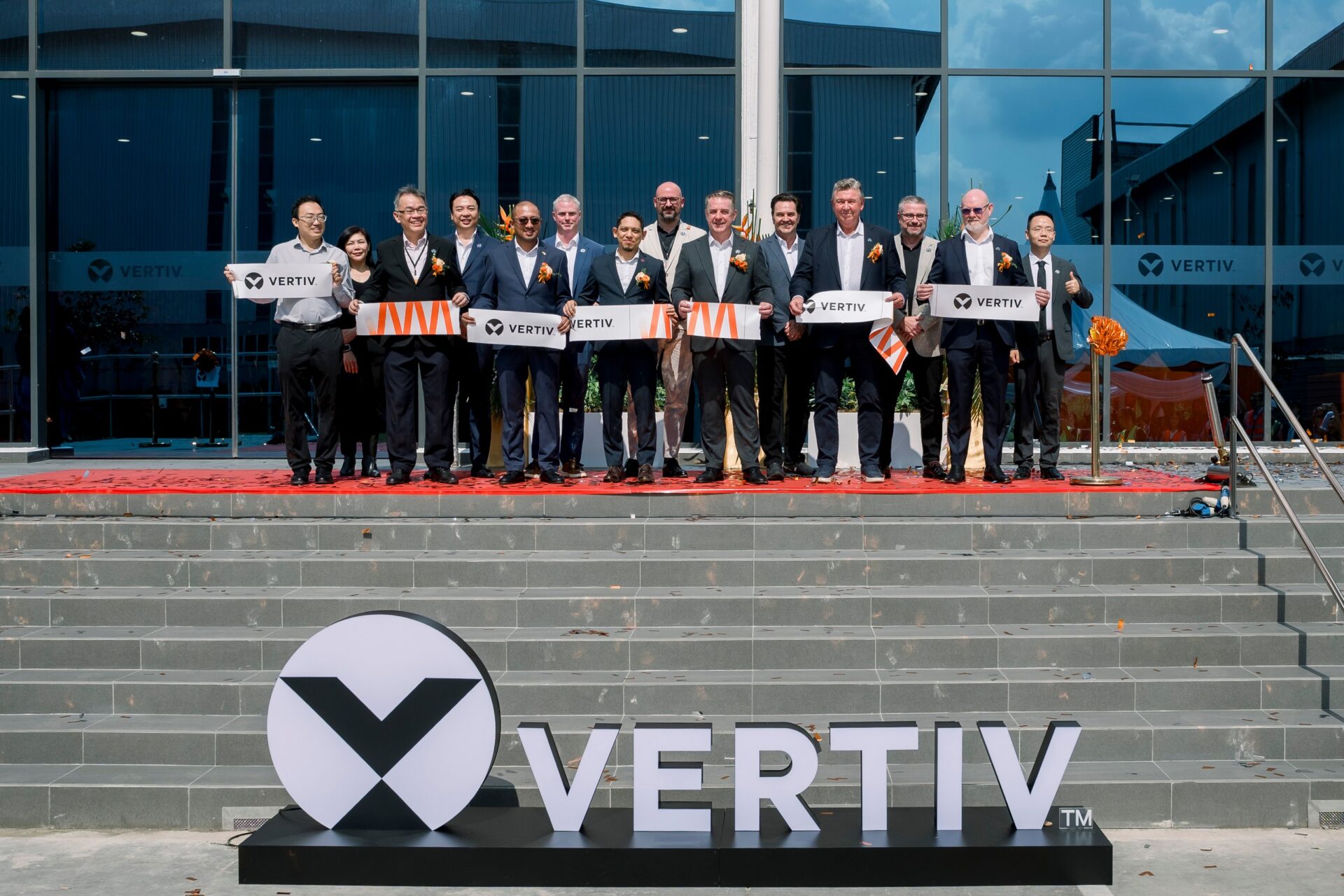
Paul Churchill, vice-president and general manager for Vertiv Asia, said the facility strengthens the company’s ability to respond to increasingly complex AI and high-density deployments in the region.
Senai was chosen for Johor’s connectivity, including its road network and three international ports, along with its growing technology ecosystem and skilled workforce, he said at the launch press conference.
Customers want speed, he stressed, and that means having manufacturing capacity close to the market. Ramping up manufacturing is the easy part, but getting finished products into customers’ hands is the real bottleneck, he added.
Even from India, he noted, goods can take an extra couple of weeks to reach this part of the world, and shipping disruptions from Middle East tensions have only made things worse.
The Senai facility was built in about 18 months and has already started shipping products. Plans to expand its product lines are also on schedule.
Recent research from real estate services firm CBRE found that AI demand continues to drive new data centre development.
In Asia-Pacific, Johor is leading the charge, with data centre capacity in 2025 registering 53 per cent year-on-year growth.
While the market remains dominated by cloud and corporate usage, demand for both AI training and AI inference is rising, according to CBRE.
At the infrastructure level, CBRE noted that AI workloads require substantially higher power capacity and greater rack density.
Vertiv’s new facility comes at the right time, especially as AI workloads demand improved cooling systems.
Churchill expects the new Johor site to create up to 500 skilled jobs once fully operational in 2027.
The plant will produce Vertiv’s CoolChip coolant distribution units for liquid cooling, along with prefabricated power and infrastructure systems designed to cut deployment time.
The facility also includes dedicated testing environments for liquid cooling and power systems, built to validate performance under real-world conditions before deployment.