
An interface for AI that works anywhere, with your favourite AI models out there. That’s the promise of Salesforce’s AIforce software interface launched this week by the customer relationship management software company.
Yet, in South Asia and Southeast Asia, “anywhere” comes with caveats.
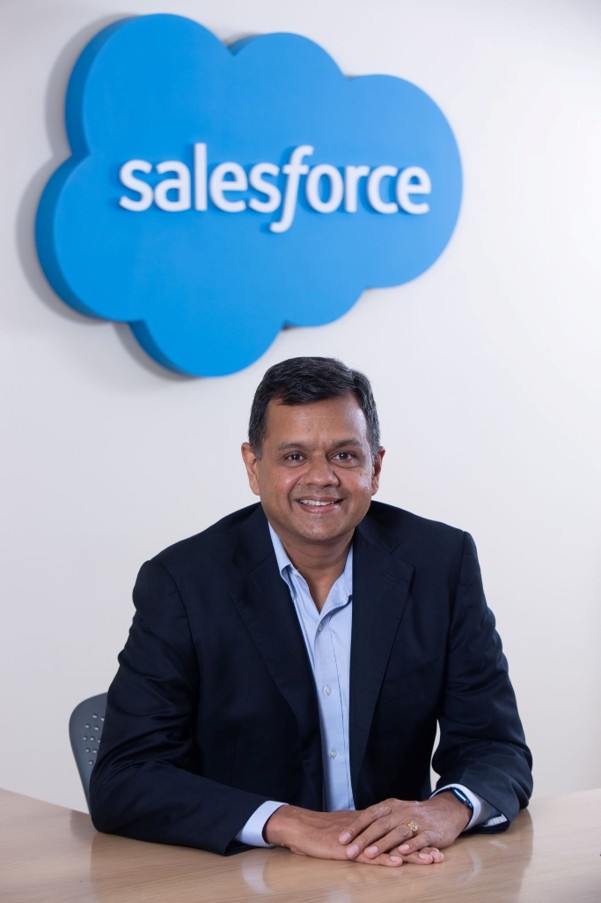
“With the exception of Singapore, in almost every other market, the cost of human labour is cheaper than the cost of AI,” said Arun Kumar Parameswaran, Salesforce’s executive vice president and managing director for South Asia and Southeast Asia.
That single fact reshapes the sales pitch. In markets where a call centre agent costs a fraction of what an AI query does, productivity gains are a hard sell to chief financial officers, he explained.
So Salesforce is selling top-line growth instead. Customers have years of data stored inside the Salesforce ecosystem. AIforce is built to unlock the data.
One target is the pile of “fallen” leads, customers who enquired, then went nowhere. Re-qualifying them, said Parameswaran, can open up new revenue pipelines.
Getting there means solving for language and data residency requirements. India alone has 36 languages to support; Asean adds Bahasa and others.
Several governments, Singapore’s public sector among them, will not tolerate AI queries failing over to servers outside the country, even if the alternative is simply not answering.
Salesforce had to re-engineer Agentforce, its product ahead of AIforce, to block that failover entirely, and has since stood up its data centres in Singapore, Indonesia and India to keep frontier models local.
AIforce layers a governance system on top of that infrastructure, what Salesforce calls the Enterprise AI Harness – the plumbing that gives AI a shared understanding of the customer and the business and enables it to act with trust.
“LLM models are amazing, but you don’ want to use them raw. They know nothing about how a particular business runs,” said Gavin Barfield, vice-president and chief technology officer for solutions at Salesforce Asean.
The Harness, he said, supplies the context, agency, action, governance, security and models.
Permissions, for instance, carry over from the human user, he said, adding that an employee who can edit five deals in Salesforce can edit the same five through Claude, and nothing else.
The control plane manages the growing agent population the way a company treats headcount – job descriptions, budgets, performance tracking, he added.
“Once you’re going to have 10,000 employees, you need a human resource department,” he noted.
Data, meanwhile, stays put. Rather than migrate everything into a central warehouse, Salesforce’s Data 360 pulls records into view “at the point of engagement” through zero-copy links to third-party software like Snowflake, Databricks and BigQuery, then leaves them in place.
None of this locks out the smaller customers, Parameswaran emphasised.
Small and medium-sized companies are, if anything, moving faster than large enterprises, he added, explaining that they have no security chief or risk committee, often just the founder or managing director at the top.
AIforce is expected to be simple to use. A two-person cake shop can build a customer-service agent in a day. The wager, according to Salesforce, is that trust and governance, not the interface, are what will actually get paid for.
It Southeast Asia, the company can point to Singlife, Grab and Philippine healthcare group Maxicare and Panasonic Asia Pacific as customers that are deepening their push to the agentic enterprise.
Singlife’s general insurance e-mail agent assesses each customer enquiry in real time, answering straightforward enquiries immediately and routing more complex or sensitive ones to human agents for personalised support.
The agent handles over 20 per cent of customer enquiries received by e-mail. Its existing agent, Buddy, has reduced average handling time by 30 per cent and cut training time for new hires by 50 per cent, from four weeks to two. Singlife plans to evolve Buddy into a customer-facing digital agent.
In the Philippines, Maxicare receives 20,000 to 40,000 requests a month for letters of authorisation. Now, with AI, the processing time for each letter can be cut from 20 minutes to 30 seconds.