A couple of days with the Honor X9e Pro and one thing is clear: this phone is built for people who hate power banks. The 11,000mAh battery is the headline act here, backed by serious drop and water resistance ratings that make it a practical travel companion.
Honor’s new phone sits in that sub-S$1,000 mid-range space where you expect some trade-offs. You get a decent main camera, a big bright display and battery life that can stretch into days but there are compromises.
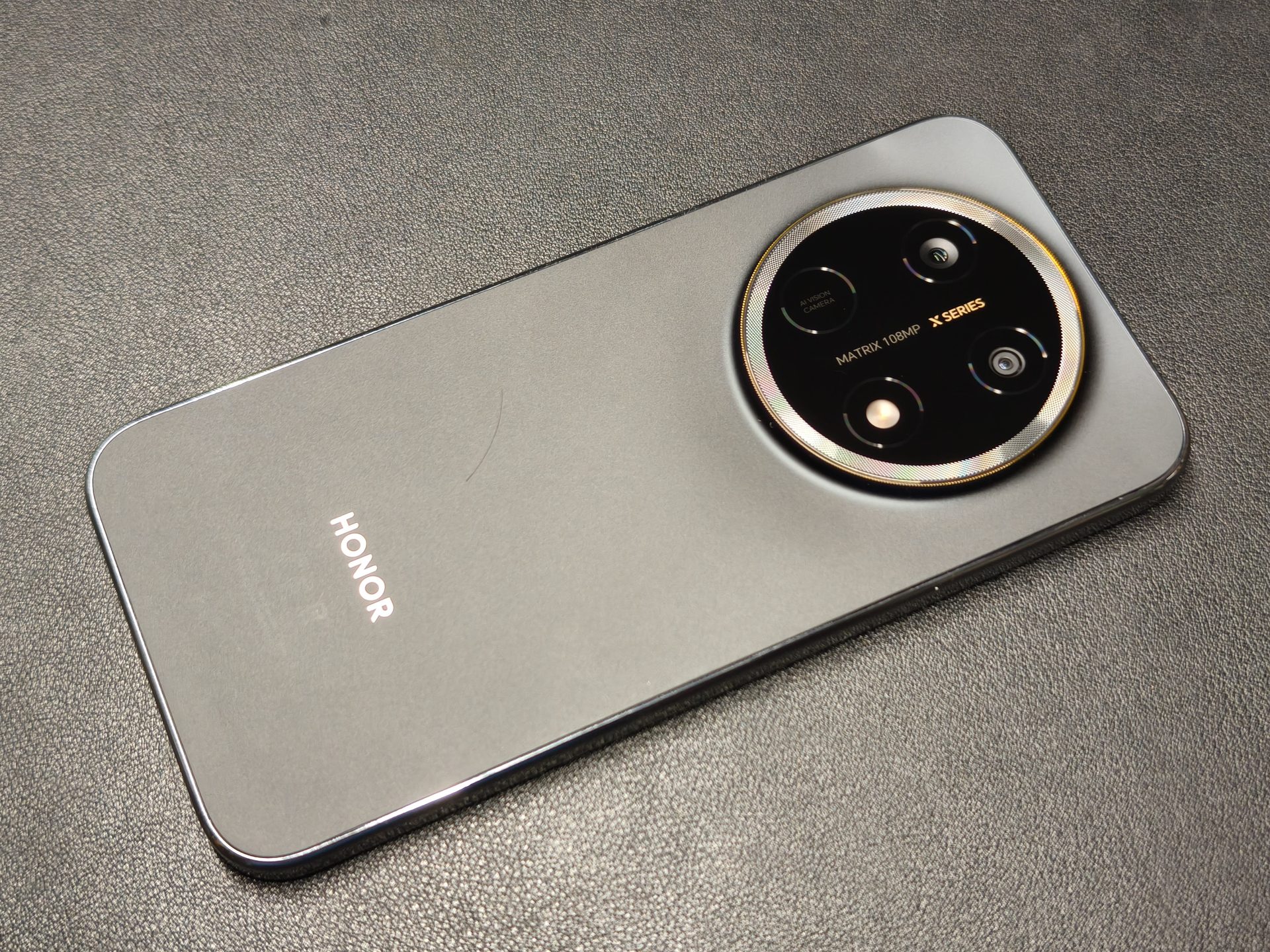
Honor certainly hopes the X9e Pro punches above its price tag. The black version I tested has a matt rear panel, a shiny metallic-looking frame and that large circular camera housing with a fluted edge that screams “premium camera”.
At 8.08mm thick and weighing 203g, it has a bit of heft but isn’t that heavy for daily use. It feels more like a regular large smartphone than a chunky rugged phone.
The glossy frame lends the Honor X9e Pro a bit of class, but unfortunately, it is a serious fingerprint magnet. After extended use, it can feel slightly slippery, even. A case is worth having both for grip and protection.
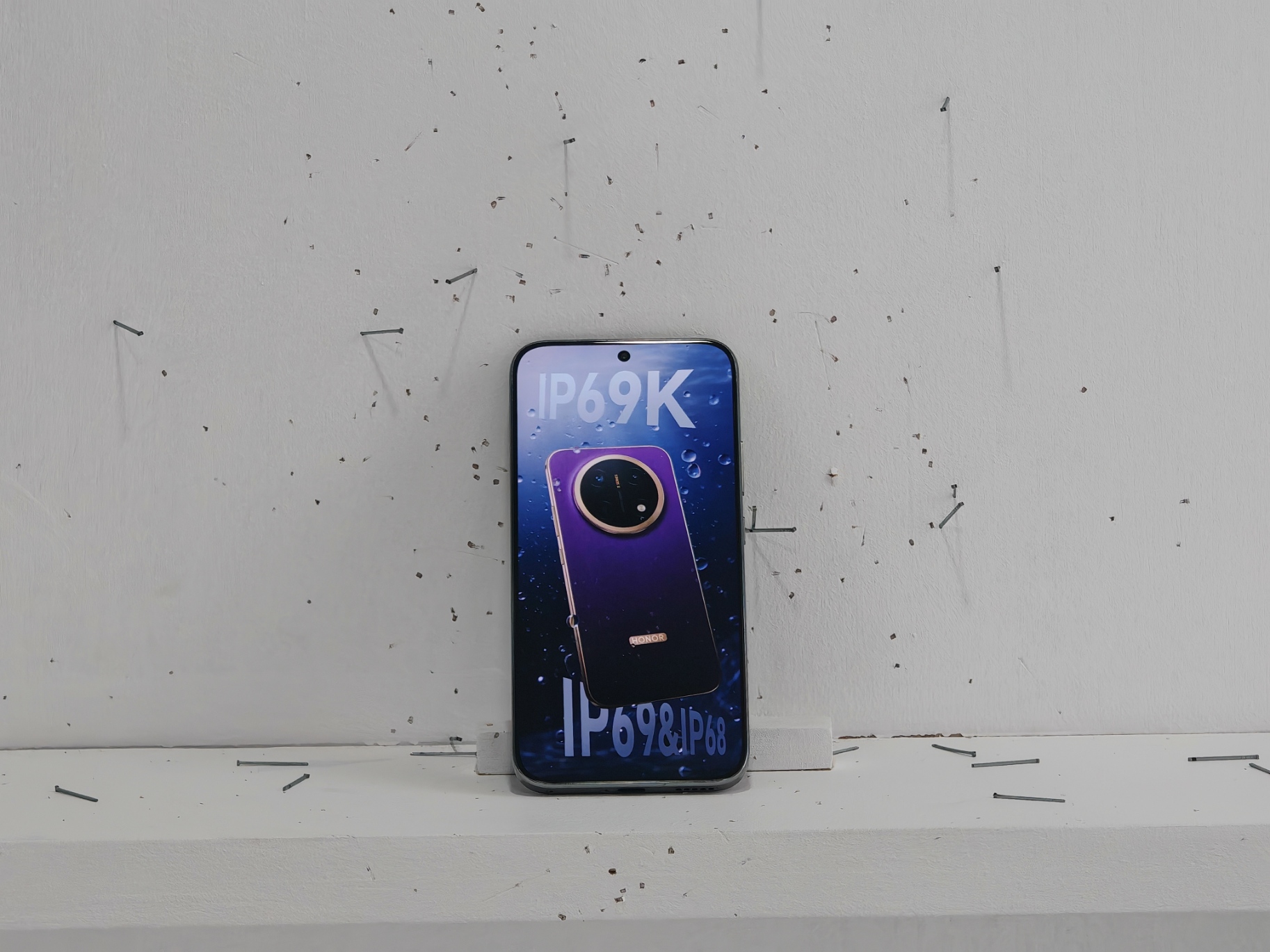
Honor claims the X9e Pro can survive drops of up to 3m onto smooth marble and 1.2m onto rough surfaces at different angles, thanks to impact-dispersal structures around the corners. That said, I’d imagine that a fall onto a sharp edge, uneven pavement or loose gravel can still cause damage especially with that shiny frame.
Water resistance is another touted strength. The phone carries IP68, IP69 and IP69K ratings, covering dust protection, immersion and high-temperature water jets. For travel and outdoor use, this is particularly practical. Rain, accidental drops into water and poolside splashes are less worrying than with a conventional phone.
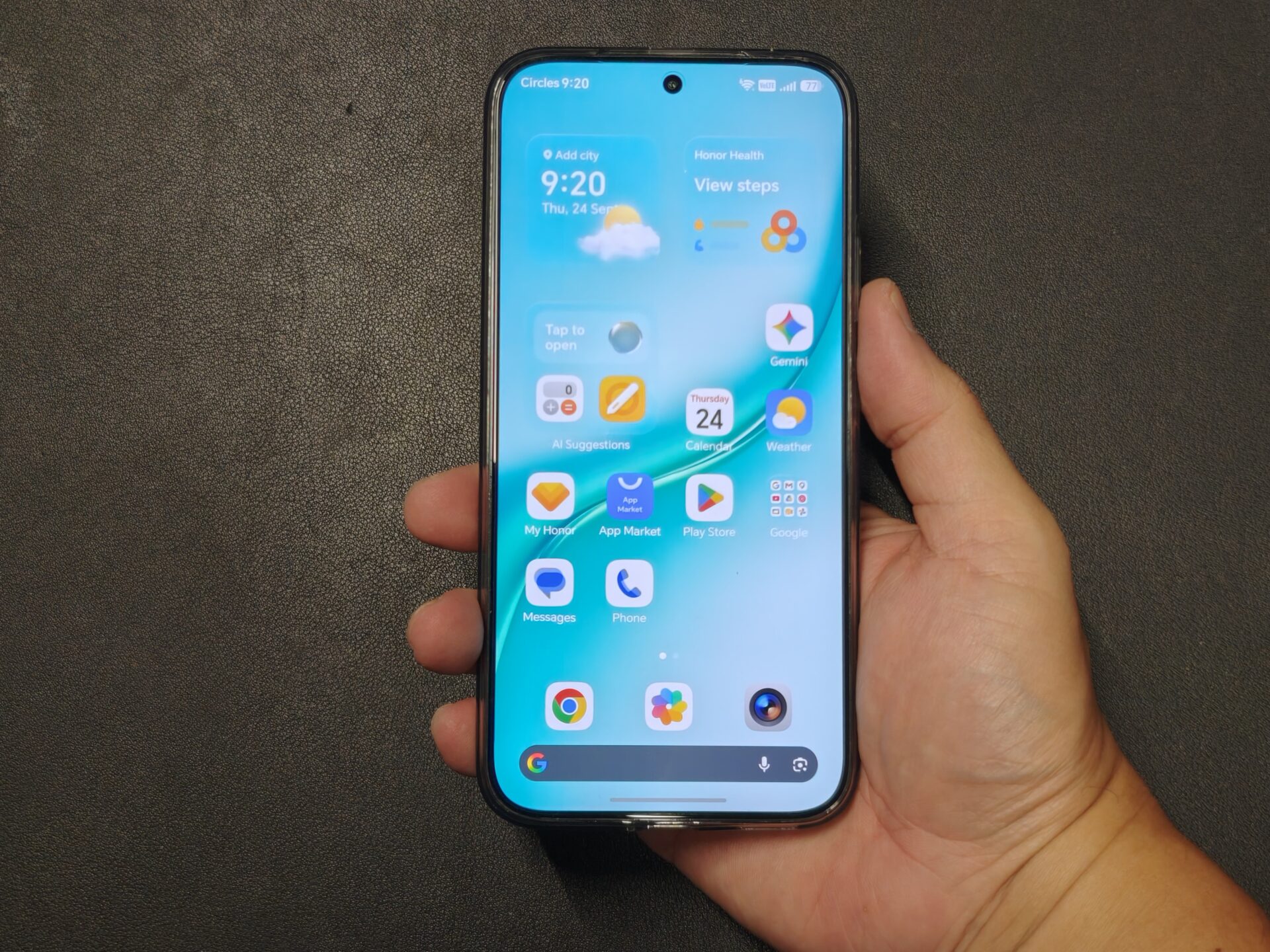
The 6.8-inch display is large and bright, with a 2,788 x 1,280 resolution and up to 120Hz refresh rate. The screen’s peak brightness goes up to 10,000 nits, and the screen remains easy to read outdoors in bright Singapore conditions.
The X9e Pro uses a Qualcomm Snapdragon 6 Gen 5 processor with 8GB of RAM and 256GB of internal storage in the version tested. The 256GB capacity is workable for most users, but it can fill up quickly if the phone is used extensively for photography and video.
Someone who regularly records 4K video, travel clips or long vlogs can fill the storage much faster than expected. Be prepared to fork out more money for models higher RAM and storage.
Social media, maps, music streaming, Web browsing and imaging run without obvious problems. Switching between applications is generally smooth. The phone while not aimed at serious gaming, performs well with casual games and common multitasking is well within its capabilities.
As I mentioned at the start, the main reason to buy the Honor X9e Pro is its 11,000mAh silicon-carbon battery that can support 80W quick charge and 27W wired reverse charging for emergencies.
With light everyday use, the phone’s 11,000mAh battery can easily last for several days. In my testing, there more than 90 per cent of power left, after more than a day of light casual use.
Even after I recorded several short videos and taking still photos during the Mid-Autumn Festival light-up at Gardens by the Bay, the battery still had 75 per cent of power remaining.
Maps, messaging, Web browsing, music streaming, travel bookings and casual photography can be used throughout the day without constantly looking for a power socket. The phone can be charged using the 80W quick charger, which is thankfully included. It can also reverse-charge another gadget at 27W during emergencies.


The Honor X9e Pro has two rear cameras. The main camera uses a 108MP 1/1.67-inch image sensor with optical image stabilisation and an f/1.75 aperture. It is paired with a 5MP ultrawide camera with an f/2.2 aperture and a 16MP front camera.
The main camera produces 12MP images through pixel binning, while the full 108MP resolution can be selected when required. The 12MP mode is the one I would use most of the time and the 108MP high-resolution mode makes more sense for brightly lit landscapes, buildings, signs and other static subjects where there is a reason to crop into the image later.
The lack of a dedicated telephoto camera is pretty noticeable. At 3x zoom, the phone relies on the main camera, digital zoom and image processing. Honor uses AI Enhanced Zoom to sharpen and upscale the result.
It can produce “usable” 3x images in good light, but the image quality drops when zoomed further. Fine details can appear smeared or overly processed, particularly when the lighting is poor.
The ultra-wide camera is the weaker part of the system. The 5MP sensor is enough for basic group photographs, architecture and travel scenes, but it does not provide the same level of detail as the main camera.

More importantly, the ultrawide camera cannot be used with Pro mode or Night mode. This limits its usefulness for photographers who want more control or need to shoot wider scenes in difficult lighting.
That is a significant omission for a travel phone. Night markets, city skylines, buildings and indoor spaces are exactly the situations where an ultrawide camera can be useful. With Night mode, the main camera remains the only choice once the light starts to fall.
Portrait mode came with some issues during my tests. In some occasions, the camera correctly identified a subject, but after the AI processing was applied to create the blurred background, the subject became blurred. For a phone that’s supposed to handle everyday photography, that’s a frustrating miss.
Even worse, there was also no way to refocus on the subject after the photograph had been taken. Because of this, I had to use the normal Night mode without the bokeh effect when shooting in low light.

Video recording goes up to 4K at 30 frames per second (fps). This is sufficient for family videos, travel footage, vlogs and social media. Slow motion is available at Full HD at 120 fps, although good lighting is needed to maintain image quality.
Anyone looking for 4K at 60 fps, more advanced stabilisation or greater control over video recording will need to move up to a higher-end phone.
If battery life and durability are your priorities, the Honor X9e Pro with its 11,000mAh battery, 80W charging, large display and strong water and drop protection would be interesting.
It appears a strong option particularly for travellers, outdoor users and anyone who spends long hours away from a charger. If the camera capability is more important, phones like the Vivo X300 or Oppo Find X9 will be a better fit.
What the Honor X9e Pro has going for it are prices that might catch the eye of buyers on a tight budget. The basic version with 128GB of storage goes for an attractive S$529, while the 256GB one costs S$659 and the top-tier 512GB model will set you back S$829.