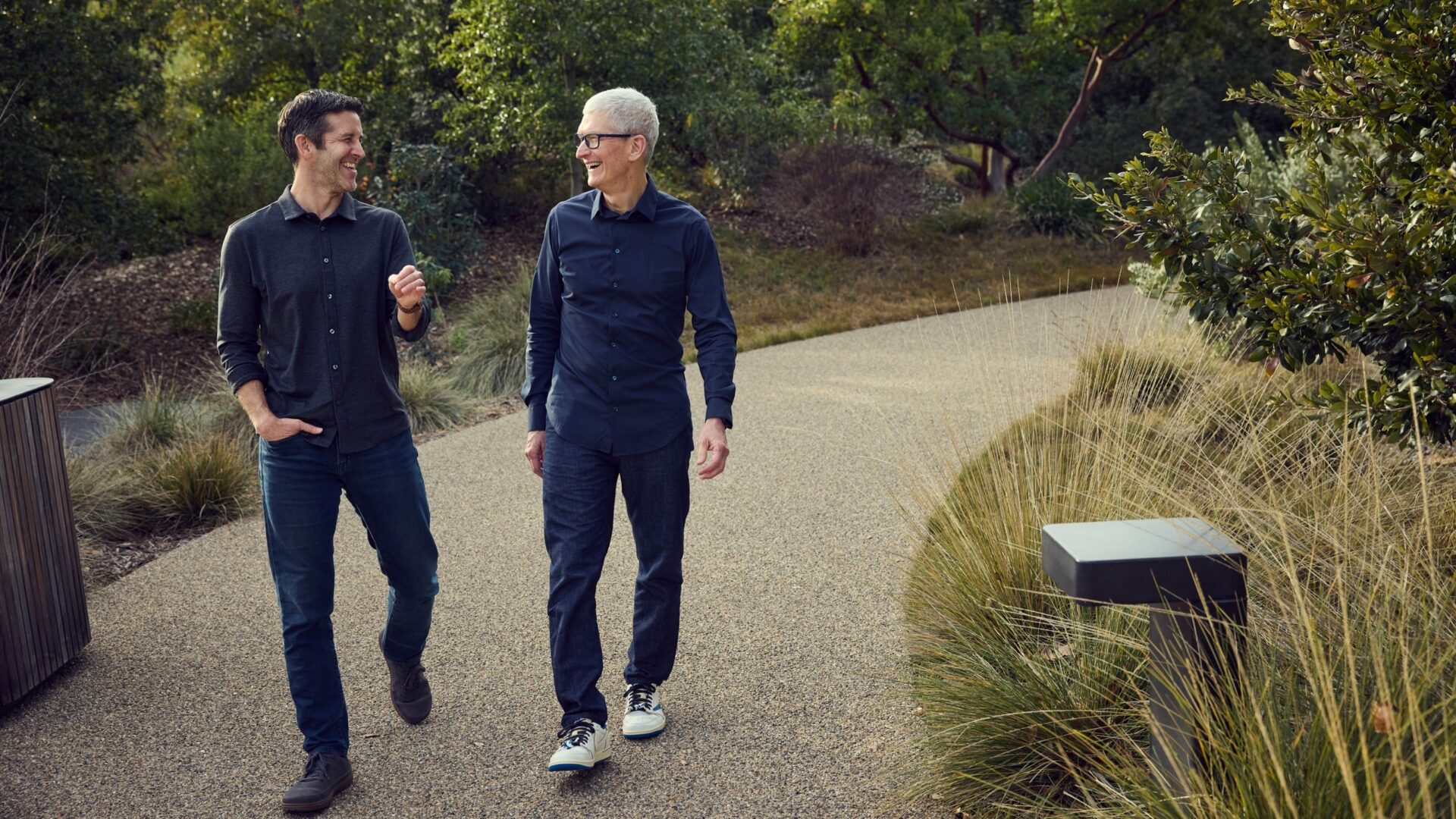
A new Apple CEO is stepping in, after Tim Cook’s remarkably successful 15 years at the helm. This is more than a regular changing of guard.
You could say this is even a fundamental recalibration of Apple’s corporate soul. The Cook era was defined by operational excellence, with his mastery of the supply chain and services turning Apple into a US$4 trillion global utility.
The Ternus Era signals a return to engineering and the laboratory. By elevating John Ternus, 50, Apple’s long-time head of hardware engineering, Apple’s board is making a statement – in the age of AI, the physical device remains the primary competitive moat.
After more than a 18 months of intense competition among AI companies, you could say we have reached a point of model parity.
Whether you use OpenAI, Google Gemini, Llama or an open-source model, the argument is everyone has access to the same “brain” that can handle about 90 per cent of daily consumer tasks. Consequently, the software itself is no longer a sustainable competitive advantage.
While competitors focus on cloud-based large language models (LLMs), Apple is betting that the winner of the next decade will be the one who can master the thermal, silicon, and material science required to run these “brains” locally and elegantly.
Hence Ternus, the architect of the Apple Silicon transition. By appointing the executive who successfully migrated the Mac from Intel to the Arm-based M-series chip, Apple has given him the mandate to merge silicon and material science into a post-iPhone future.
This succession has been the subject of intense speculation over the past year. Cook himself spent the last few months giving media interviews where he actually dismissed retirement rumours while at the same time dropping hints about long-term succession plan.
You can see Cook’s move to executive chairman as a pragmatic split in the CEO’s duties, allowing Ternus to focus on products with Cook as the senior statesman handling the high-stakes politics of global diplomacy.
Cook’s legacy is undeniable. Under his watch, Apple became the first public company to reach a US$1 trillion market cap. The company’s revenues quadrupled to more than US$400 billion from 2011 when he ascended the top job.
The hardware “moat”
On October 2010 in San Francisco, at Apple’s “Back to the Mac” event, I heard Steve Jobs remark that touchscreens will never come to the Mac. “Touch surfaces don’t want to be vertical”, he insisted. They give great demos but would be ergonomically a disaster because your arms will fall off after extended period of use, he said.
As they say in tech, Never Say Never.
Under Ternus, Jobs’ rigid rule is likely to bend. Technological advances have finally caught up to Jobs’ concerns.
The rumoured new macOs Tahoe, expected to be released this year, is to be designed with a hybrid interface that only reveals touch targets when a finger approaches the screen, minimising the time your arms needs to be raised. This hybrid workflow shifts between traditional cursor use and touch interaction.
Besides, consumer expectations are changing. After 15 years of iPads and iPhones, users (especially younger ones) reflexively touch every screen they see. Apple is reportedly tired of fighting that instinct.
This hardware-first philosophy will likely manifest in bold new forms, such as the rumored “iPhone Ultra” (a foldable phone). A device that functions as a phone but unfolds into a 7.8-inch workspace.
More than a foldable phone, it’s the spiritual successor to the iPad mini, bringing iPadOS-style multitasking into a pocketable frame.
However, the transition is not without its skeptics. Contrarian voices argue that Apple may be “fighting the last war” by doubling down on hardware engineering.
Critics point to the AI commodity trap. They argue that in a world of “Invisible UIs” – where the system anticipates what you want to do when and where – and agentic AI, the hardware box matters less.
A CEO who excels at thinning out aluminium may not be the visionary needed to fix Apple’s lagging software intelligence.
There is also the risk of institutional inertia. As a 25-year Apple veteran, Ternus is seen by some as a steward rather than a disruptor. The fear is that Apple is prioritising stock stability and orderly succession over the radical, messy innovation required to find the next iPhone.
What you can’t argue with is how poetic the leadership switch is. Apple turned 50 years on April 1, having successfully revolutionised the PC and mobile eras. It remains nearly unique in tech history for staying intact, and avoiding, major spin-offs or divestitures that saw rivals like IBM and HP fracture under pressure.
As Tim Cook moves to the board to handle global diplomacy and policy, Ternus inherits a company at its financial peak but also a technological crossroads.
Whether he can turn the world’s most profitable machine back into its most innovative laboratory will be the defining story of the next decade in tech.