Singapore’s largest telecom operator, Singtel, is tearing up its own organisational chart and coming up with a new one that contains both human employees and AI agents.
This new hierarchical chart will no longer be like before, where a manager looks after a team of people. In the past, seniority was determined by size and complexity of that team and the revenue the team generated.
Singtel’s new framework will look vastly different, the company told reporters last week in a briefing on its AI transformation plans.
As it starts deploying more AI agents, managers will no longer just supervise people, they will lead a mixed fleet of people and virtual bots.
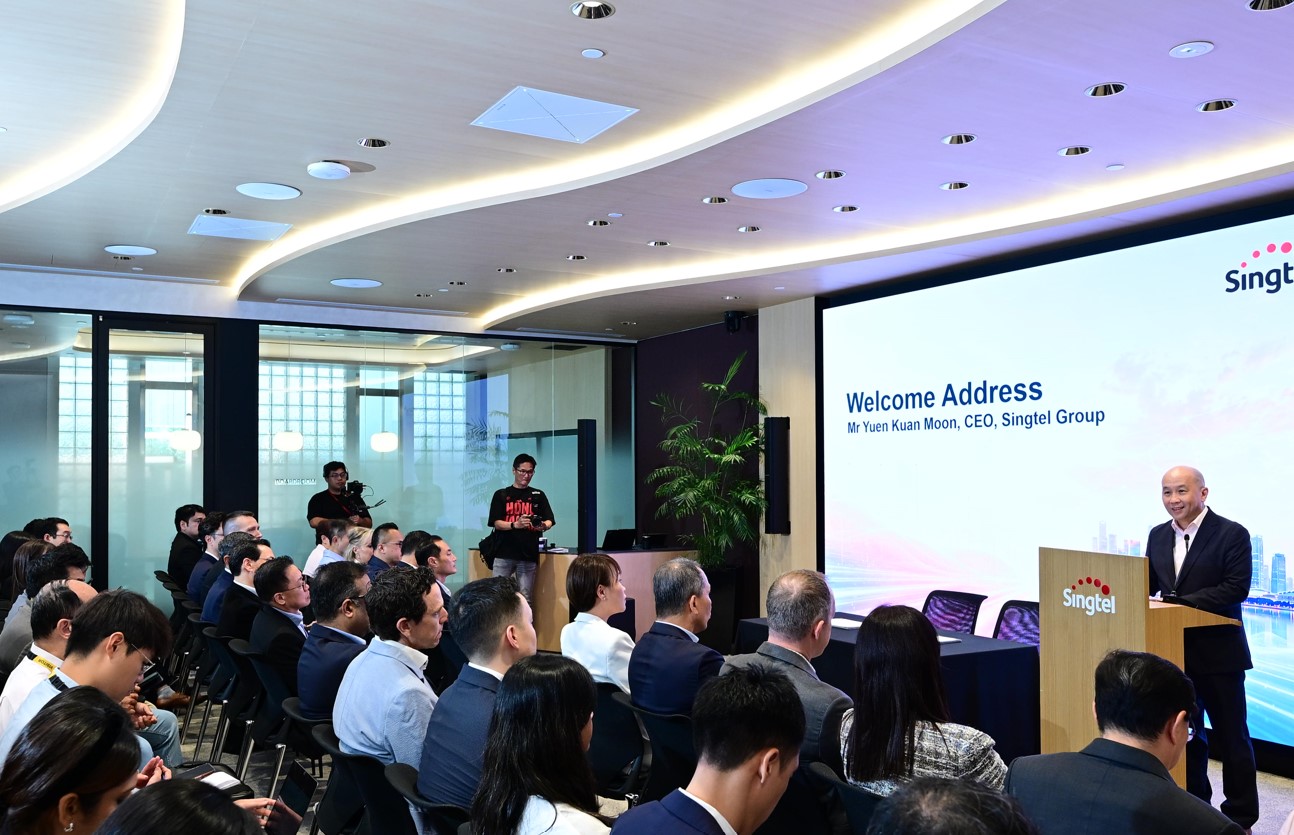
“We are working with the HR (human resources) team to redesign our organisational chart where a manager is looking after humans today but tomorrow he will be looking after humans and bots,” said Singtel group chief executive officer, Yuen Kuan Moon. “How should his job be scoped?”
Traditionally, a job scope was determined by the size and complexity of the work, largely measured by revenue size, profitability and people headcount. Managing a mixed team of humans and bots would completely upend the organisational chart and raise unprecedented corporate issues.
Soon, it will be common for managers to oversee a hybrid team of, say, 100 people and 100 bots. This will inevitably spark friction in the corporate hierarchy, Singtel predicts.
Said Yuen: “Executives will look across the aisle and ask, “I look after 100 human beings, the other person look after 10 human beings and about 100 bots. Why is his role considered more senior than mine?'”
Recruitment is another critical area that demands deep reflection. In the past, potential candidates have been identified by evaluating their sequential achievements – assessing value by the number of years spent performing specific functions. While this linear experience remains valuable, the AI era requires a shift toward dynamic, skills-based evaluation.
“Tomorrow, it will be this plus what skills you possess that’s useful for the AI roles. We need a lot of effort to re-think this,” stressed Moon.
He pointed out that workers must reskill and upskill to achieve AI fluency, stressing that professionals equipped with AI skills will inevitably replace those who refuse to adapt.
He was speaking at a media session after Singtel inked a strategic partnership with Digital Industry Singapore to accelerate a multi-year AI transformation programme across the company.
This agreement includes an eight-figure government grant for strengthening its foundational AI capabilities including AI talent development, setting up governance and technology frameworks and building enterprise advisory and implementation expertise to support AI deployments.
Singapore’s largest telco has already trained about 13,000 employees in Singapore. To bolster its AI capabilities, it aims to train 3,000 employees as AI practitioners and another 300 as AI specialists.
These efforts seek to deepen AI expertise across the telco group and equip its teams to operate effectively in the AI-enabled environments.
Bret Taylor, chairman of OpenAI and CEO of Sierra AI, pointed out that most of the current AI advancements did not exist more than three years ago.
“We are all new to it. The computer science skills I learnt in university are irrelevant today. Reskilling is the answer for the workforce,” said Taylor, who witnessed the signing of the partnership agreement between DISG and Singtel and was present at the media session.
His advice to workers is to worry less about job displacement because the technology is so new, “you’re an expert as anyone else”.
When it comes to governance, Moon emphasised that it was critical for enterprises to set up their own guardrails for AI safety.
Management must also accept ultimate accountability when these guard rails break and leaders must be prepared to explain any mishaps to the public, he noted.
Taylor elaborated on the unique nature of this challenge: “AI is both intelligent and dumb. It can do a mathematical proof yet it also lacks common sense. This paradox is very hard for society at large to understand.”
One example is a bank deploying an AI agent to offer financial advice. While the natural inclination is to demand 100 per cent perfection before launch, Taylor noted that this standard may be unrealistic.
“Humans are not 100 per cent perfect, either,” he pointed out.