Smart watches have evolved far beyond telling time. Today’s models handle notifications, navigation, payments, and a growing ecosystem of apps alongside health tracking. The Fitbit Air takes a different approach, focusing on passive health monitoring without demanding constant attention.
At first glance, it resembles a typical fitness band, with a slim strap and a compact module that rests against your wrist. The key difference becomes clear once you wear it – there is no display.
The module houses its sensors on the under side, with a Google logo on the other, and a small LED indicator on the side for basic status updates. Swapping straps is straightforward by pushing the module out and inserting it into another band within seconds.
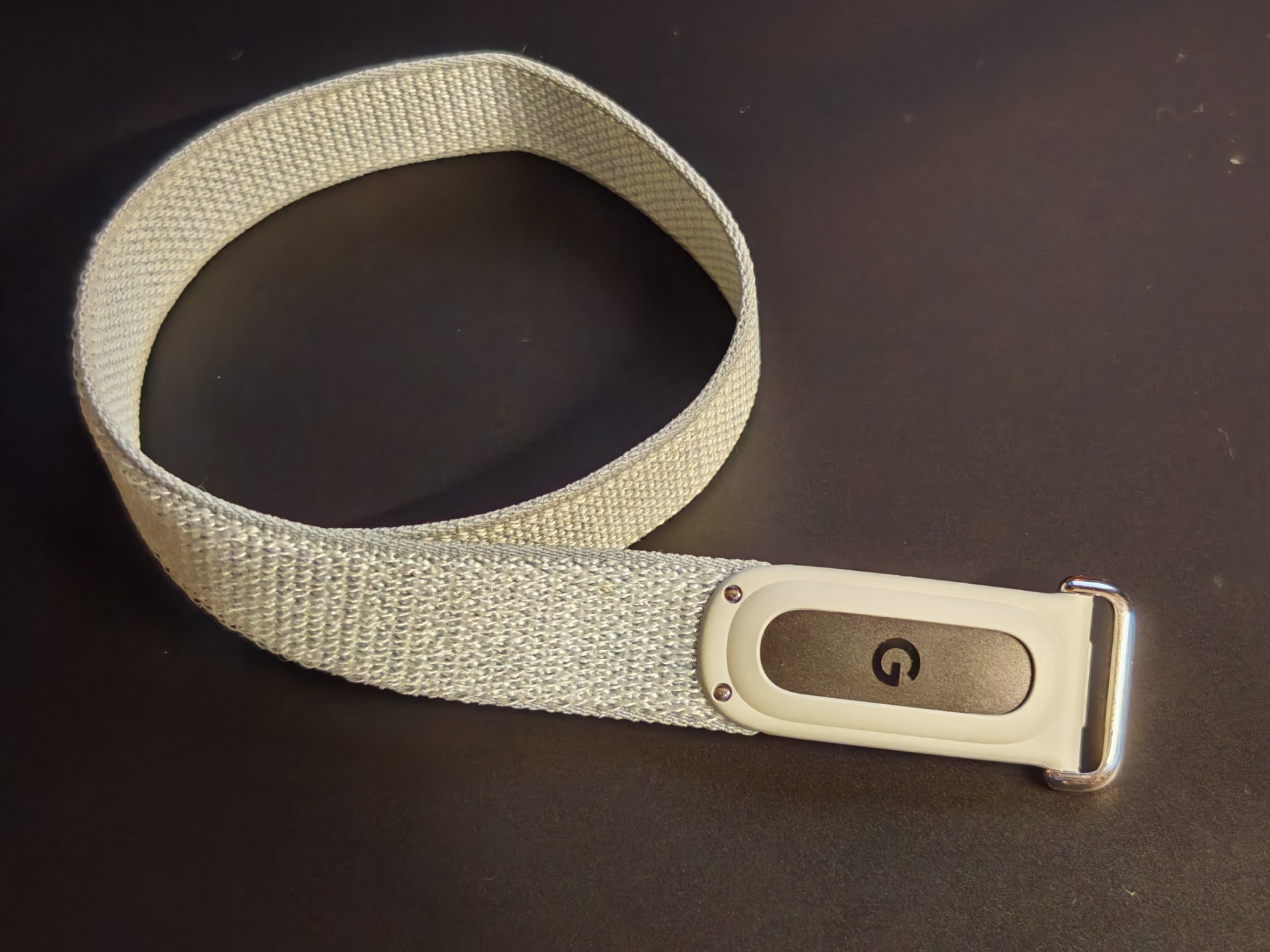
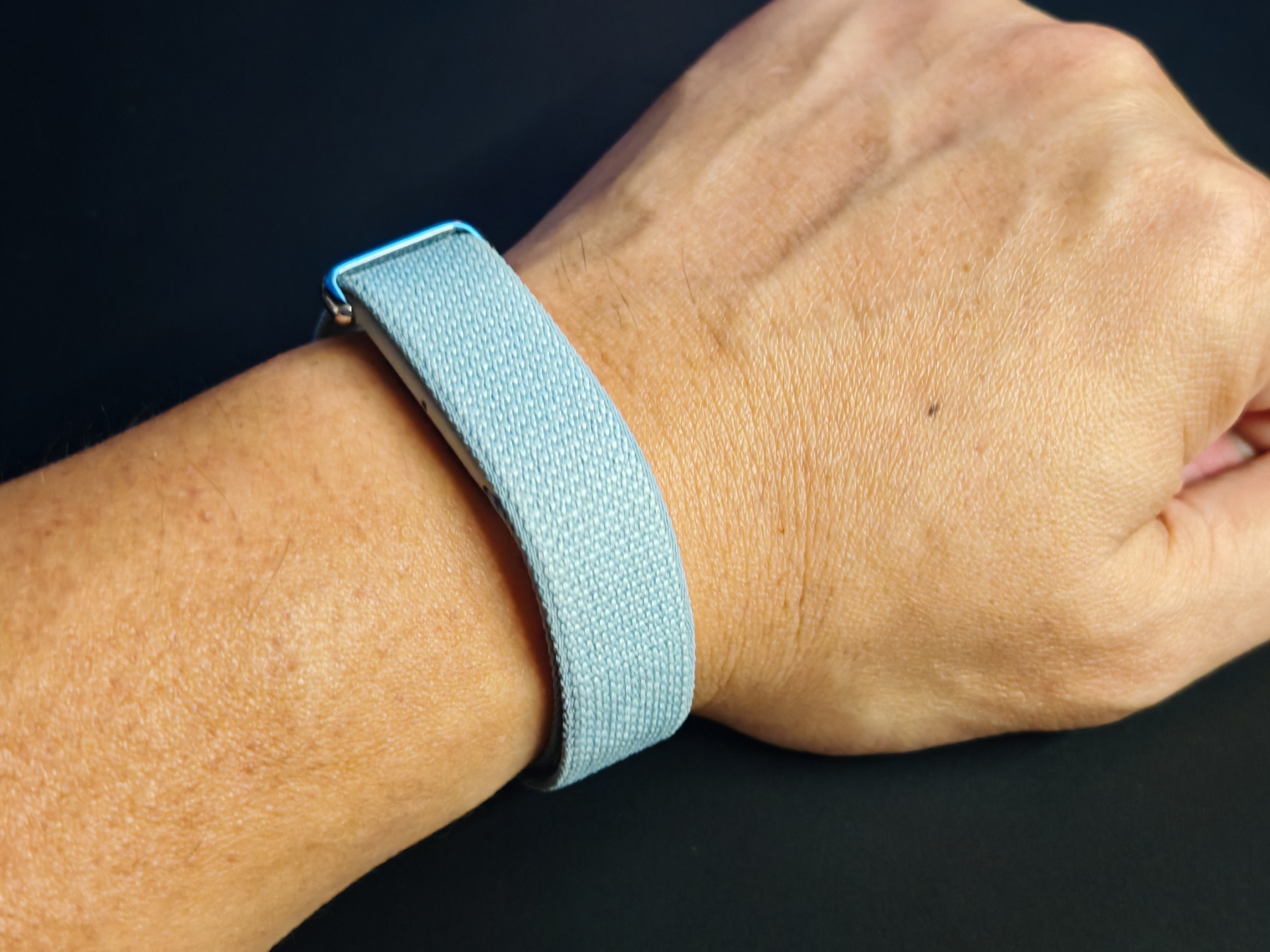
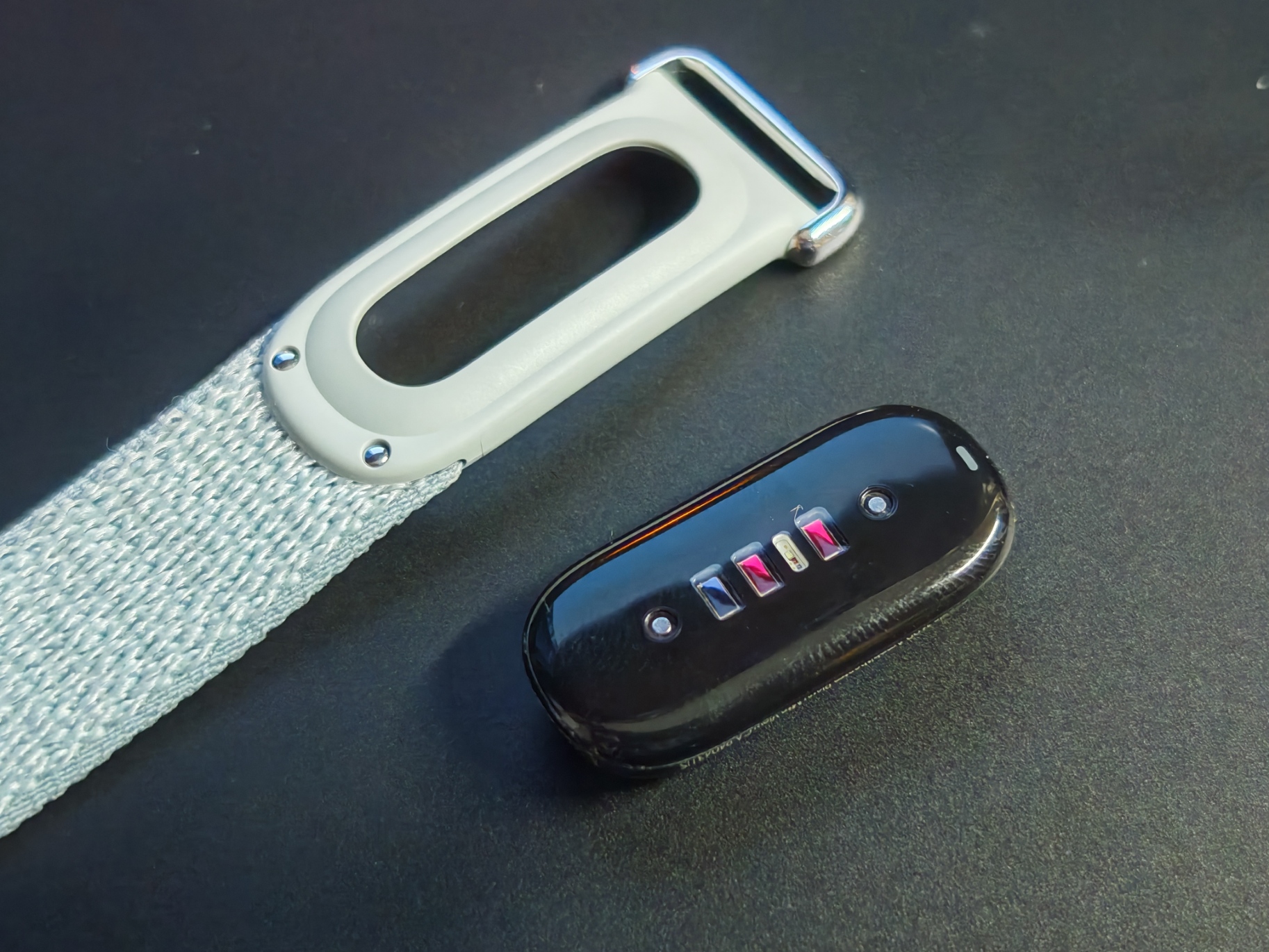
Despite its minimal design and 12g weight with the band, the Fitbit Air includes a full suite of sensors. It tracks heart rate, blood oxygen, skin temperature, sleep quality, and daily activity. All data is presented through the updated Google Health app.
Much of the experience depends on the app. While core tracking is available for free, the more advanced features require a subscription at S$12.98 per month.
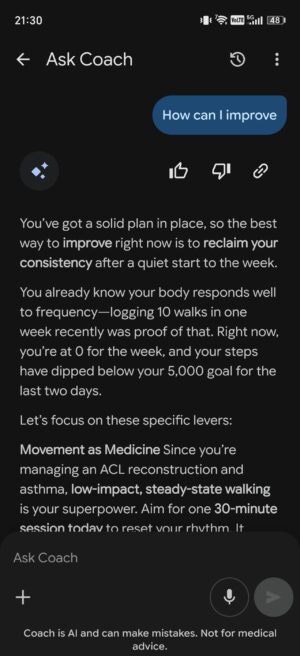
This unlocks AI-driven insights via a conversational interface using personal data such as age, height, and weight to generate tailored fitness plans, provide sleep analysis, and offer broader health insights.
It also adapts recommendations based on changes in your routine, such as reduced activity or poor sleep. A library of guided workout videos is included for users who prefer structured sessions too.
For Singapore users, the Fitbit Air works with the government’s Healthy 365 app, allowing continued rewards tracking such as SimplyGo fare redemptions and Fairprice Supermarket vouchers, so you don’t need another device. Battery life is another strong point, lasting around seven days on a single charge during testing.
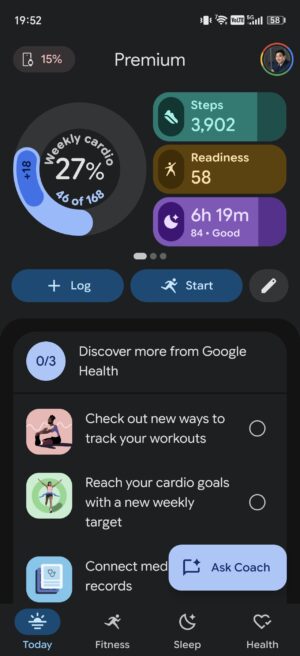
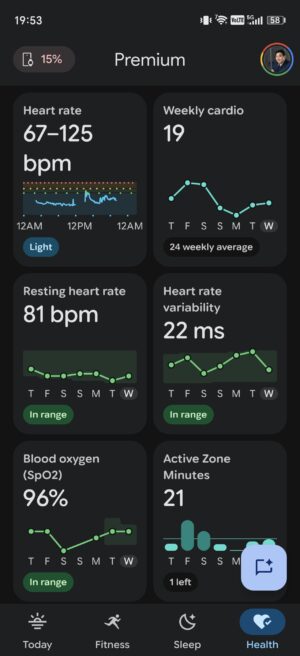
A good amount of numbers here. SCREENSHOT: Wilson Wong
The bad news is that simplicity comes with trade-offs. Without a display, most interactions require a phone which is an additional thing to bring for your sessions. Choosing and starting a workout such as swimming, jogging or cycling, must be done through the app. There is no way to check stats directly on the wrist too.
This becomes more obvious when compared with a device like the Fitbit Charge 6. On a typical cycling session, you can start a ride directly from the screen without reaching for your phone. During the ride, you can check your progress at a glance and even follow basic navigation cues.
After the session, you can stop for a drink and pay using the watch. It is a small thing, but it shows how much convenience is added with a screen and wireless payment.
The S$189 Fitbit Air doesn’t offer these. Perhaps more importantly, many of its key features are locked behind a subscription. While the distraction-free design may appeal to some, the compromises are significant.
This makes alternatives like the Fitbit Charge 6 more compelling. Despite being older, it offers a display and a broader feature set for only slightly more at S$229.95. If you wish, notifications can always be disabled too.
So, in the end, the Fitbit Air succeeds as a minimal, unobtrusive health tracker. The real question is whether that simplicity justifies the price when more versatile options are available at a similar cost.