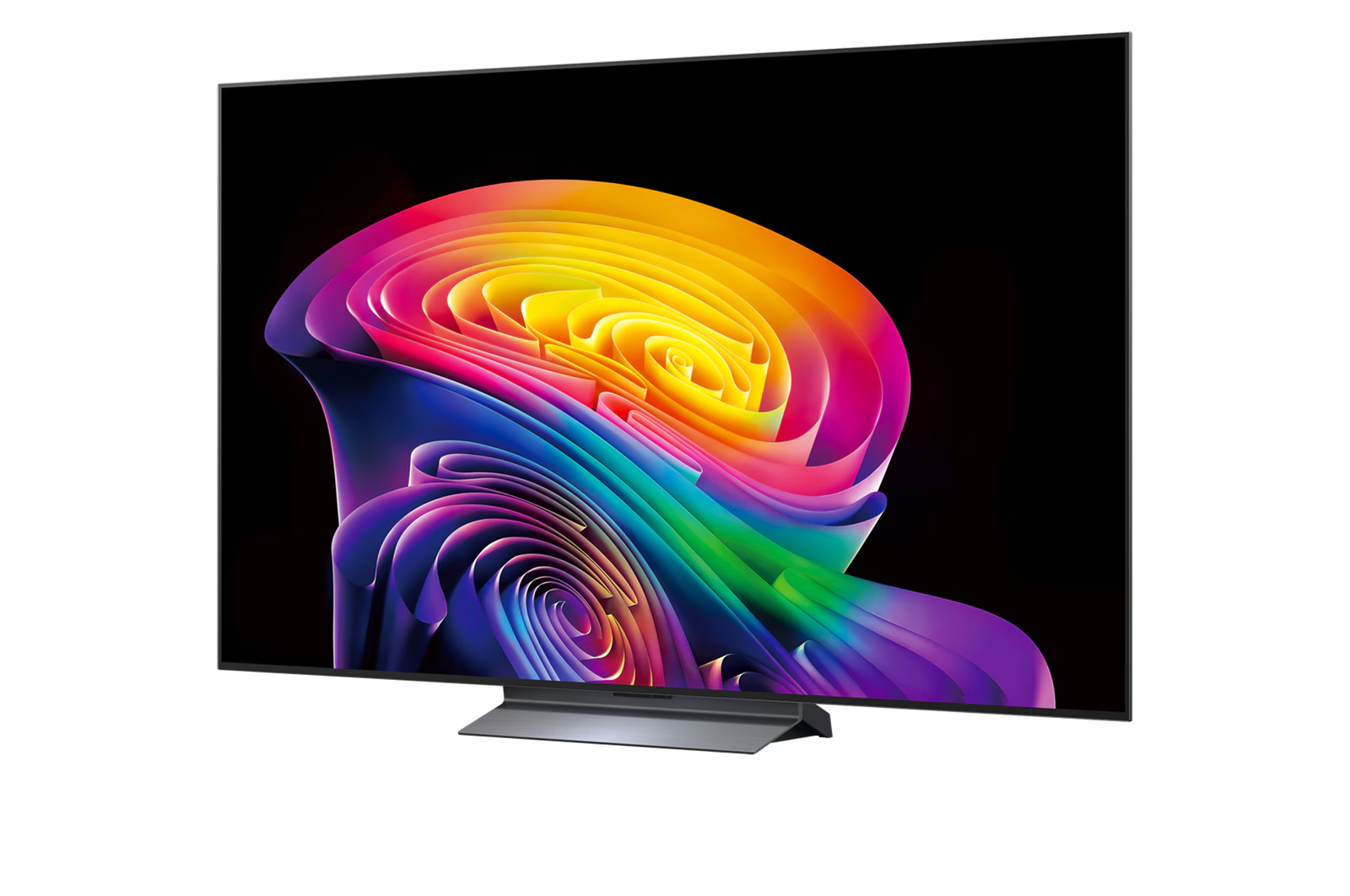
The LG OLED evo AI C6 TV is a mouthful of a name but really the key is in one word – OLED – which means eye-catching image quality.
The LG C6, as most people will call it, offers unrivalled deep blacks, high contrast and smooth, natural motion that are the trademark of premium OLED TVs.
If you’re gunning for the best way to watch your movies and play your games, the LG C6 should be something to look out for at the showroom.
Note that it’s the “middle child” of the Korean electronics giant’s OLED family this year, flanked by the entry-level B6 and the flagship G6.
The mid-tier C6 gets LG’s new Alpha 11 AI processor, which the entry-level model doesn’t. However, only the larger 77- and 83-inch C6 models have the more advanced Primary RGB Tandem 2.0 OLED panels that the costlier G6 series also offer.
The 65-inch C6 model I am reviewing comes with a regular white OLED (WOLED) instead of the more advanced panels, which deliver what LG calls Hyper Radiant Color. In real terms, higher contrast and voluminous colours.
I didn’t have a chance to test the two types of panels side by side. That said, the “regular” OLED panel that the 65-inch LG C6 offers is already plenty good.
If I were to compare to, say, the latest Micro RGB panels, I’d still prefer OLED for image quality. It’s very simple – fire up a show that features lots of contrast and you’d never turn back.
For this, there are few movies better than Interstellar. In its many scenes of space exploration, the vast emptiness of the universe is never as compelling as seen on an OLED TV.
The LG C6’s excellent colour and contrast are obvious in another Chris Nolan movie – Oppenheimer. The scenes of the atomic bomb test, with the spectacular nuclear explosion in the night sky show off the vibrancy and dynamism of an OLED TV so well.
I also like that the various shades of black in The Batman are presented well with the LG C6. This is where good contrast and colour come across. Plus, details are clear even in dimly lit scenes.
The good news is that you don’t have to keep switching the Picture Mode from Regular to Filmmaker that’s great for a dimmed-down room.
Shows on Disney+ that support Dolby Vision, like Star Wars: The Mandalorian and Grogu, will trigger the Cinema Home mode that looks like the Filmmaker mode. On shows like Shelter on Amazon Prime, you get switched to the Creator Original mode.
What if you don’t want the “film-like” look of movies? Fire up a 4K video of, say, a walking tour of Tokyo’s bright streets at night, and you’d love the vivid colours and a highly detailed presentation of one of the world’s iconic cities.
From the wet windows on a rainy day down to the cracks in the pavement, the LG C6 shows off images with the sharpness and lifelikeness that you’d expect from a premium OLED TV.
I also played back some football matches from the World Cup and this is where the ultra-sharp, fluid motion from a high-end TV shows its worth.
You don’t get so much blur from players moving around the pitch. Even slow-motion replays are sharp – so sharp you’d hope the video assistant referees (VARs) have similarly good screens!
For my tests, I watched the shows both in the evening with the lights dimmed and on bright days with a full-length glass door on one side of the living room. The LG C6 works better in low light but it’s certainly bright enough even on the brightest day.
To be sure, this is a souped-up OLED TV. What I’m less certain about is the cramming in of AI features, which is what you get from other TV makers as well.
For the LG C6, there’s a prominent AI button in the remote which fires up keywords for say, movie names or TV features like brightening the display. There’s even Copilot generative AI to create your own music. But why do I need this so urgently, when I’m watching Dune?
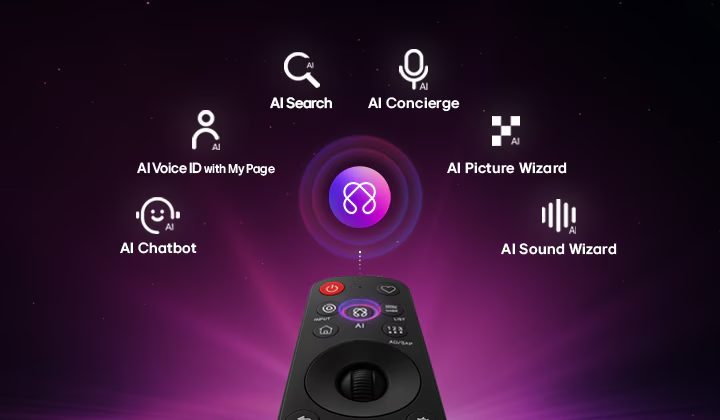
Speaking of the remote, yes, this is LG’s usual “magic wand” remote that you can wave at the screen to move the cursor. It also works like a more regular remote with the directional buttons, but there’s an extra option.
I’ve liked this magic wand approach in the past but I can imagine some users will get confused. It does take a bit of getting used to.
What I don’t really like is the rather cluttered line of icons right across the screen for the current LG WebOS software interface. I used to like this a lot but now the row of apps, like one for a live LG Web TV feed, feels overwhelming to scroll through.
Fortunately, there are previews and quick access to the programmes you’ve been watching across streaming apps, from Disney to Netflix. So you can still get started pretty fast (after looking past the line of app icons).
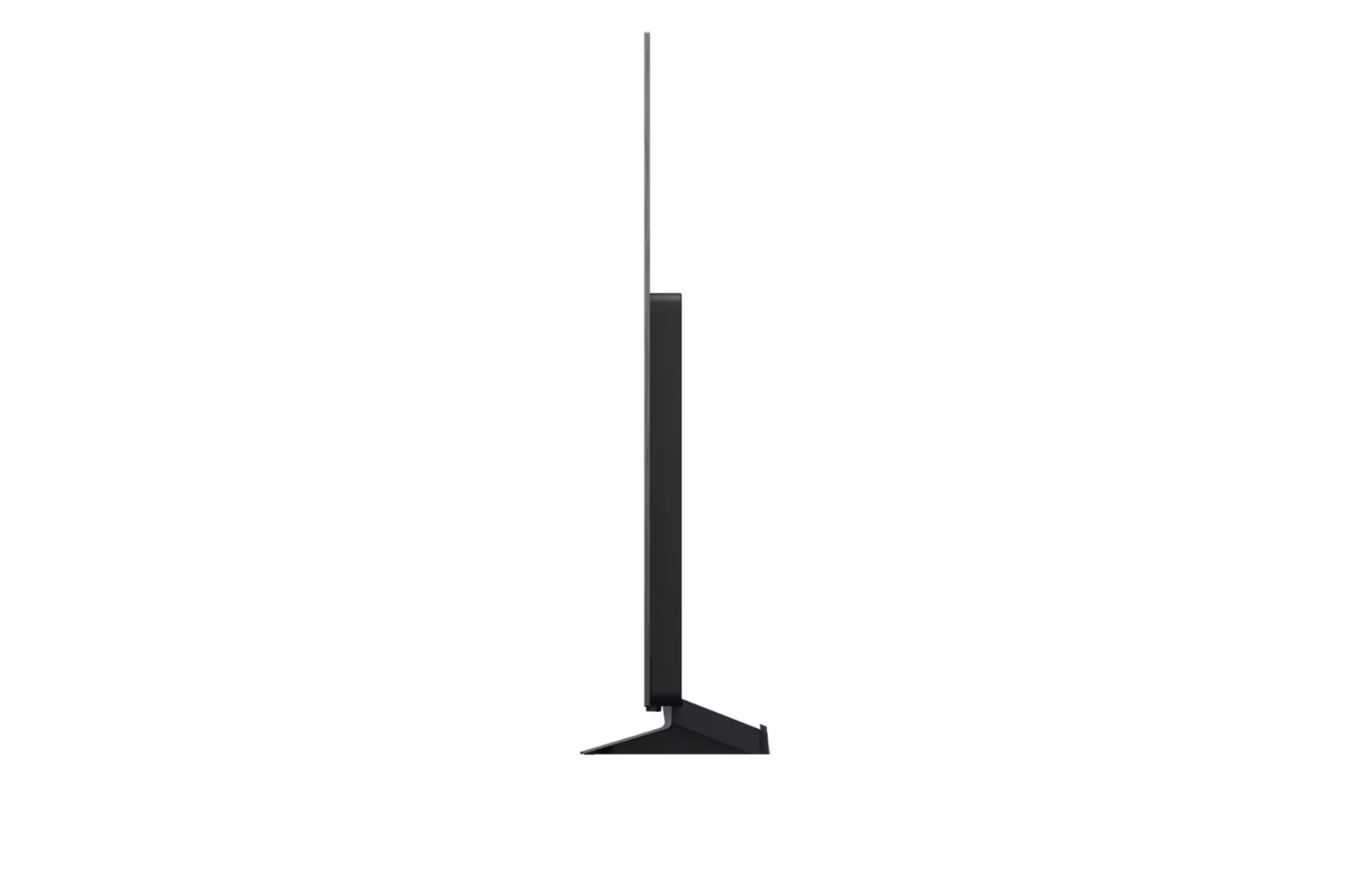
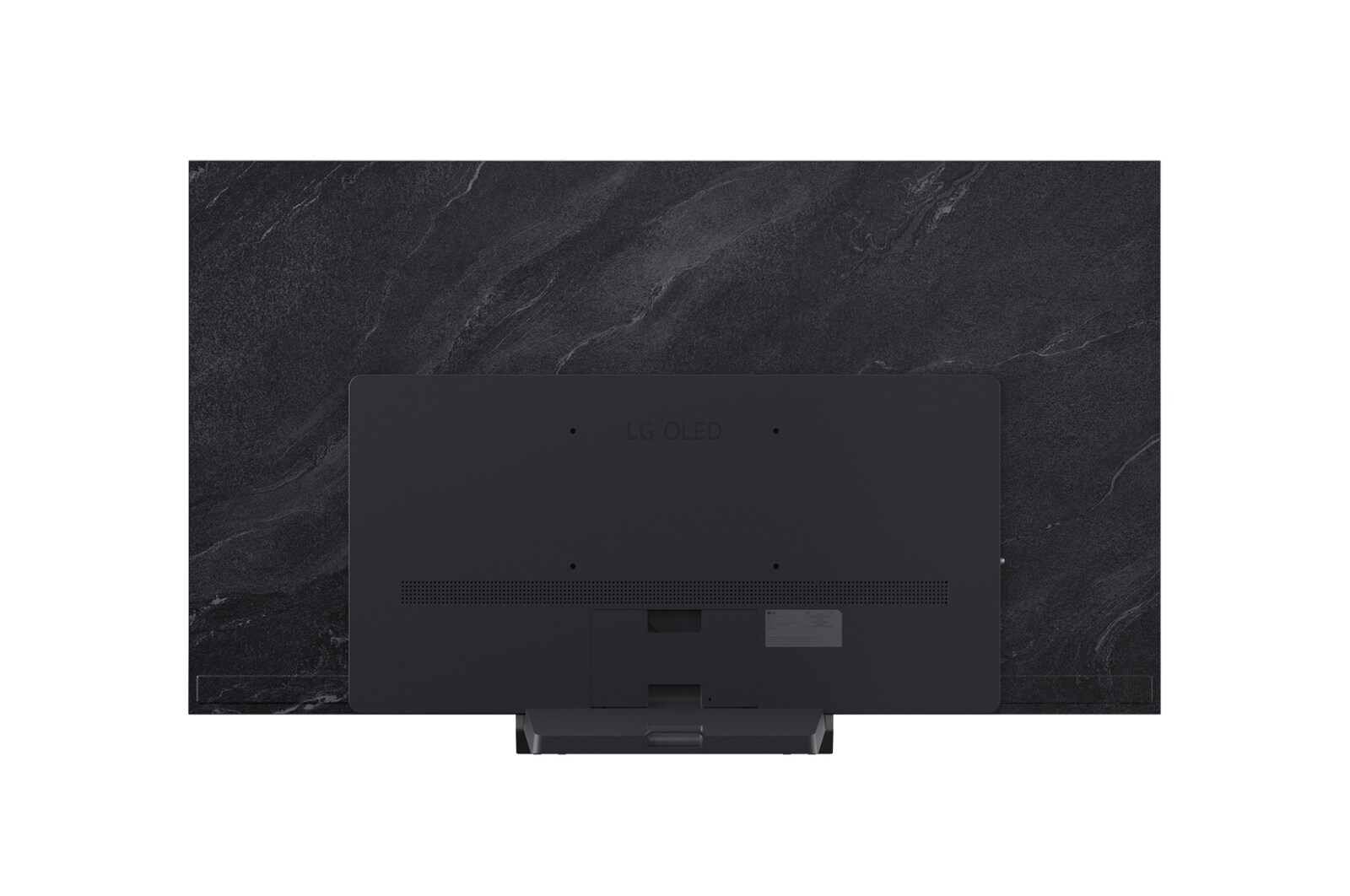
Looks-wise, the C6 display is extremely slim like other OLED TVs, though it is stuck to a “box” of sorts that contains the electronics to power the screen.
So, this TV would not be fully flush against the wall if you mount it. For an ultra-slim look with the TV fitting on the wall without any gap, you’re looking at the G6.
The “box” on the back of the LG C6 lets you connect directly to your external devices, be it a PC, game console, a sound bar or a home theatre receiver.
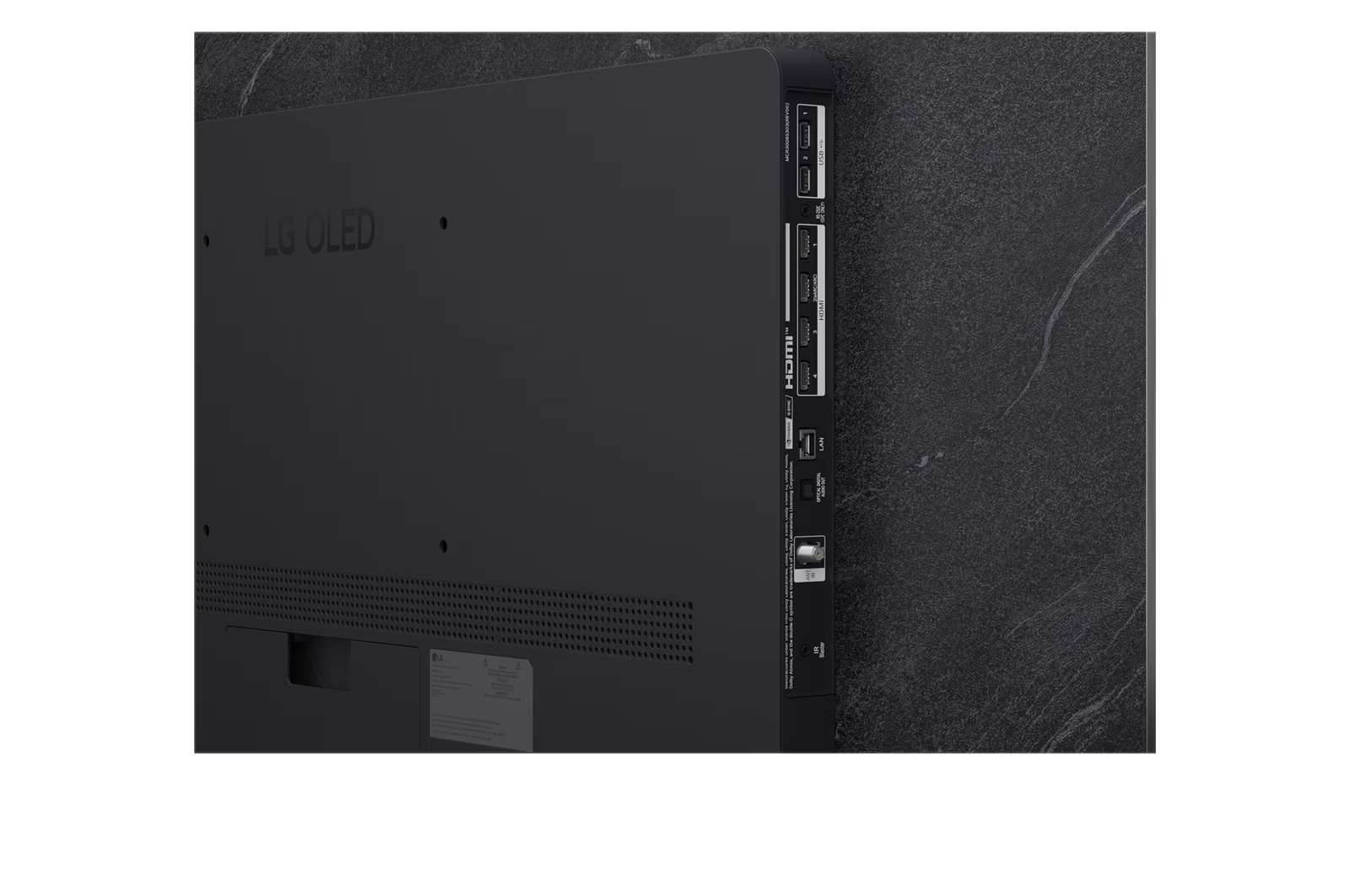
You get four HDMI 2.1 ports, with support for PC gaming going up to 165Hz (at 4K resolution), which is outstanding. This is a screen fit for the fastest games.
What I’m not crazy about is the LG C6’s sound. While decent with its clarity, it doesn’t have the scale and slam that are more apparent on Samsung’s R95H, for example.
In other words, you can expect to spend a bit more for a decent sound bar or maybe a real surround sound system with discrete speakers to match the great visual experience.
Like LG’s earlier OLED TVs, the 65-inch C6 is a great TV to have if you are after a premium experience. It’s brighter now though it lacks the newer, more advanced Tandem OLEDs in the larger C6s and the costlier G6 range.
If you’re set on an OLED TV, the question is whether you should pick this middle-of-the-road 65-inch C6, which has a hefty sticker price of S$4,099 (though it’s likely a fair bit less in the stores).
The similarly-sized G6, notably, goes for S$4,999 and sports a more advanced OLED screen. At the other end, the B6, which lacks the faster processor of the C6 but has the same OLED screen, is going for S$3,599.
If you’re after the cheapest OLED TVs, the LG B6 is clearly lighter on your wallet. Plus, don’t forget rivals like Samsung also make competitively priced TVs with regular WOLED panels as well.
If you want to stretch your budget, the G6 is going to be an alternative to the C6 as well. That’s assuming you can get prices that are close enough to the C6 to consider it.
So, the C6 is another great OLED TV from LG but whether it’s the best choice depends on how deep your pockets are, even if you’re committed to paying a premium for image quality!