As if you needed any more acronyms when buying a TV today, here’s another new display technology – Micro RGB – that promises great image quality in the new Samsung R95H model.
The Korean electronics giant’s new high-end TV sits alongside its other premium line-ups in the shape of OLED and Mini LED TVs.
So, what’s the difference? When even Samsung has a detailed page on its website explaining various display technologies, you know it’s hard for the consumer.
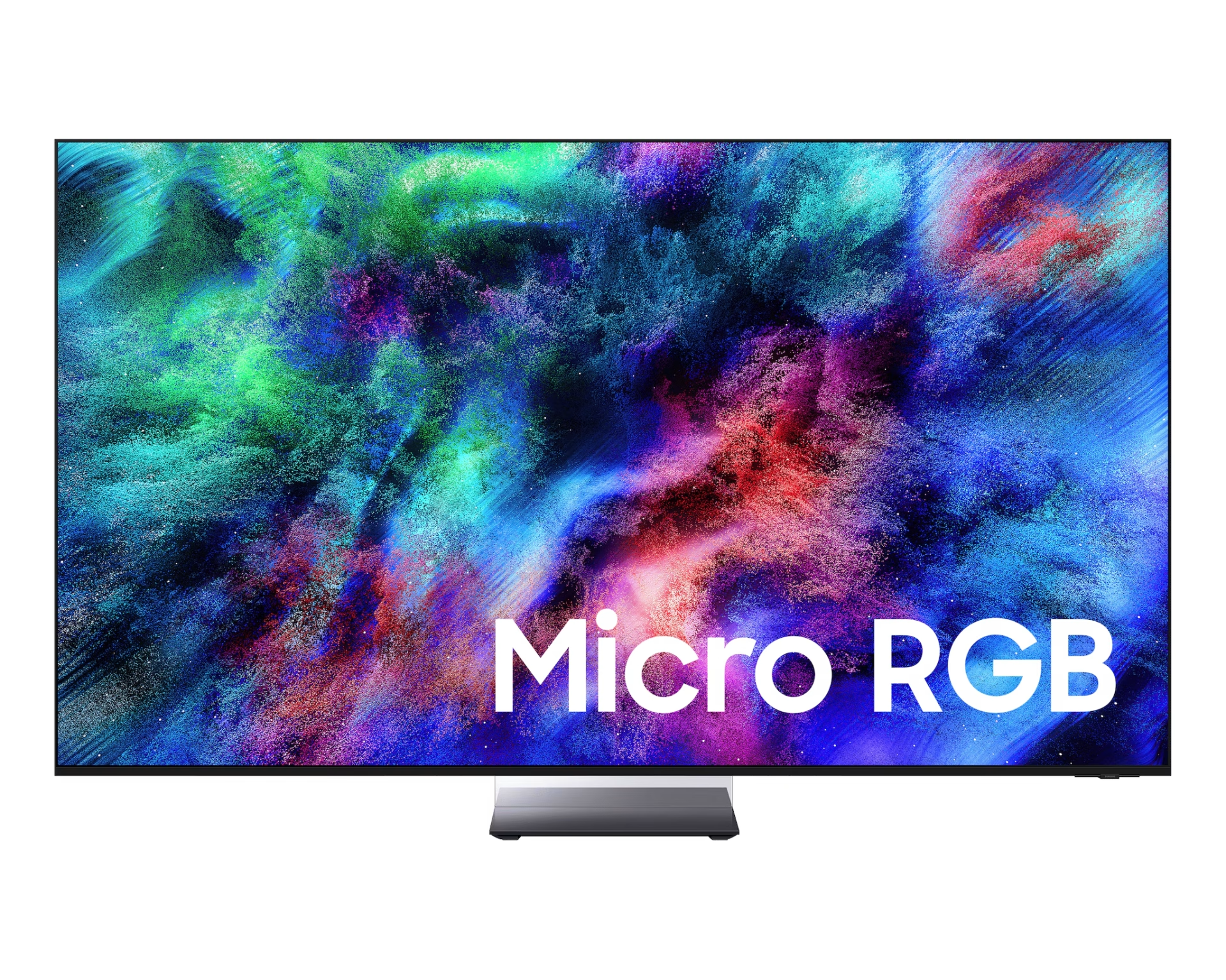
In a nutshell, Micro RGB is a step up from many basic display technologies today. First, it has relatively small (“micro” is smaller than “mini”) LED lights that can give better control unlike a display panel that uses bigger LED lights.
Second, Micro RGB LEDs work together to show a picture on screen and does not need a typical backlight (like many entry- or mid-level TVs) that often leads to image problems like blooming.
Third, Micro RGB improves on cheaper TVs that use a blue or white backlight to illuminate a screen – the newer technology relies on red, green and blue (RGB) backlighting, which delivers better colours.
In many ways, this advanced backlighting system is what makes Micro RGB TVs like the Samsung R95H able to offer an upgraded experience.
That said, technically speaking, Micro RGB is still some ways from self-emitting display technologies used in flagship OLED TVs and rare Micro LED TVs (which are generally still too expensive to make).
TVs using these advanced technologies have pixels that can individually turn off, which means extreme control over contrast and colours. And yes, they can go totally dark, say, in a movie scene featuring outer space.
Alright, back to the Samsung R95H, if you’re still with me. Whatever the acronyms behind it, the new TV is certainly impressive, especially when it comes to brightness and colour vibrancy.
Even in a bright living room with glass windows on one side, images do not appear faded under the harsh glare of Singapore’s tropical sun.
Fire up a dark scene in a movie, and you’d see the details emerge. On another TV, it might be a challenge to see everything that’s in the video.
Of course, it helps that Samsung has added its glare-free treatment for this high-end TV. Image quality is nothing if it is only good in a darkened showroom and not in your home.
I also like the extremely rich colour palette, which is what RGB TVs promise. More than the highly saturated sort of vibrancy you see on some “amped-up” TVs, the display technology behind the screen does make a difference.
I play Gladiator II and the rich colours flaunted by the Rome royalty catch the eye. The gold trims in costumes, in particular, showcase the opulence of the privileged class well.
Another big thing about the Samsung R95H is the smooth motion. It’s sharp in focus yet does not seem overly done like with the soap opera effect in the past.
Is it as smooth as OLED? Well, generally, when watching a shot from a camera that is panning, you don’t get the stutter and lag you get on older LED TVs. I’d say the “micro” LED lights in the Micro RGB technology do help out.
Does it have the deep blacks of an OLED TV? Well, it’s very close. I fire up Tron: Ares and a bike chase scene at night showcases the night sky and buildings extremely well. The characters’ dark costumes contrast well with the blazing red lights of the bikes.
To be sure, I play the good old Interstellar movie, which has several scenes of pitch-black space in its glorious nothingness. The void cannot be darker on an OLED screen, like on my laptop, and it is just a tad less so on the Micro RGB-based Samsung R95H.
Honestly, if I hadn’t played the same scene and compared the screens side by side, I’d be hard pressed to tell the difference. I was actually pretty satisfied with the new Samsung TV, which performed extremely well.
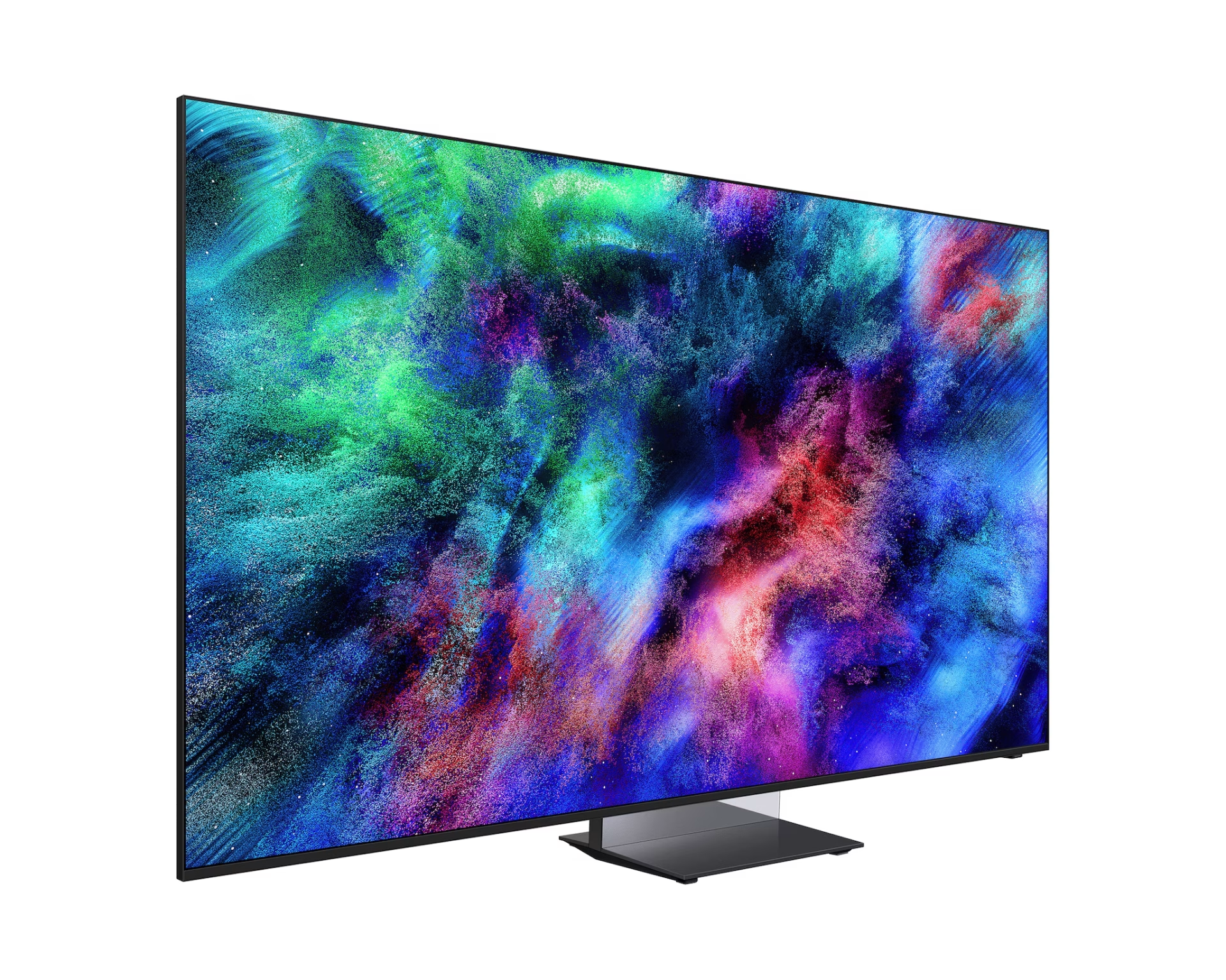
Throughout the various videos I played, one thing that stood out for me was the amount of detail I saw. Okay, it’s still 4K resolution like on my own ancient Samsung TV, but the image quality is clearly better.
Things like High Dynamic range (HDR) help you see detail better by illuminating, say, dark areas of a scene. A wide colour palette helps us see more too, in the various shades of, say, the desert sand in the Dune movies.
Alright, what about sound? I’m assuming you already have plans for a great sound system if you’re splashing out for a premium TV. However, if you’re saving up for later, this new Samsung TV does a great job, to my surprise.
When I first switched it on with the solar-powered remote controller, I was surprised how “big” the sound from the 4.2.2-channel speakers hidden in the thin TV was.
Explosions rocked my living room without nearing the annoying distortion levels, plus the sound did seem decently immersive with Dolby Atmos. Crucially, dialogue came across clear despite many sound effects in busy scenes.
To be sure, there are too many new features about the Samsung R95H to include here. A souped-up AI chip promises better upscaling to 4K plus you get AMD FreeSync Premium Pro to enable stutter-free HDR gaming if you’re plugging in a PC.
There’s also a breakout box that connects wirelessly. I deliberately place it a bit further away, so the signal has to get around a leather sofa (and a human or two) but it seems to work fine.
What this lets you do is mount the screen without worrying about running an HDMI cable to your breakout box to connect to HDMI sources like a game console or PC. You still need a power cable for the TV, of course.
This being 2026, there have to be some new AI features thrown in. What I’m not sure about is Samsung Vision AI, which promises to find out more about what you’re watching by searching the Web. Your phone usually does that pretty well, to be fair.
Another AI feature, called AI Football Mode, is also a mixed bag. Turn it on and the TV detects football content and tries to enhance things. The grass is greener, for example, when I play back some 4K World Cup highlights on YouTube but some things – like the red jerseys worn by some players – can seem too red.
I can see this football mode’s appeal, of course. Fast action is in focus so you can see clearly if penalty calls are right. The commentary and the crowd cheering also seem to be more audible, which I can appreciate.
All said, the Samsung R95H is an attractive premium TV featuring the latest display technology that sets it apart from most mid- and entry-level TVs. It’s hard not to like the new Samsung TV, except perhaps the hefty price tag that hangs around it.
The 65-inch model I have been using for the past few weeks is the smallest version of the Samsung R95H – there are also 75-inchers and 85-inchers – and it comes with a daunting S$5,399 sticker price.
In comparison, you pay less – S$4,499 – for Samsung’s equivalent S90H OLED TV. I haven’t looked at that TV closely but it’s interesting how the Korean company is positioning its premium lineup.
The idea is that OLED TVs give you uncompromising image quality but that Micro RGB comes very close and also sports a brighter display and doesn’t suffer from burn-in (frankly, I don’t think most modern OLED TVs used at home instead of commercial settings should have a problem that makes them a deal breaker).
I’ve liked OLED TVs since I first saw first years ago and I still think they are the best when it comes to image quality. I’d still go for OLED today if I am spending on a premium TV, though if you can get a Micro RGB TV like the Samsung R95H at a decent price at the shops, it’s definitely worth checking out.