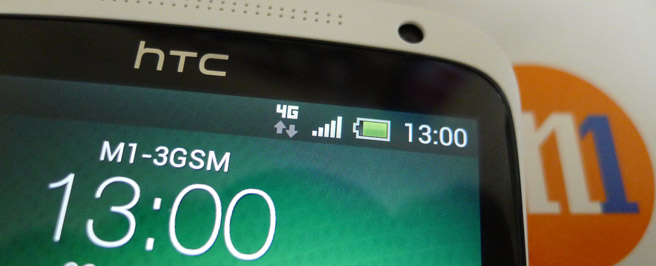
M1 is rolling out a service that makes use of customers’ home or office broadband links to provide a better connection on the cellphone, whether this is to make calls or surf the Web.
Instead of connecting to the nearest base station that may be several kilometres away, these users’ phones hook up wirelessly to a femtocell device installed indoors, next to their broadband modem, and tap on the faster wired connection to reach the cellphone operator.
In essence, this offloads the traffic from the often congested cellphone networks to much faster, and often under-used fixed line networks. …
StarHub will be turning on a new service that promises to let users speak more clearly over their cellphones – without all the annoying background noise – from this Thursday.
Called HD Voice, the technology is similar to noise cancellation technology on phones and Bluetooth headsets that already lets users speak clearly, say, in a crowded cafe or market. The other party hears the caller’s voice, without the background chatter.
M1 is giving its cellphone customers three days of free local calls, messages and data services from February 10 to 12, as it tries to assuage users aggrieved by one of Singapore’s most serious mobile network outages.
Apologising to its customers, M1 said in a press statement this afternoon that it had restored 3G services fully in the affected areas by yesterday. …
As thousands of M1 subscribers find themselves suddenly cut off from phone calls, SMSes and e-mail these past couple of days, it is hardly surprising to see many taking to Facebook to hit out at their telecom operator.
That the most serious outage in recent memory was caused by M1′s vendors somehow setting off a water sprinkler at a network centre makes it even harder to accept. As a friend who works in the industry remarked, this looked like a rather “noob” mistake. …
Some M1 smartphone users were not able to go online with their 3G connections after a “power problem” disrupted the mobile data service early this morning in the country’s latest cellphone service outage.
The telecom operator put up a notice on its Facebook page at around 6am this morning, informing customers that some of them may be affected by the disruption. It also advised them to log on to its 2G network instead of 3G to continue using its services.
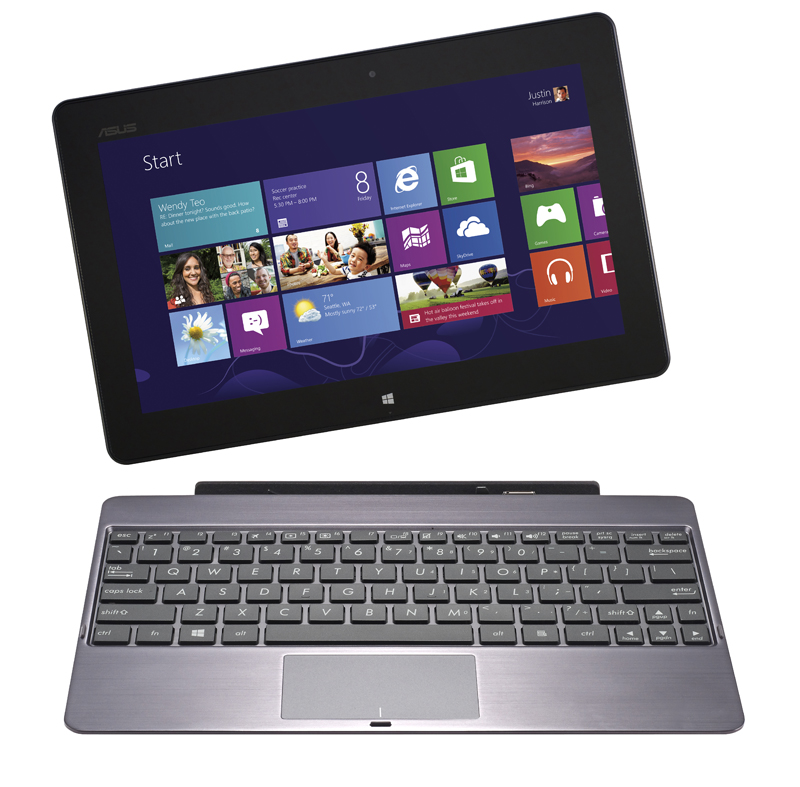
Remember that Windows RT tablet that Asus was showing off at the end of last year? Well, there’s a 3G version of the VivoTab RT now in Singapore and it’s started selling on Wednesday for S$1,049.
It’s not bad a deal, considering it’s just S$100 more than the Wi-Fi only version that went for S$949 at launch. With 3G, you will be able to connect on the go without worrying about Wi-Fi hotspots not working when you need them the most. …
Asus Singapore is selling its 3G-enabled Nexus 7 for S$499 from tomorrow, just in time for last-minute shoppers hoping to buy the new 7-inch tablet for Christmas. The new model is shipping here weeks after it started going on sale in the United States. …
From frequent dropped calls to impossibly slow Internet connections, the problems with increasingly congested airwaves are prompting some industry experts to ask if there will ever be enough frequency spectrum to dump more data on 3G and LTE (long term evolution) networks.
Now, some are advocating moving some of that data to less congested wireless networks, such as public Wi-Fi hotspots. Dropbox files or less urgent app updates, for example, can be handed over to these faster and freer lanes in the cyber highway, according to an increasingly popular view on building future wireless networks.
One of its proponents is Aled Tien, who is Motorola Solutions’ lead for the Asia-Pacific vertical market for telecom operators. The veteran of the industry has worked on wireless systems for 25 years, starting with AT&T in the United States and including stints at Lucent Technologies in China and Southeast Asia.
A speaker in this year’s Unwired 2012 conference, he joined Motorola Solutions in 2009. In this month’s Q&A with Techgoondu, he argues how Wi-Fi offload can help telcos alleviate the jam in the sky.
Downloads are never too fast. Webpages cannot load quickly enough, and that YouTube video should have streamed five seconds ago.
If that sounds like a typical day for a smartphone user, it is partly because of the explosion of mobile broadband data in the past few years, which has telecom operators struggling to cope with the demand for more bandwidth.
With users updating their Facebook status every other minute and worse, when machines start “talking” to one another to transmit, say, sensor data of an impending flood, how can mobile networks cope?
Techgoondu had a quick Q&A with StarHub’s chief technology officer, Mock Pak Lum, to find out more. A veteran of the industry, Mock has been the CEO of 1-Net, Singapore’s broadband exchange, and has had stints in Hewlett-Packard and MediaCorp.
He will be speaking at next week’s UNWIRED 2012 conference in a panel discussion on Adding Network Smarts. …
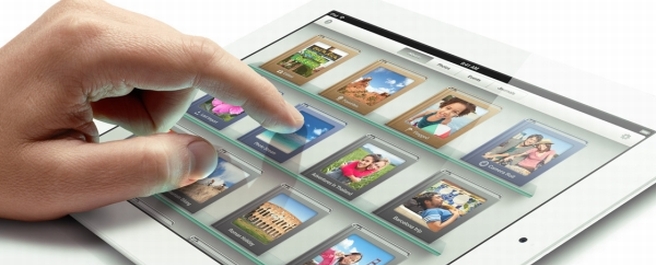
Not everyone checks up the specs on the new Apple iPad before buying the shiny toy, but for those who do, they will find an interesting entry in a section called Wireless and Cellular.
Not only is there mention of the touted “4G” or LTE (Long Term Evolution) speed upgrade, which supports the 700MHz and 2,100MHz frequencies, but the iPad can also log on to older networks running UMTS/HSPA/HSPA+/DC-HSPA in four other frequencies. And get this, the new iPad also supports GSM networks in the good old 800, 900, 1,800 and 1,900MHz frequencies as well.
Confused already? That, by the way, is just for the AT&T model in the United States. Also listed on the Apple website is a Verizon model, which supports LTE all the same, but “falls back” on a different older network called CDMA EV-DO, along with the rest of the other cellphone network technologies, if LTE is not available.
Nobody but geeks used to care about the alphabet soup here, but as more LTE devices hit the market this year, as the iPad did this weekend, this fragmentation of wireless network technologies is becoming a huge problem for device makers and users alike.
LTE was meant to unify these disparate technologies evolved over the years, but with 38 different frequencies expected to be rolled out around the world, the new technology is adding to the problem instead. …