Hold the new DJI Pocket 4 in your hands and it’s clear how much the company has refined its pocket-sized cameras since the original DJI Osmo Pocket first appeared more than a decade ago.
Designed for solo creators, vloggers and travellers who prefer to move light, the new version blends familiar usability with improved imaging performance and better accessories.
It continues to rely on a true three-axis mechanical gimbal rather than electronic stabilisation, producing footage that looks natural, smooth and consistent even when moving at a brisk pace. This is a big upgrade over smartphones when capturing walking shots or gentle pans without visible jitter.
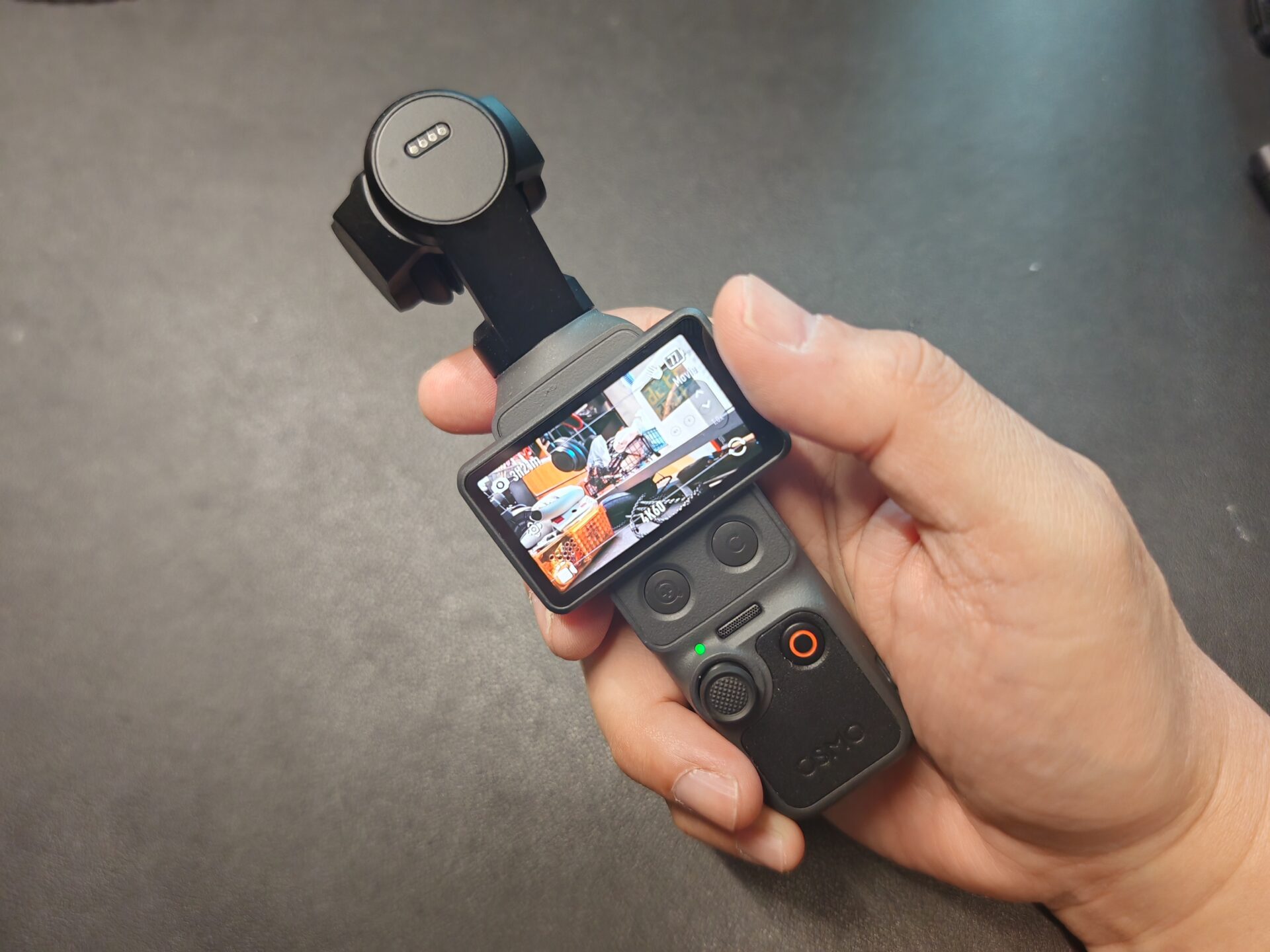
In use, the new camera feels well balanced. Its weight distribution makes it easy to hold steady for extended periods, which is handy when filming travel clips around the city or recording personal vlogs throughout the day.
The rounded edges and compact build sit comfortably in the hand, though the relatively short body can feel a little awkward for those with larger hands.
Attaching DJI’s optional extension handle improves the grip immediately and adds a proper tripod mount that is otherwise missing on the base unit.
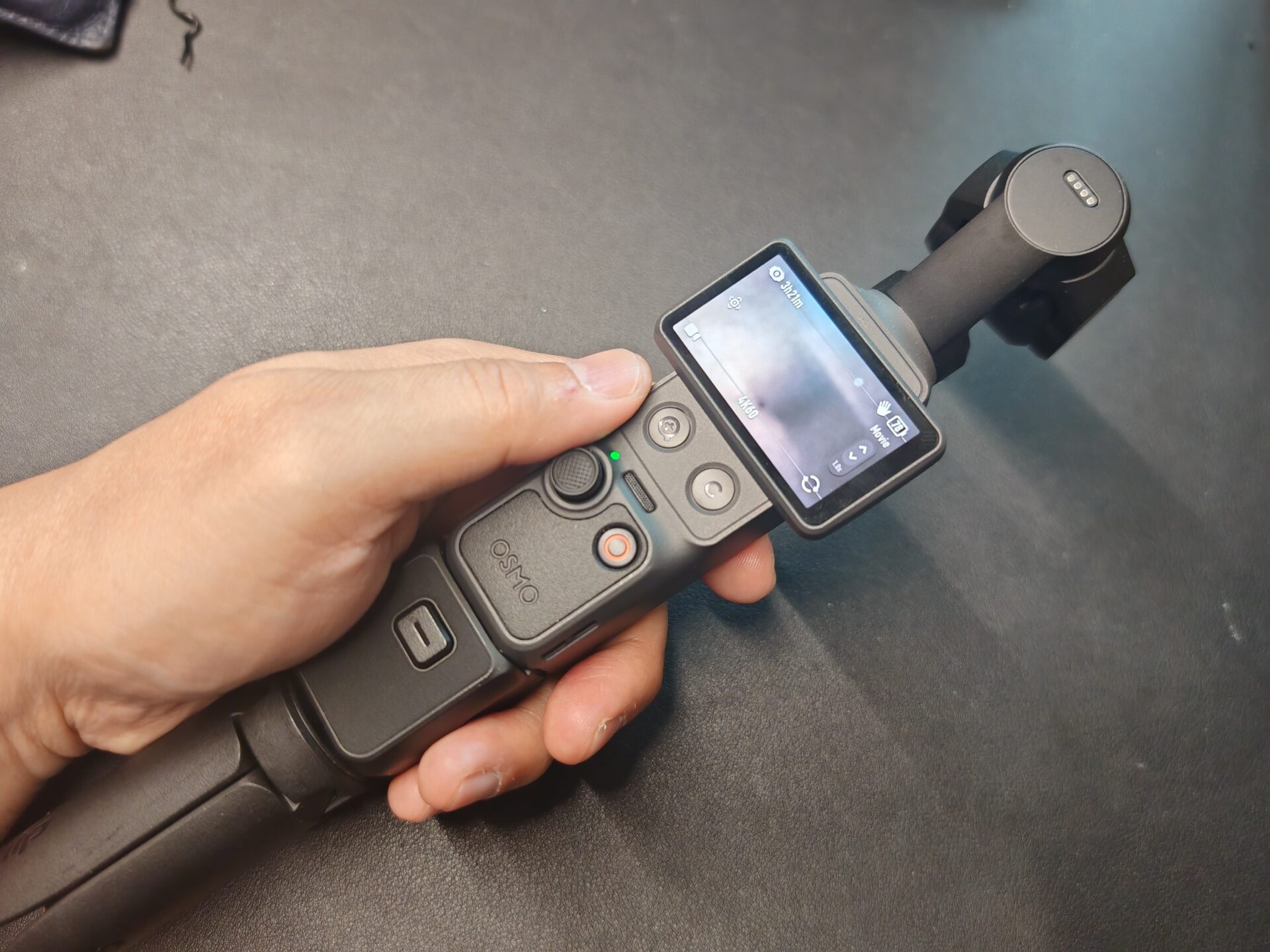
For mounting, you can either rely on the screw thread on the extension handle or use the built-in magnetic attachment system.
The magnetic option is convenient for quick swaps between mounts or stands, though it does mean investing in additional accessories.
Switching between shooting orientations is straightforward. Rotating the touchscreen toggles between horizontal and vertical recording, which is useful for anyone creating content across different platforms.
This allows you to move from cinematic widescreen footage to vertical clips for social media without much interruption.
When it comes to image quality, the one-inch sensor delivers improved detail and colour accuracy. It works well across a range of lighting conditions, particularly in the kind of dim indoor settings, such as in local cafes or night spots.
Footage appears cleaner with less noise and better balance between highlights and shadows. Dynamic range is also improved, giving more flexibility when adjusting exposure and colour during editing, especially when shooting in D-Log.
At the same time, the standard 10-bit profile looks good straight out of the camera when there is little time for post-production.
Built-in colour filters offer some creative flexibility. The movie filter adds a subtle cinematic tone, while the beauty filters gently soften skin for portrait-focused clips.
Video performance remains consistent across various modes. In landscape orientation, the DJI Pocket 4 records up to 4K at 60 frames per second, while portrait mode goes up to 3K at 60 frames per second, which is more than sufficient for social media content in normal video mode.
For dramatic slow-motion sports action, the Pocket 4’s maximum resolution can be set at 4K capturing 240 frames per second.
Autofocus is responsive, and the tracking system keeps subjects framed reliably. Just by tapping on detected faces on the screen, you get the camera to quickly change its target and lock in. To make things even more convenient, you can register a user’s face and the Pocket 4 will give it priority over other subjects.
The onboard microphones capture voices clearly with minimal background noise, which works well for quick recordings on the move.
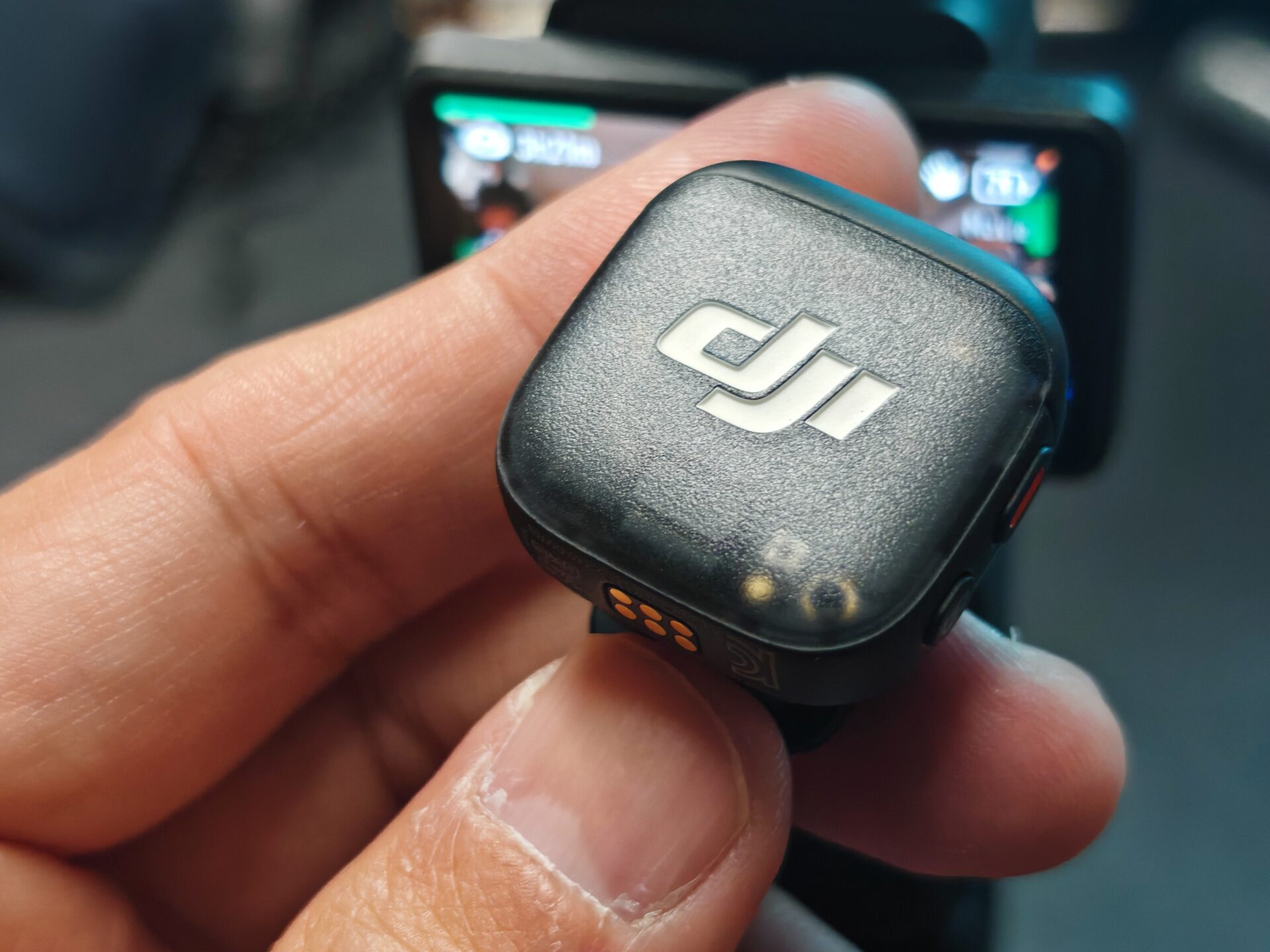
For more demanding setups, the DJI Mic 3 included in the Creator Combo provides more consistent audio capture and allows you to move freely while filming.
It connects seamlessly, though it needs to be enabled in the settings before use. The new camera can also connect up to two microphone transmitters using the older Mic Mini and Mic 3 transmitters. Good for multi-person recording.
Internal storage is generous for a device of this size, with about 107GB of usable space. This is enough for several hours of 4K footage and offers reassurance if you forget to bring a microSD card.
For regular use, a high-speed card like the SanDisk Extreme Pro microSD or the Sandisk Creator Card with the V30/U3 rating help maintain stable recording performance at higher bitrates.
Battery life is respectable. The camera uses the upgraded 1,545mAh battery, sufficient for a day of intermittent shooting. That said, I’d still recommend carrying a small power bank for longer days out on trips overseas.
The camera does warm up with extended use, especially when recording at higher resolutions. The heat is noticeable around the grip after several minutes, though it does not reach a point where it shuts down.
Given that the DJI Pocket 4 is designed for short, dynamic clips, this is unlikely to be a major concern.
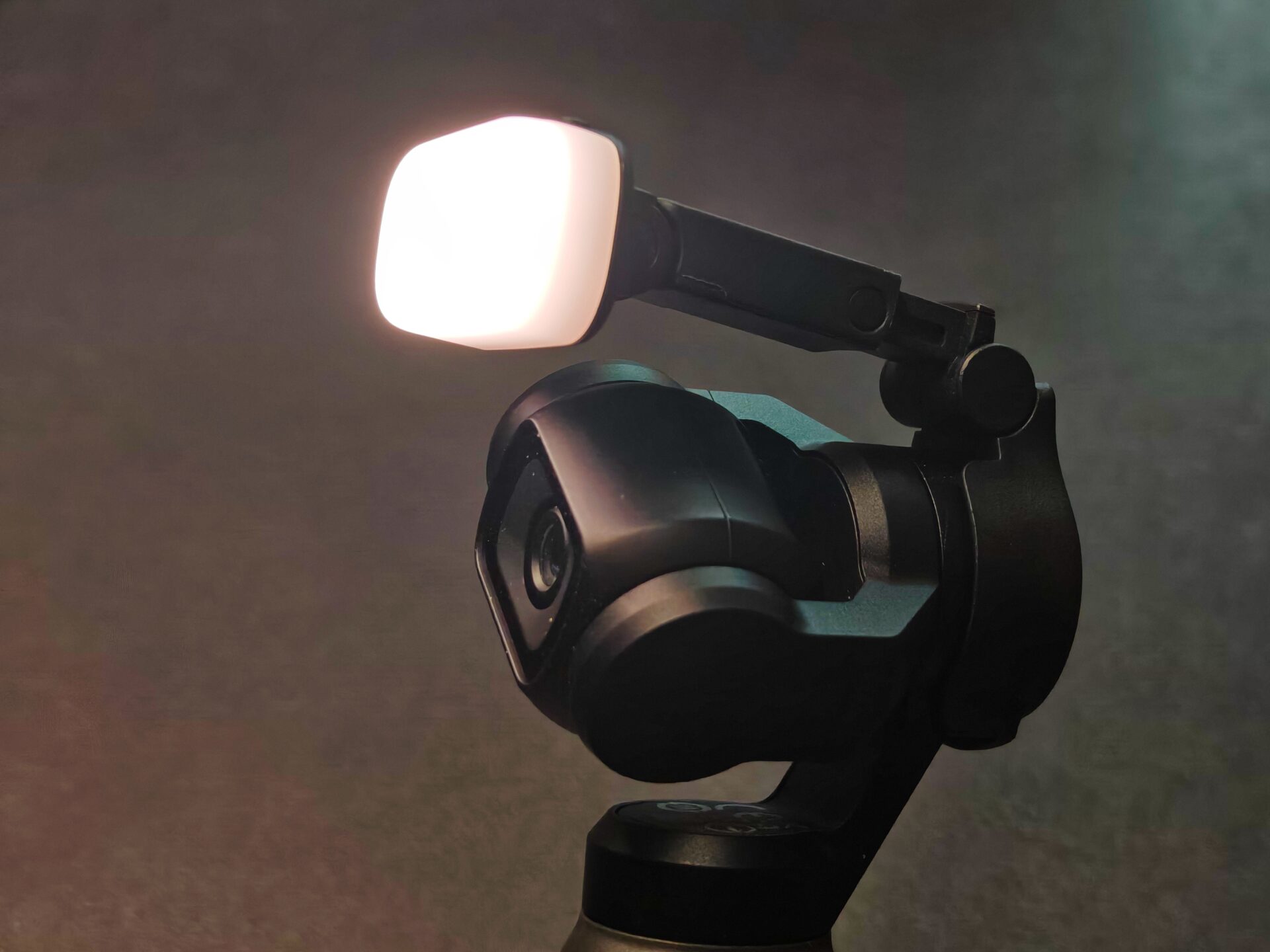
If you’re after more professional clips, consider DJI’s Creator Combo package. It includes a compact fill light attachment that powers on automatically when connected.
This is useful for brightening subjects during indoor shoots or evening walks, though its effective range is limited to about an arm’s length. For anything beyond that, additional lighting such as a LED video light panel or lighting stick is still required.
A magnetic wide-angle lens converter is available as well, expanding the field of view. The magnetic attachment, however, feels less secure than ideal and can shift if knocked, so it requires some care when moving around. Using a clip system instead is more assuring.
The Pocket 4 also includes a high-resolution photo mode that captures 37‑megapixel images in a 1:1 format or 33‑megapixel shots in 16:9.
The lack of more conventional aspect ratios such as 3:2 or 4:3 limits flexibility. This means extra time spent cropping images in post to match standard photo framing.
For vloggers, casual filmmakers and travellers looking for stable, high-quality video in a lightweight package, the DJI Pocket 4 strikes a practical balance between convenience and performance.
Compared with a smartphone, the Pocket 4’s mechanical gimbal produces a level of motion smoothness that electronic stabilisation on smartphones cannot fully match. Plus, it does not take too much space in a travel bag.
To be sure, the new DJI camera will not replace a mirrorless camera when absolute quality matters. However, it is handy as a B cam, ready whenever you want to travel light yet still capture footage polished enough for the Internet.
Who should the new camera? If you are already using the DJI Pocket 3, the improvements here are incremental rather than transformative, so sticking with the earlier model could make more sense.
Others looking to up their game in video content creation will find the DJI Pocket 4 attractive. This is a compact and capable camera that simplifies content creation without unnecessary complexity.
If you want the full works to get started with vlogging, the Pocket 4 Creator Combo Bundle sold for S$759 in Singapore is worth checking out. If you’re tight on budget, the basic combo with camera and gimbal clamp goes for S$599.