Yes, it’s a phone made by the famed German camera maker. And yes, the Leica Leitzphone is based on the Xiaomi 17 Ultra, as part of a collaboration with the Chinese phone maker.
So, what you get is a Leica phone that uses the same camera hardware, though Leica has given it a more luxurious exterior, different camera interface and a few exclusive photography modes. In Singapore, it is priced at S$2,299, which is S$500 more than the Xiaomi 17 Ultra.
Notably, the Leitzphone has the same dimensions as the Xiaomi 17 Ultra. It measures 162.9mm in height, 77.6mm in width and 8.32mm in thickness. While not the lightest at 223.4g, it is still pocketable.
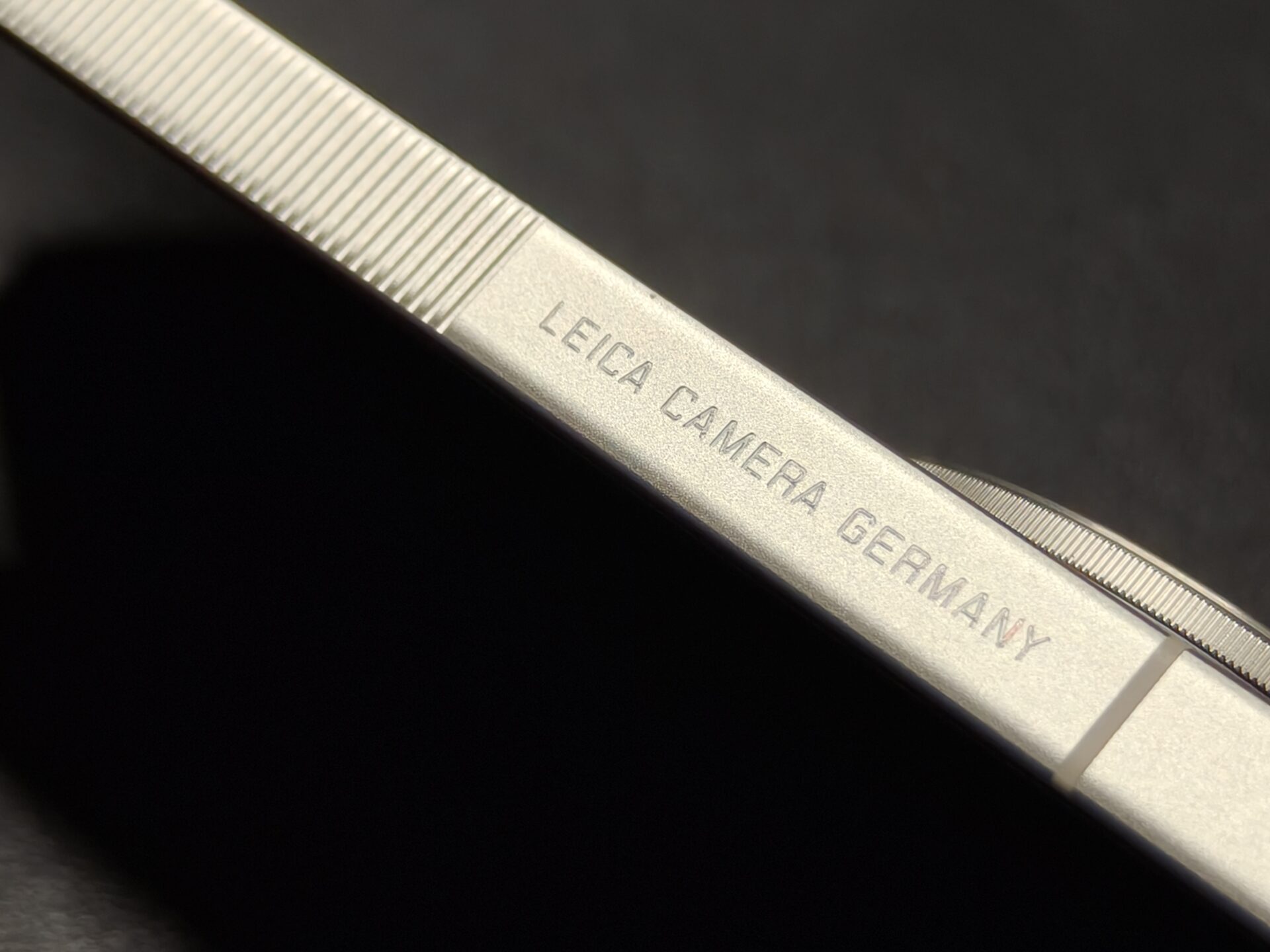
The silver aluminium frame and frosted black-coloured rear cover give the phone a different look from the standard Xiaomi model. For fans of Leica, the words “Leica Camera Germany” are embossed along the side.
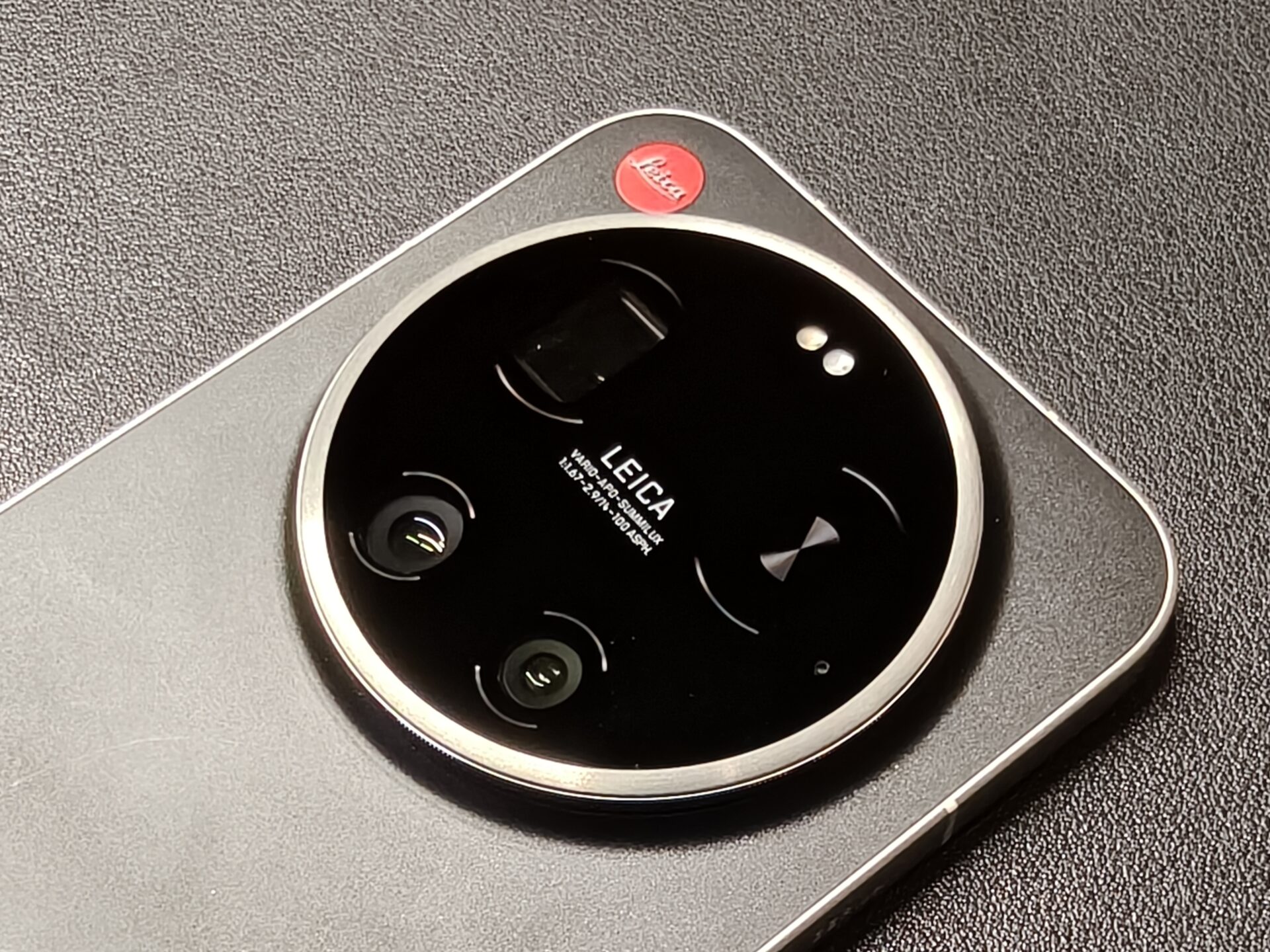
Together with the red Leica dot and the large circular camera module, these details make the phone look more like a serious camera kit than a regular smartphone.
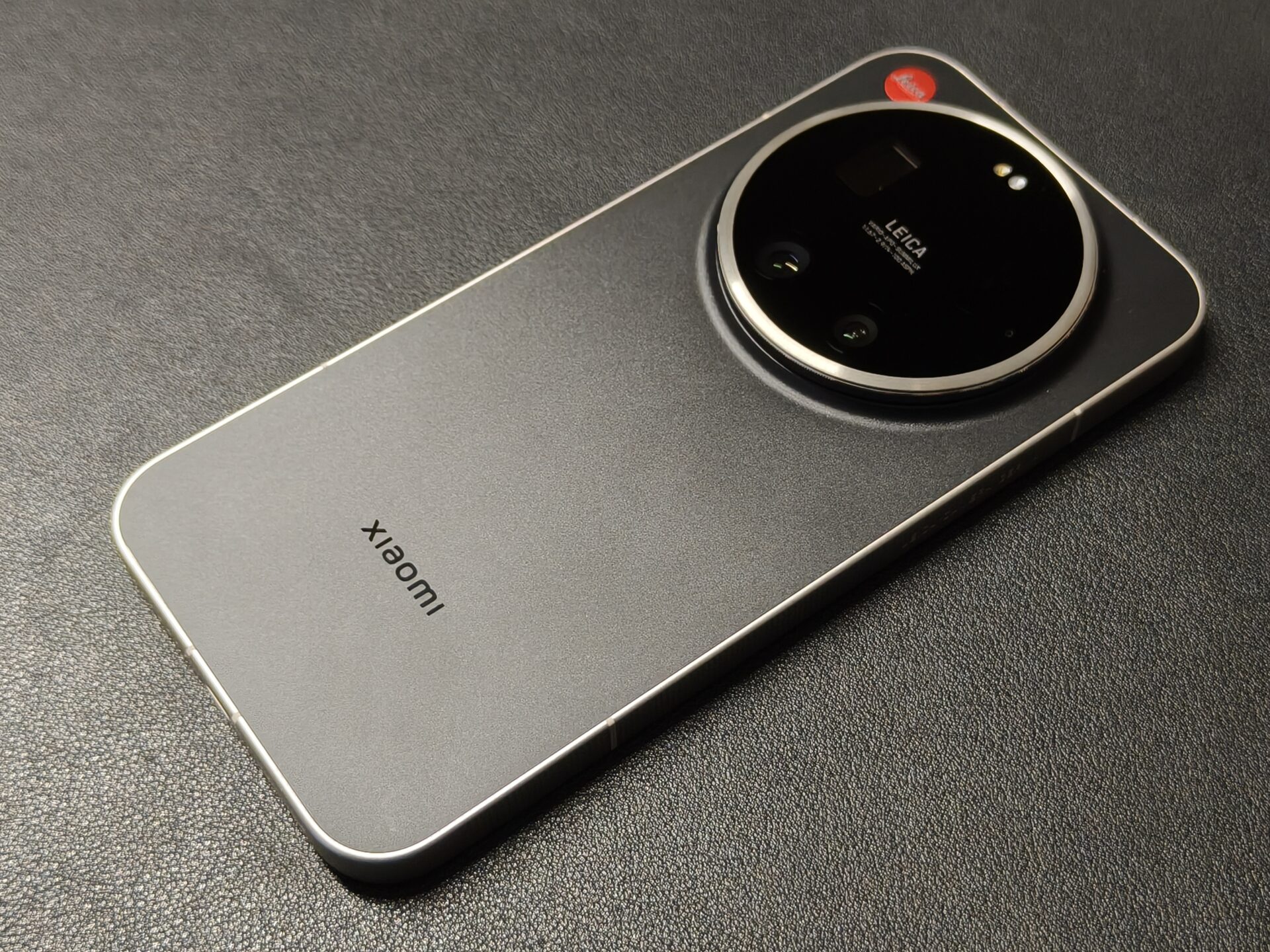
The rotating ring around the camera module is the most interesting physical feature. By default, it controls the zoom when taking photographs. It can also be used to select other settings, including focus, bokeh, exposure compensation and shutter speed under different mode settings.
When selecting a Leica filter, the ring becomes an effect selector. The ring feels more natural and speedy than tapping small controls on the screen especially during a shoot.
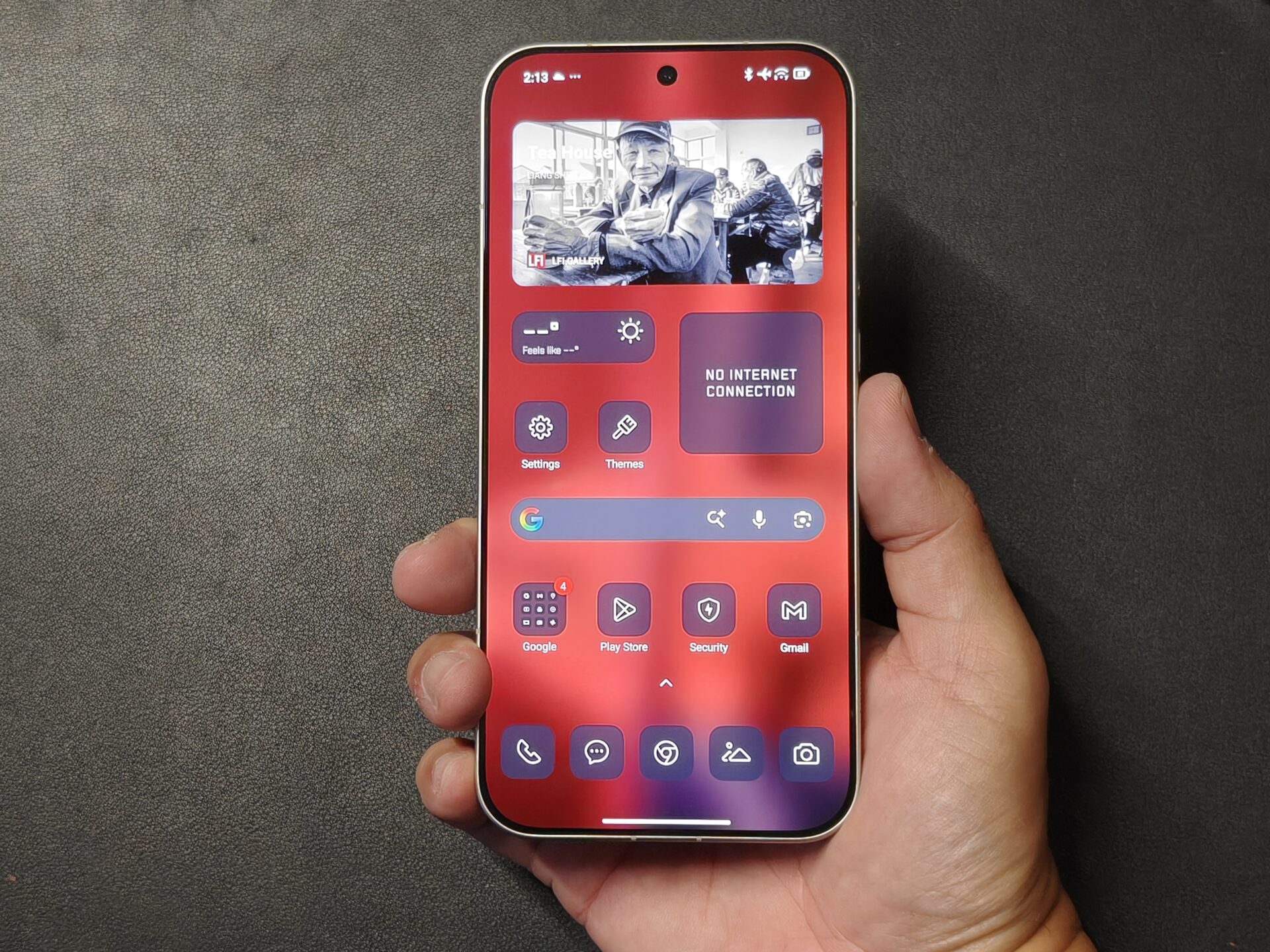
The Leica influence also continues in the software. The fonts, icons and menus resemble those found on modern Leica cameras. The interface is simple, easy to read and less cluttered than other camera phones.
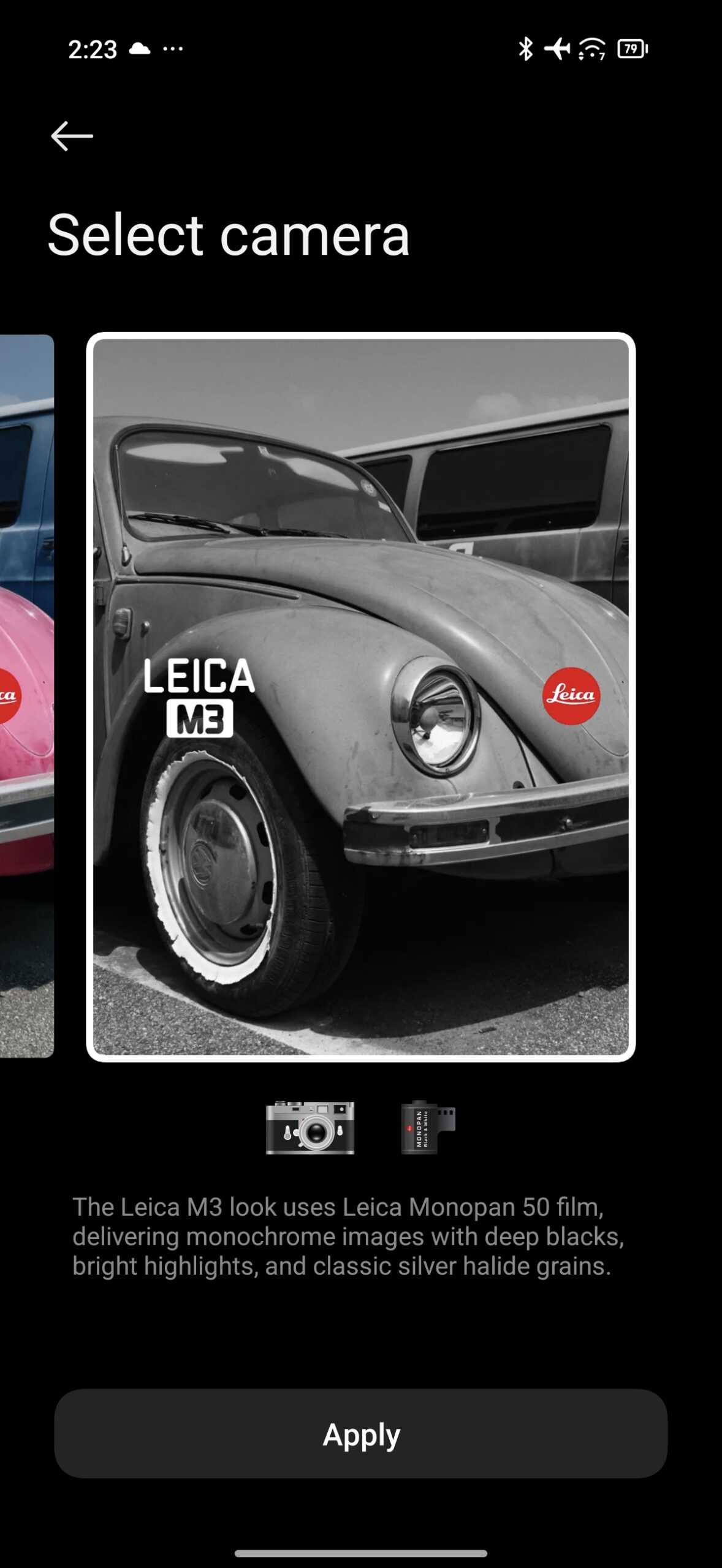
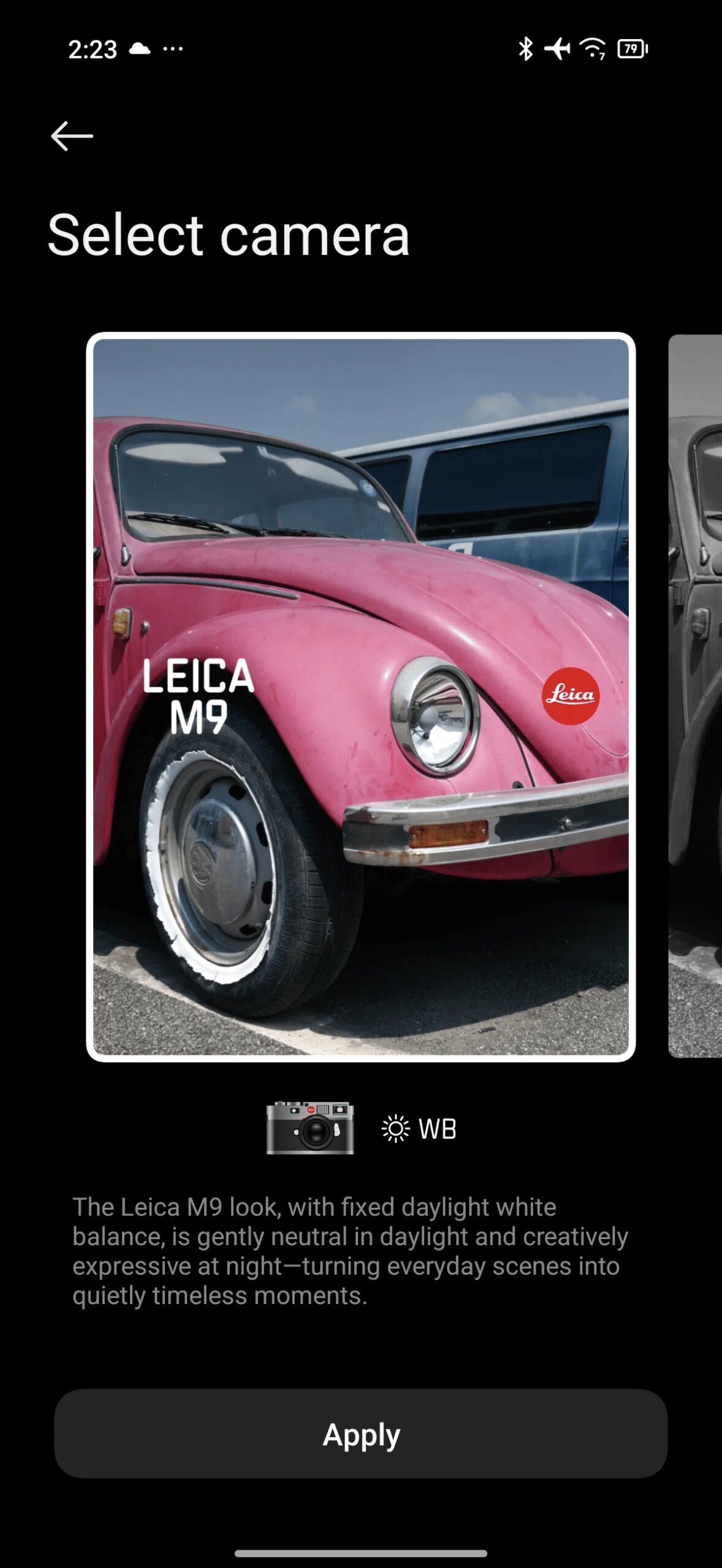
There is one small inconvenience, though. The Leica M9 and M3 Monochrome effects are found in the Leica Essential mode instead of the regular filter list, which means switching between modes during a shoot. It would be more convenient if both effects were available alongside the other Leica Looks.
For its engine, the Leica Leitzphone uses the high-end Qualcomm Snapdragon 8 Elite Gen 5 chip. It comes with 16GB of memory and 1TB of storage. There is also a sizeable 6.9-inch OLED display with a fast 120Hz refresh rate.
The phone has a solid 6,000mAh battery and supports 90W wired charging and 50W wireless charging. It is also rated IP68 for dust and water resistance.
The rear camera system consists of three cameras. The 50MP ultra-wide camera has a 14mm equivalent focal length and is shown as 0.6x in the camera app. The 50MP main camera has a 1-inch sensor, a 23mm equivalent focal length and is shown as 1x. The 200MP telephoto camera covers a continuous 75mm to 100mm range, starting at about 3.2x. The front camera has a 50MP sensor which is plenty sharp for selfies.
If you are shooting moving pictures, the Leica phone can record 8K video at 30 frames per second. It also supports 4K Dolby Vision recording at 30, 60 and 120 frames per second.
The bad news is that the 200MP mode is limited to the telephoto camera. It works within the 75mm to 100mm range and cannot be used with the main camera. This is disappointing if you want extra resolution for a landscape, wide interior shot or a city view.
The 200MP files also take some time to process. That is acceptable for a carefully planned shot, but it can cause you to miss a moment when photographing moving people, fast traffic or ever changing light.
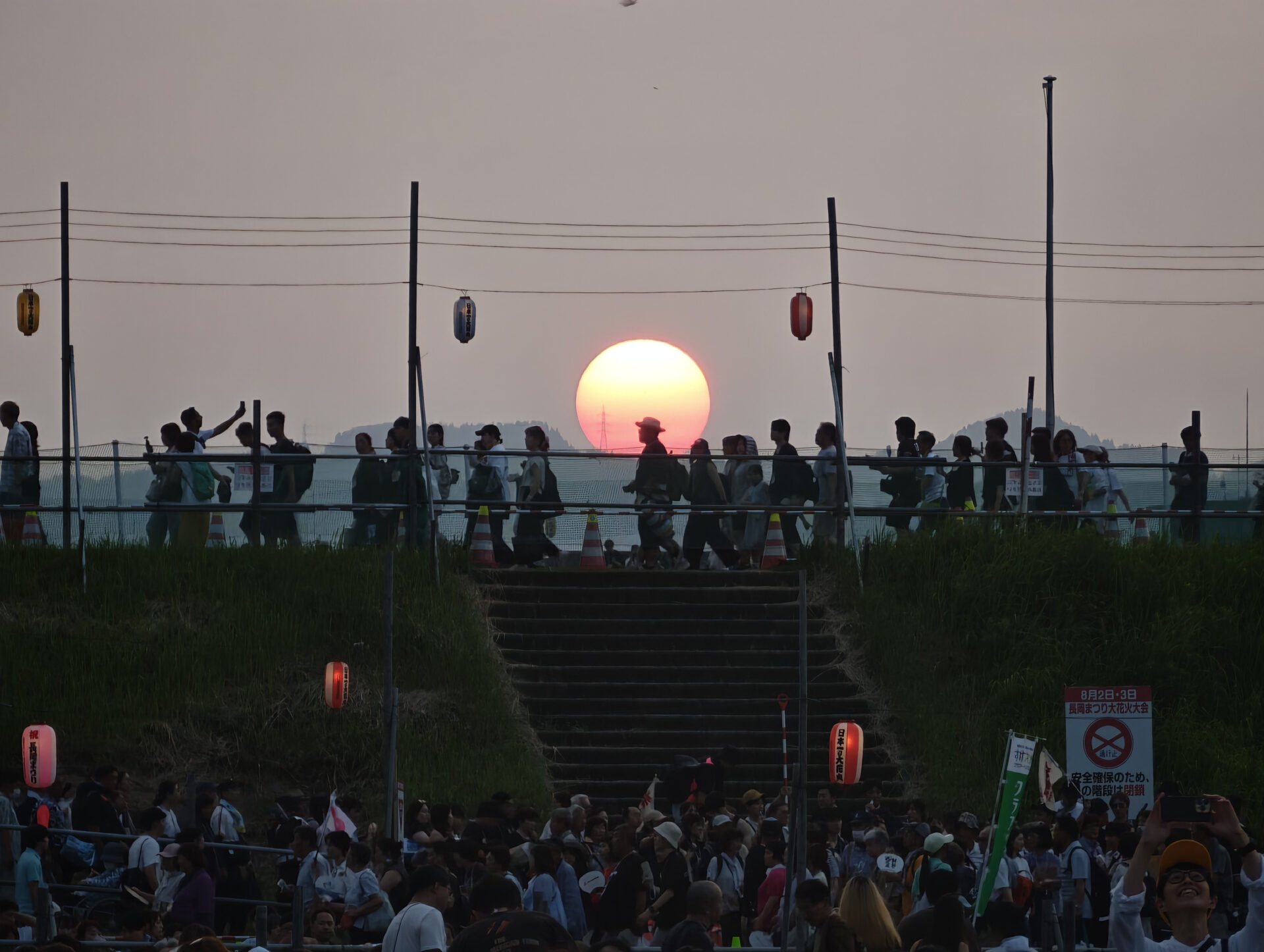
On a positive note, photos show off the colour rendering expected from Leica. The images often carry a slight magenta or auburn warmth, which works well for landscapes, buildings and portraits. Colours do not look completely neutral, but the effect is usually pleasant rather than distracting.

Unsurprisingly, the main camera produces the strongest results. The large sensor gives images good detail and a more natural separation between the subject and background. The telephoto camera is also useful because it offers real optical movement between 75mm and 100mm instead of relying only on fixed digital crops.
Zoom quality is good for the most part. However, the sharpening becomes too aggressive at 8.3x digital zoom. Fine details can look processed, especially on hair, leaves, distant buildings and other textured subjects.
My main gripe is that the phone does not have a dedicated night mode. This is not always a problem because the automatic camera mode can produce bright and usable photographs in low light.
However, there are times when I want more detail in the highlights and shadows, and the automatic processing does not retain it. A proper night mode could have offered another way to control the balance between bright areas, dark regions and overall exposure.
Unfortunately, the Long Exposure mode is more restricted than expected. It works only with the 1x main camera, not the zoom cameras. That limits its usefulness when photographing distant waterfalls, moving lights or other subjects where a tighter composition is needed.

There is also an odd problem with some long exposure photographs. A few images were saved in a mirrored orientation. Flipping the photograph later in the photo editor is simple, but this is still an unnecessary step.
The bigger concern is the processing lag. On some occasions, the camera captured the timing correctly, but the processed image saved to the gallery was different from what appeared to have been taken.
There were moments when I thought I had captured a moment, only to find that the final file did not match it. This does not happen with every photograph, but it is a weakness that should not appear on a flagship camera phone.


The Leica Essential mode is the main reason to consider this phone instead of the Xiaomi 17 Ultra. The M9 effect gives photographs a warm analogue character, while the M3 Monochrome mode produces a stronger black-and-white look. These effects are useful if you enjoy photographs from classic camera and want a consistent style without doing any post-editing.
At S$2,299, the Leitzphone is expensive. The extra money gets you the Leica exterior, the rotating camera ring, the Leica interface, 1TB of storage and the Leica Essential modes. It does not get you a faster processor or a different camera system.

Leica’s Leitzphone makes sense for someone who already likes the Leica look and wants a phone that feels different from the usual flagship models. The M9 colour effect and M3 Monochrome modes are also good reasons to choose it if these looks matter to you.
It is less convincing for someone who only wants the best camera phone for their money. The missing night mode, limited Long Exposure mode, slow 200MP processing and occasional processing problems are difficult to ignore at this price.
To be sure, the Leica phone takes attractive photographs and has more character than the Xiaomi 17 Ultra it is based on. The Leica design and colour rendering are its strongest selling points.
For everyone else, the Xiaomi 17 Ultra offers most of the same camera experience for considerably less. For the price Leica is asking, other imaging-focused phones like the Oppo Find X9 Ultra and Vivo X300 Ultra should also be on your list. Do check them out before making a decision.