

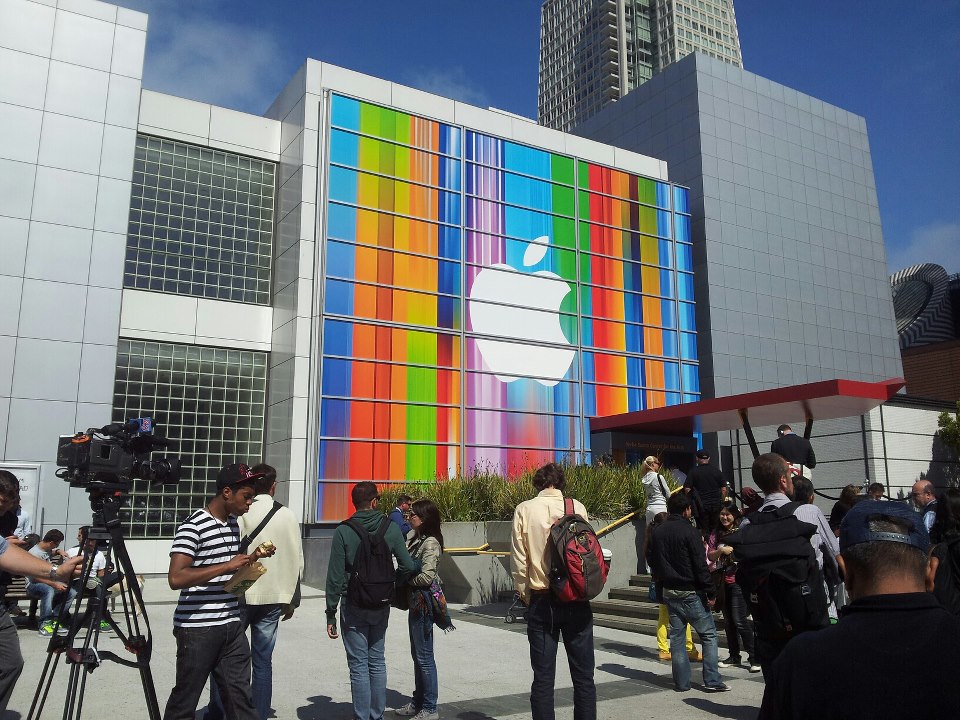
I was on the way to an Office Depot, the most boring store here in San Francisco, when I passed by the Yerba Buena area where Apple was unveiling its new iPhone 5. Past the hype, I walked on round to 3rd Street and picked up a couple of non-magical, non-revolutionary Nexus 7s.
If there’s something to be said about Apple’s event this morning in the United States, it’s that it’s underwhelming. Okay, that’s unfair, seeing that the iPhone 4S launch before that was worse in terms of new features or hardware, but hey, Apple still went on to sell millions of those.
So, warts and all, disappointments and burst bubbles aside, don’t be surprised to see Apple sell loads of the iPhone 5. There are just enough people out there who would buy an iPhone even if it’s a rebadged Blackberry or Nokia.
But seriously, what’s important – and what’s good – about the new iPhone 5 can be boiled down in a few words. The first has to do with LTE (Long Term Evolution) or 4G. In East Asia, like Singapore, Hong Kong and South Korea, the iPhone 5’s support for the faster networks will drive the adoption of the newer technology.
In Singapore, for example, only a handful of phones and tablets support the new network, so telecom operators have been fast to pick up on the iPhone craze to sell these 4G plans. They have already lined up price plans for the new Apple gizmo, before it reaches the shops on September 21.
Sadly, other than that, the iPhone 5 is far less impressive than the usual Apple hype would have it.
It’s got a 4-inch screen that’s smaller than the competition (the “copycat” Samsung Galaxy S III has a 4.8-incher) and the resolution is less than the competition (1,136 x 640 against the 1,280 x 720 on the S III and HTC’s One X and One XL). Okay, it’s very light at 112 grams, quite unlike the previous iPhone 4S, but it’s far from the revolutionary, magical product that Apple likes to tout its products as.
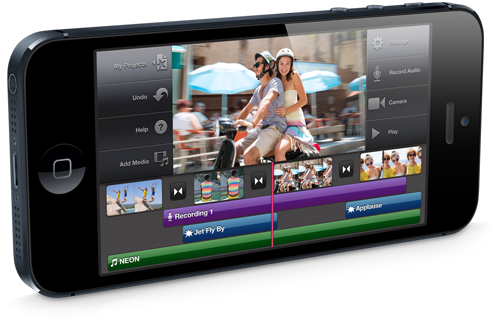
Perhaps it’s unfair to criticise Apple as such. The iPhone 5, all things considered, is a very competitive product. It’s just not the best.
Indeed, the iPhone hasn’t been the best for a long time, hence Apple’s attempts to halt the sales of Samsung products (it’s succeeded in suing Samsung in the US but has been rebuffed in Japan and Britain).
Even the BBC, which had previously lauded older iPhones like many Apple-mad mainstream media outlets, says the magic has gone. Research firm Ovum has a more sobering message: if Apple doesn’t innovate with new features, it’s in for a hard time in the next two years against Google’s Android, which is leading the market now.
The new iPhone just doesn’t have the wow factor that others have picked up and ran with. Nokia’s Lumia 920, which runs the less popular Windows Phone 8 software, comes with wireless charging – a gimmick but cool, nonetheless. Samsung’s Galaxy S III is slim, fast and boasts a sharp screen and it’s been selling for months now.
Better yet, Google’s Android has some of the best maps and other cloud services which Apple is trying to replicate with iCloud. To the average consumer, if this is what innovation is about at Cupertino, they’d probably rather have the Korean copy.
Sure, there’s nothing that will stop the long queues forming up outside a telco launch in Singapore and elsewhere next week. But it’s ironic that Apple fans now speak like Microsoft supporters of the past.
In the 1990s, when Apple was an underdog, its Macs had the cutting edge with SCSI drives and scanners besting the PC’s slower parallel and serial links, and the early beige Macs ran on a graphical interface that did not throw up a blue screen like the Windows of the day did so ever often.
The reverse is true today. Now, Apple is the laggard when it comes to technology and is banking on users who only know the iPhone as the one smartphone they’d own. It is using its dominance to sell underwhelming products to users who don’t know better. Ironically, rather like Windows and the boring PC in this post-PC era.



One big caveat following update to iOS 6 … gimme back Google Maps. TomTom cannot make it.
At least can still use a web app …
pls lah alfred. we all know you never liked the iPhone and was never going to give it a good review, no matter how good it may be. maybe you’d have some credibility if you started your article with a bias disclaimer.
Think the first thing apple should do is look for a successor to SJ…. prob gonna be hard to find but TC just doesnt cut it…. think he’s a paper pusher…. concerned with the numbers and numbers only….
No doubt it is still a good product however the innovation and push to be market leader seems sorely lacking. In fact the last 3 iPhones reminds me of Nokia whereby during their peak of 6610. All their phones were rehash of the previous.
The iPhone5 looks to me like another product in transition to the next wow thing…whenever that it…I am still waiting since iphone4. I though that 4s was it.
We will still see brisk sales for the iphone5 but Apple is surely heading the way of Microsoft or Nokia if they don’t innovate and surprise the world with technology for iphone6.
You hit the nail on the head. I nearly fell asleep during the event, and not because it was 1am in the morning…
There was no wow factor unlike the Galaxy Note 2 and Lumia 920 events. Only Motorola’s event was worse. 🙂
But as you said, confirm will sell like hot cakes!
“Best” is based on the user’s preference. If I want a phone of reasonable size that I can comfortably pocket and use with one hand, the iPhone is the “best” for me in a sea of phones with monstrous screen sizes.
It wasn’t too long ago that smaller phones are deemed better. Android phones went to larger screen sizes so that they can differentiate themselves from the iPhone, but is bigger truly better? It is subjective. However, I believe it is a fact that engineering a smaller phone is more difficult. Personally, I appreciate Apple for increasing the screen size while maintaining a certain size for usability.
You make mention that the S III is “slim, fast and boasts a sharp screen”, entirely ignoring the fact that the iPhone 5 is slimmer (and smaller), as fast (if not faster, due to OS), and has a sharper screen at 326ppi vs S III’s 306 (less if you count the Pentile display).
Declaring it the laggard does not make the iPhone one. Android is still the lagging platform for app development. For example, I use Facebook and Gothere.sg on a daily basis, both of which are considerably much poorer experiences on Android. There are also many entertainment titles that are still exclusively iOS, and iOS remains the launch platform for many apps. Also, Google services are available on Android as it is on iPhone. iPhone users have the choice between Apple’s iCloud services and Google’s.
Moreover, iOS users who crave for customisability can opt to jailbreak.
I personally feel that Android is more analogous to Windows than Apple’s offering. Windows was “inspired” by Mac OS, licensed to OEMs and eventually took the market with cheap hardware, as well as being susceptible to malware.
Android was “inspired” by iOS, licensed free to OEMs and eventually took the market with cheap hardware, and malware is now on the rise.
Just because the iPhone 5 is not for you does not mean that people “don’t know better” if they buy one. It’s not as if people don’t know the existence of Android phones. In fact I think there are a significant number of people who buy Android phones thinking it’s about the same as an iPhone, but I guess that’s another debate.
Fair points, Seth, even if we disagree. The market will declare its winners in time and competition is good for consumers. 🙂
Hi Seth and Alfred,
A few other points I’d like to add. I am an iPhone 3GS and new iPad (ie. iPad 3) user, but also had the task of setting up a Galaxy S2 for a relative.
(1) As an A/V company and one which makes great TV’s and nice looking home theatre systems, why doesn’t the S2’s stock music playing app (or WinAmp for that matter) include album cover art? Why do I have to go and download an app just to extract cover art that has already been added to my MP3’s? Also, why if I create a playlist of AAC files, does it not play in the sort order that I’ve set up (MP3 files have no such problems). Why restrict my choice of audio formats?
iTunes / iPhones has no problem with these.
(2) I understand that Samsung’s own DA-650 docking sound system doesn’t work as well with Android devices (even its own Galaxy S2) as it does with iPhones, and both through the docking interface. This was according to a Harvey Norman sales man who advised me against it.
Perhaps it was because the salesperson’s customers had not installed the Samsung Wireless Audio with Dock App. But still, it is quite surprising that a Samsung docking speaker works better with Apple out of the box than with its own Galaxy.
(3) Docking connectors — Here I have to say that Apple’s 30-pin connector gave a more assuring feel when plugging your iPhone/iPod into a sound system and feeling that it won’t fall over. (The same is seldom said of the much bigger and heavier iPad.)
I’m not sure that a micro-USB dock, or a Lightning dock for that matter, gives the same assurance.
By the way, Apple also has a micro USB-to-Lightning adapter to comply with EU regulations. It costs a bomb though at GBP 15, esp. since it probably doesn’t include a DAC like the 30-pin-to-Lightning adapter.
(4) Handling of PDF files by web browser — why can’t I get the built-in web browser to simply open a PDF file in a new tab, and not have to go to the Downloads folder and open it up in Polaris Office?
iOS on the other hand seems to be much more elegant in this matter, opening a PDF file in a new tab, much like how Chrome works in Windows. (iOS Safari’s passing of PDF files to iBooks using the “open in” feature is another matter … it is quite miserable here, often failing to pass the file despite several attempts.)
(5) Android allows me to have an unrestricted file explorer. iOS requires me to work with “standalone silos” of information. So a file browser app (eg. FileApp Pro, Goodreader) ends up managing its little cache of data. This is also the same method we would use if we make use of DropBox or Sugarsync, as each service will have access to a selected set of files.
This can be good or bad. Good in that we limit our attention and focus to just a select group of files and folders at a time. Bad in that we cannot have a universal search / file indexing function which is the core of Google’s search technology.
(6) Upgrading the system. On iOS, you can easily upgrade your device software once the new version of iOS has been released (assuming the server is available). If you jailbreak your iDevice, then you got to wait until someone makes a compatible version. But the default is immediate upgrade.
On Android, unless I have a Nexus, I have to wait for Samsung or LG or Sony to customise the new release of stock Android for my phone. So it seems that if I buy an Android phone from anyone but Google, I’ve bought myself a “jailbroken” version of Android, which comes with all the inherent delays and issues with a jailbroken iOS?
Cheers,
Stephen
Exactly, Alfred. And the queues have already started for the “laggard” phone.
http://www.dailymail.co.uk/sciencetech/article-2203098/iPhone-5-Apple-fans-start-queuing-sale-Friday.html