|
| |
| 
Cellphone users in Singapore can expect extended coverage in buildings, on roads and when travelling in an MRT train underground, when stricter rules on 3G coverage unveiled today by the government regulator kick in as soon as April 2012.
Following a number of high-profile network outages last year, the Infocomm Development Authority (IDA) today spelt out the new rules, which will include 85 per cent coverage for each building here. Currently, telcos only have to cover 85 per cent of “public access areas”.
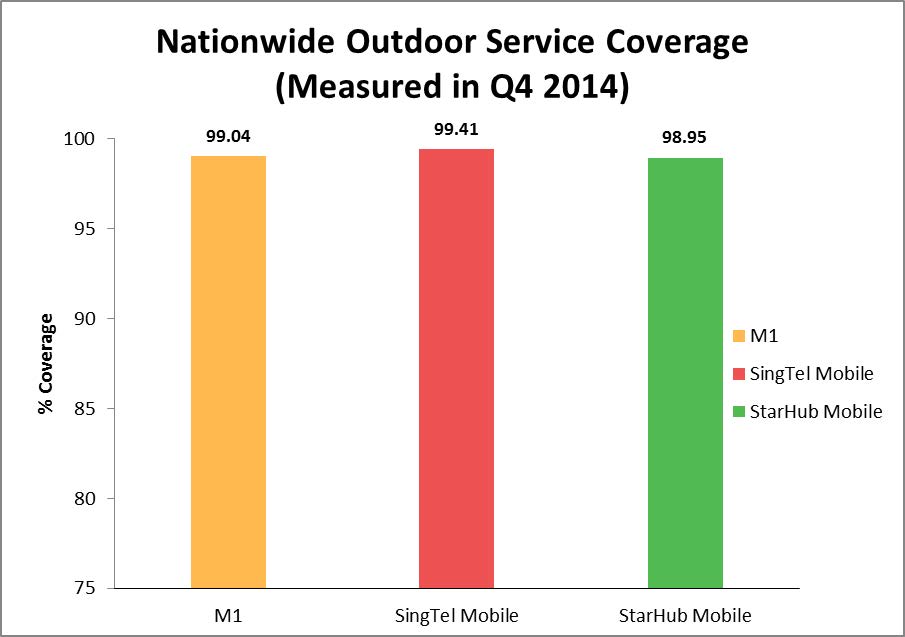
For commuters, the coverage will now include all road and MRT tunnels as well as the CTE by 2015, extending from the previous requirement of 95 per cent across road and MRT tunnels tested. In all, about 99 per cent of the outdoor space on the island is to be blanketed by 3G signals. Previously, the requirement was only 95 per cent across all roads.
And each time any of the three telecom operators here – SingTel, StarHub, M1 – fails to meet one requirement, they can be fined up to S$50,000, instead of the previous “slap on the wrist” S$5,000 per indicator per month.
…
|
|
| |
| |
|
|
| |
|
| |
| 
M1 is facing one of the stiffest fines meted out to a telecom operator in Singapore in years, after faulty hardware cards caused some of its users to be locked out from their phone calls, messages and mobile Internet services on May 18 this year.
The “orange” telco had given users a free day of calls and SMSes a week later to say sorry, but the regulators obviously are not as forgiving, instead handing out a S$300,000 fine today to the errant telco for the disruption. …
|
|
| |
| Tagged in:
broadband, Cellphones, Internet, fine, IDA, M1, mobile Internet, network disruption, Service Resiliency Code, SMS, |
|
|
|
|
| |
|
| |
| 
Think of Singapore’s latest efforts to turn everyone’s phone into a mobile wallet to pay for taxi rides, burgers and groceries, and the phrase deja vu may not be far from your mind.
As the city-state’s infocomm regulator and its industry partners embark on an ambitious S$40 million project, unveiled today, to let mobile phone users here tap and pay with their phones at some 20,000 payment points by next year, they could perhaps remember a lesson or two from the past.
If they succeed, users will be able to trot out their smartphones to pay for a burger at McDonald’s instead of using an ez-link card by mid-2012. A year later, in 2013, commuters may also be able to tap their phones at train station gantries to pay for their rides – if the transport authorities and companies get their act together.
But Singapore has seen numerous such trials over the years, even as places like Japan and Hong Kong have raced ahead with more advanced payment options. …
|
|
| |
| Tagged in:
Cellphones, Featured, DBS Bank, ez-link, Gemalto, IDA, M1, mobile payment, mobile wallet, NFC, Nokia, osaifu keitai, SingTel, StarHub, |
|
|
|
|
| |
|
| |
| 
What features would users expect from the mobile OSes running their handheld gizmos in the next six to 12 months? What will LTE and 4G bring to telecom operators when the speedy networks are finally rolled out? And how can organisations gain by creating mobile apps that tap on “the cloud” through their smartphones?
These are just a sample of the issues that industry leaders from Singapore and the region will be discussing at the upcoming UNWIRED 2011 conference on May 26, 2011. …
|
|
| |
| Tagged in:
android, BlackBerry, broadband, Cellphones, cloud, Enterprise, Featured, iphone, networking, Singapore, Tablet, Web 2.0, Windows Phone 7, IDA, LTE/4G, mobile cloud, mobile OS, SingTel, StarHub, UNWIRED 2011, |
|
|
|
|
| |
|
| |
| 
Singapore and Malaysia have inked a deal which reduces the cost of mobile roaming by up to 30 per cent for voice calls and 50 per cent for text messages (SMS). Travellers will start reaping the cost savings, which apply to all mobile operators in both countries, from May 1. …
|
|
| |
| |
|
|
| |
|
| |

Internet users in Singapore can expect to transfer savings funds, access health records and carry out other online transactions more easily with a single token from the second half of this year, as a government-backed authentication service goes live.
This so-called two-factor authentication (2FA) service works like existing online banking services, which require users to log in with a password on a PC followed by another one that is displayed on a small token or sent to them over SMS. …
|
|
| |
| |
|
|
| |
|
| |
| 
What’s the next-gen broadband network all about? What can it do for me?
Those questions were topmost on the minds of some home owners who have so far rejected a free offer to hook up to Singapore’s ultra-fast fibre optic broadband network, according to the government agency in charge of rolling it out.
“Some people don’t even know what’s NBN (next-gen broadband network), they see the letter (of offer) and they throw the letter away,” said Assistant CEO for the Infocomm Development Authority, Khoong Hock Yun, at a media briefing here at CommunicAsia. …
|
|
| |
| |
|
|
| |
|
| |
| 
Hard to log in. Keep getting disconnected.
If those problems have kept you from surfing the Web with Wireless@SG, you’ll be happy to hear that the free Wi-Fi hotspot service islandwide is now going to be a breeze to use.
With a new secure sign-on system announced today, you will only need to sign in once on your PC or phone and never have to do it again when you next visit a Wireless@SG hotspot. …
|
|
| |
| |
|
|
| |
|
| |
| 
As you may have heard, some 95 per cent of Singapore is being wired up with fibre optic cables for the country’s next-generation broadband network, which promises an almost unlimited speed boost over existing SingTel’s copper-line phone system and StarHub’s HFC (hybrid fibre coaxial) network.
But little has been said about what this cable laying project means to the average Joe.
Earlier this week, OpenNet, the consortium tasked with wiring up Singapore, gave the media a glimpse of how things will pan out. The quick takeaway is that it is on-schedule, and will be sending letters to residents in selected areas to inform them that contractors would be coming to their homes to hook up the new cables. …
|
|
| |
| |
|
|
| |
|
| |
| Singapore’s ultra high-speed broadband service, capable of offering speeds of 1Gbps, will go commercial as early as the first half of 2010, earlier than many observers have expected.
The country’s telecom regulator,the Infocomm Development Authority (IDA), had just awarded the tender for the network’s OpCo (operating company) to StarHub months ago, and the NetCo contract to SingTel late last year.
However, the multi-billion dollar project seems to be picking up fast, with commercial services coming to some users in less than a year, according to Singapore’s Acting Minister for Information, Communications and the Arts, Lui Tuck Yew, at the opening of the imbX show here. …
|
|
| |
| |
|
|
| |
|